
Truck vs Semi Truck: Key Differences, Specs, CDL Rules and Costs
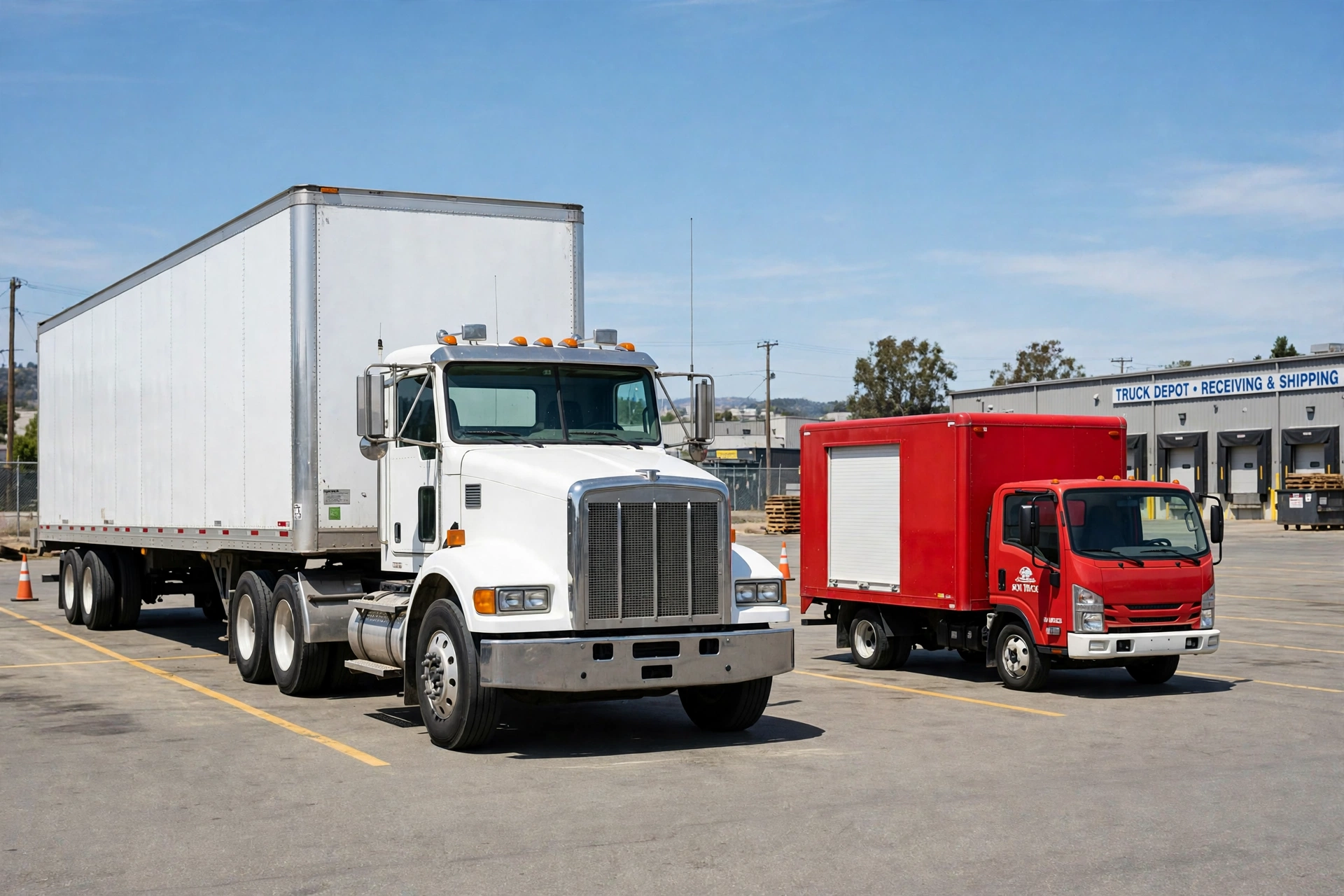
A truck carries cargo on its own chassis. A semi truck is a tractor unit that pulls a detachable semi-trailer through a fifth wheel coupling. Comparing a truck vs semi truck sorts vehicles by design, weight class, licensing and cost, and each of those factors changes what a driver or fleet can legally do. Most semis are Class 8 vehicles. Operating one usually takes a Class A commercial driver’s license (CDL).
Key Takeaways

- A semi truck is a tractor unit that couples to a semi-trailer through a fifth wheel. A straight truck carries its cargo on one fixed chassis.
- Most semi trucks are Class 8 vehicles with a gross vehicle weight rating (GVWR) above 33,000 lb (14,969 kg).
- A tractor-trailer combination requires a Class A commercial driver’s license (CDL). A straight truck rated at 26,001 lb (11,794 kg) or more requires at least a Class B CDL.
- Federal rules cap Interstate gross weight at 80,000 lb (36,287 kg) and vehicle width at 102 in (2.59 m). Each state sets its own height limit.
- Leasing a semi truck lowers upfront cash, and buying one builds equity. Both paths carry Heavy Vehicle Use Tax (HVUT), International Fuel Tax Agreement (IFTA) and International Registration Plan (IRP) obligations.
What Is the Difference Between a Truck and a Semi Truck?
A straight truck mounts its cab and cargo body on one frame, while a semi truck is a separate tractor unit that hauls a detachable semi-trailer. Semi trucks also haul heavier loads than most straight trucks. Most require a Class A CDL.
Ask anyone in the US what a truck is and you’ll hear everything from a Ford F-150 pickup to a concrete mixer. Inside the industry, the word narrows. It usually means a straight truck, a single rigid vehicle like a box truck, dump truck, refrigerated delivery truck or tow truck.
A semi divides the work in two. The tractor carries the engine and drive axles under its cab, and the trailer carries the freight. Because the units separate, a driver can drop one trailer at a warehouse and hook up a loaded one, keeping the tractor moving while freight gets loaded.
This table compares a straight truck with a semi truck on the features drivers and buyers check first.
| Feature | Straight Truck | Semi Truck |
|---|---|---|
| Frame | Cab and cargo body on one chassis | Tractor and trailer are separate units |
| Coupling | None, body is fixed to frame | Fifth wheel and kingpin |
| Weight Classes | Classes 3 to 8 | Mostly Class 8, some Class 7 |
| CDL Needed | None or Class B | Class A for most combinations |
| Typical Use | Local delivery, moving, construction | Regional and long-haul freight |
| Maneuvering | Tighter turns, easier city parking | Wide turns, needs more space |
For a business, the semi truck vs truck choice comes down to route and load size. Straight trucks win locally. They’re nimble on tight city streets, and they suit any delivery load small enough to fit inside a single cargo box. Semi trucks take over for high-volume freight moving between cities and states.
Is a Box Truck Considered a Semi?
No, a box truck is not a semi because its cargo box is mounted directly on the truck frame and cannot detach. That makes it a straight truck, usually rated in Classes 3 to 7. A semi pulls a separate semi-trailer.
The box truck vs semi split also changes freight handling, since box trucks often carry a liftgate or ramp for curbside and residential delivery. Semis work differently. Their trailers typically load and unload at warehouse docks built to trailer floor height.
What Is a Semi Truck?
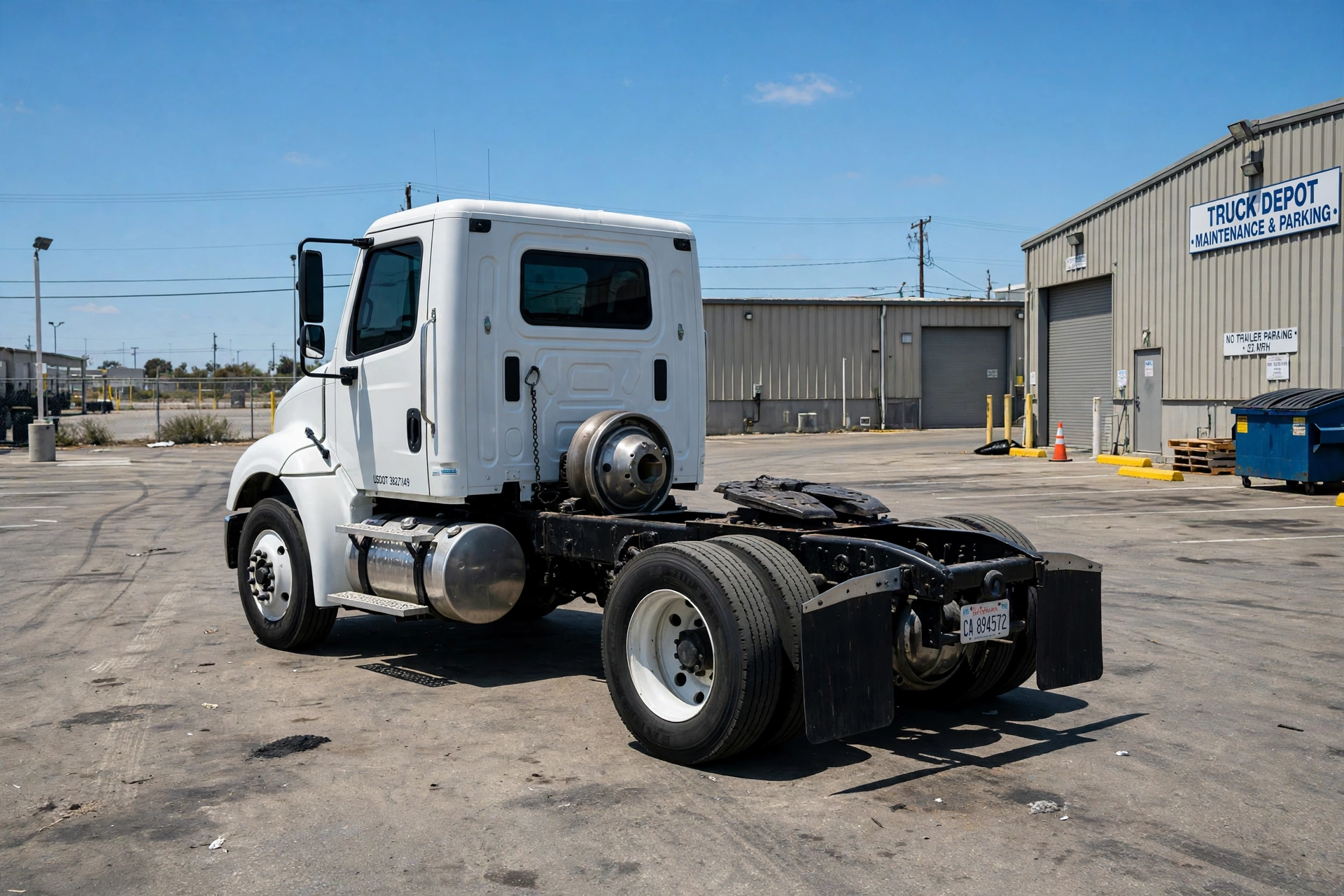
A semi truck is a heavy-duty tractor unit that pulls a semi-trailer, which is a trailer with rear axles but no front axle that rests its front end on the tractor’s fifth wheel coupling. Semi trucks move freight nationwide. Common loads include dry van, refrigerated, flatbed and tank freight.
The tractor unit houses the engine, transmission, cab and drive axles. Most US highway tractors are 6x4s. That label means one steer axle sits up front while two drive axles share a tandem at the rear of the frame.
Federal regulations use stiffer names, calling the power unit a “truck tractor” and the trailer a “semitrailer.” Drivers rarely do. Out on the road, drivers say semi or big rig, and plenty of them shorten that all the way down to rig.
Why Is It Called a Semi Truck?
A semi truck is named after its semi-trailer, which carries only part of its own weight. The rest rides on the tractor. Rear axles on the trailer hold up the back of the load, while the tractor’s fifth wheel takes the front end. A full trailer is different, with its own front and rear axles carrying its entire weight.
How the Fifth Wheel and Kingpin Work
The fifth wheel is a horseshoe-shaped coupling plate mounted over the tractor’s drive axles. Its partner is the kingpin. That steel pin sits under the front of the semi-trailer, and when the driver backs the tractor beneath it, the pin slides into the fifth wheel as locking jaws close around it.
Air lines and an electrical cord link the two units for brakes and lights. Then comes the check. During every pre-trip inspection, drivers run a tug test and look directly at the locking jaws to confirm they’ve closed.
Is a Semi Truck the Same as a Tractor Trailer?
Yes, a semi truck and a tractor trailer usually describe the same vehicle: a tractor unit coupled to a semi-trailer. Strictly speaking, “tractor” names the power unit alone. “Tractor trailer” names the full combination. In driver slang, the full combination is also a semi or a big rig, and a five-axle setup is an 18-wheeler.
This table lists the most common names for a semi truck and what each one describes.
| Term | What It Describes | Common Setting |
|---|---|---|
| Semi truck | Tractor alone, or tractor plus trailer | Everyday speech |
| Tractor | Power unit only | Dealers, mechanics and carriers |
| Tractor trailer | Tractor coupled to a semi-trailer | Media, insurance and safety reports |
| Truck tractor | Power unit only | Federal regulations |
| Semi-trailer | Trailer with no front axle | Specs and regulations |
| 18-wheeler | Five-axle tractor-semitrailer combination | Everyday speech |
The semi truck vs tractor trailer distinction matters most in sales listings. Read those ads carefully. A dealer ad for a “semi truck” usually covers the tractor only, so anyone weighing tractor trailer vs semi truck listings should confirm whether a trailer comes with the sale before comparing prices.
What Is an 18-Wheeler?
An 18-wheeler is a five-axle tractor-semitrailer combination with 18 tires. Here’s the math. The tractor runs 2 tires on the steer axle and 8 more across its two drive axles, and the trailer adds 8 on its tandem axles.
Not every semi has 18 wheels. Wide-base single tires change the count, and so do spread-axle trailers along with any extra lift axles a carrier adds.
Truck vs Semi Truck by GVWR Weight Class
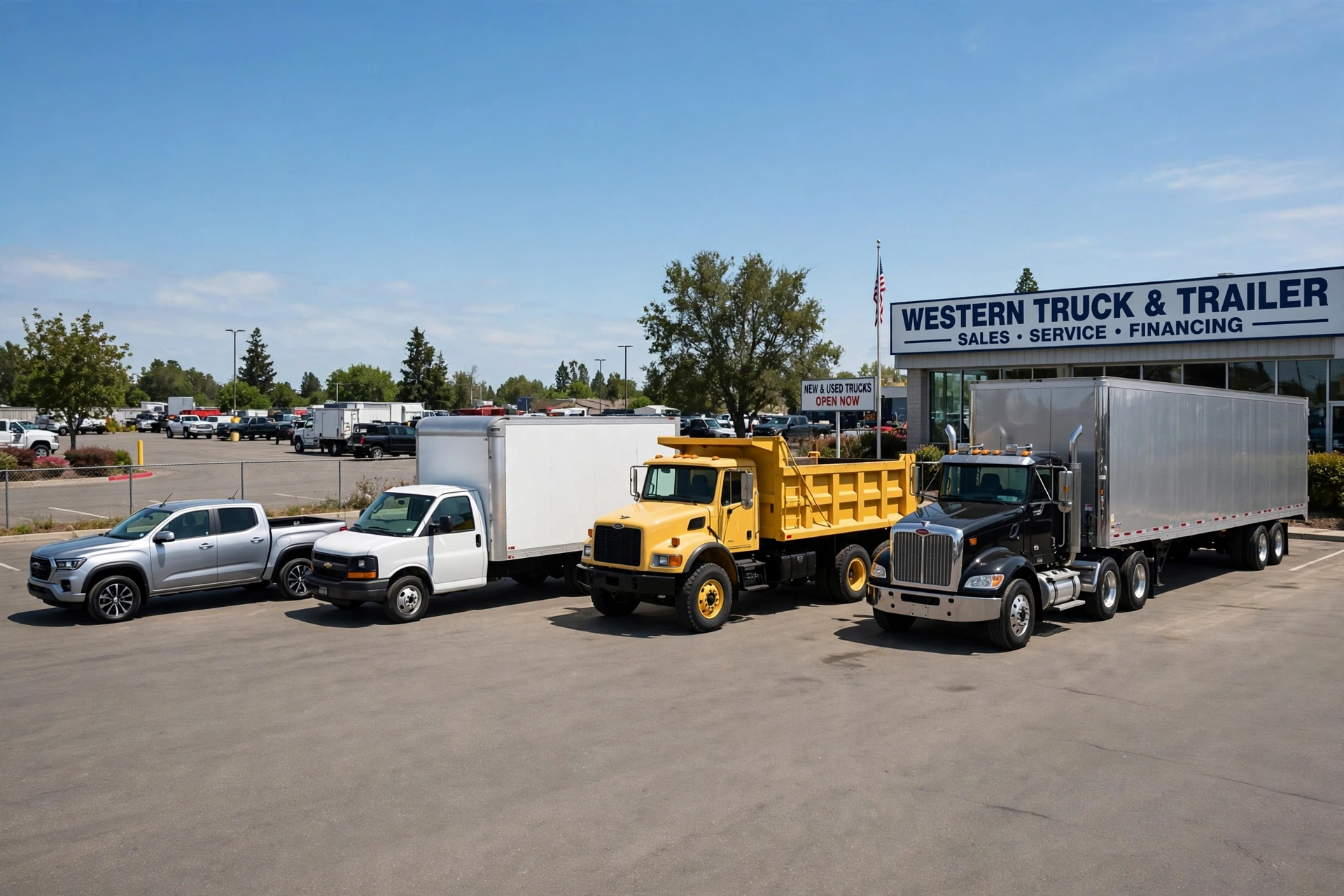
A truck vs semi truck comparison by weight starts with gross vehicle weight rating (GVWR), which is the maximum loaded weight a manufacturer approves for a vehicle. Most semi trucks are Class 8, rated above 33,000 lb (14,969 kg). Pickups sit far lower. Along with most box trucks, pickups fall between Class 1 and Class 6.
The Federal Highway Administration (FHWA) sorts trucks into eight GVWR classes. This table compares each class with typical vehicles and the license most drivers need.
| Class | GVWR (lb / kg) | Example Vehicles | Typical License |
|---|---|---|---|
| Class 1 | 0 to 6,000 / 0 to 2,722 | Compact pickups, SUVs | Standard license |
| Class 2 | 6,001 to 10,000 / 2,722 to 4,536 | Full-size pickups, cargo vans | Standard license |
| Class 3 | 10,001 to 14,000 / 4,536 to 6,350 | Heavy-duty pickups, cutaway vans | Standard license |
| Class 4 | 14,001 to 16,000 / 6,351 to 7,257 | Step vans, small box trucks | Standard license |
| Class 5 | 16,001 to 19,500 / 7,258 to 8,845 | Box trucks, bucket trucks | Standard license |
| Class 6 | 19,501 to 26,000 / 8,846 to 11,793 | Beverage trucks, single-axle box trucks | Standard license |
| Class 7 | 26,001 to 33,000 / 11,794 to 14,969 | Refuse trucks, city tractors | Class B or Class A |
| Class 8 | Over 33,000 / Over 14,969 | Semi tractors, dump trucks, mixers | Class B or Class A |
In most cases a semi is a Class 8 truck, though some lighter regional tractors are Class 7. The reverse doesn’t hold. Dump trucks and cement mixers are Class 8 straight trucks, and heavy wreckers land in the same class even though none of them is a semi.
GVWR rates a single vehicle. A tractor and trailer together get a separate number, the gross combination weight rating (GCWR), and CDL rules for combinations depend on it.
The standard license has limits. It applies only to vehicles hauling no placarded hazardous materials and carrying fewer than 16 passengers. Any vehicle, in any weight class, needs a CDL once it carries placarded hazardous materials or is designed to carry 16 or more people including the driver.
Semi Truck Dimensions and Legal Size Limits
Federal and state law together set semi truck dimensions in the USA. Federal rules cap width at 102 in (2.59 m) and require states to allow semitrailers of at least 48 ft (14.63 m). Each state sets its own height limit. On long-haul runs, the standard US trailer is the 53 ft (16.15 m) dry van.
Federal size rules trace back to the Surface Transportation Assistance Act of 1982 (STAA). Not every road counts. The rules apply on the National Network, a system that takes in the Interstate System along with other designated highways.
This table compares the main federal size rules with common state practice.
| Measurement | Federal Rule | Common State Practice |
|---|---|---|
| Width | 102 in (2.59 m) maximum | 102 in on designated routes |
| Height | No federal limit | 13 ft 6 in to 14 ft (4.11 to 4.27 m) |
| Semitrailer Length | States must allow 48 ft (14.63 m) | 53 ft (16.15 m) widely allowed |
| Twin Trailers | States must allow 28 ft (8.53 m) per trailer | 28 ft 6 in (8.69 m) common |
| Tractor Length | States cannot cap it on network | N/A |
| Total Combination Length | No federal cap for single trailers | Varies on non-network roads |
Many states also limit the distance from the kingpin to the rear axle, and 40 to 41 ft (12.19 to 12.50 m) is a common cap. The fix is mechanical. Drivers slide the trailer tandems forward to stay within that limit.
How Tall Is a Semi Truck?
Semi truck height usually tops out at 13 ft 6 in (4.11 m) because most dry van trailers are built to that height. Many Eastern states cap it at 13 ft 6 in, while plenty of Western states allow 14 ft (4.27 m). No federal height limit exists.
Tractor cab height varies by model and roof style. A sleeper tractor with a high roof fairing usually comes up close to trailer height, while a day cab sits lower. No verified single figure covers every model.
Clearance height matters more than legal height. Low bridges and older overpasses often sit below 13 ft 6 in, and parking garages do too, so drivers rely on truck-specific GPS routing and read every posted clearance sign.
Semi Trailer Dimensions
Semi trailer dimensions depend on trailer type, and the 53 ft (16.15 m) dry van at 102 in (2.59 m) wide is the US standard. Pallet math is simple. Loaded two wide, a 53 ft dry van fits 26 standard 48 x 40 in (1.22 x 1.02 m) pallets.
This table compares the most common US semi-trailer types.
| Trailer Type | Common Lengths (ft / m) | Main Use |
|---|---|---|
| Dry van | 48 or 53 / 14.63 or 16.15 | Packaged general freight |
| Refrigerated (reefer) | 48 or 53 / 14.63 or 16.15 | Food and temperature-controlled goods |
| Flatbed trailer | 48 or 53 / 14.63 or 16.15 | Steel, lumber, machinery |
| Step deck | 48 or 53 / 14.63 or 16.15 | Taller loads under height limits |
| Pup trailer | 28 / 8.53 | Doubles for less-than-truckload freight |
Inside measurements vary by manufacturer and wall construction. Don’t guess. Before loading, shippers confirm the exact inside length and width with the carrier, along with the height of the door opening.
Can Trailers Exceed 53 Feet?
Yes, trailers can exceed 53 ft (16.15 m) where state law allows it or under an oversize permit. A few states permit longer semitrailers on their own roads. Multi-trailer rigs differ. Longer combination vehicles, such as triples and long doubles, run only in states that allowed them before a 1991 federal freeze.
How Much Can a Semi Truck Legally Carry?
A semi truck can legally weigh up to 80,000 lb (36,287 kg) gross on the Interstate System without a permit. That total includes the tractor, trailer, fuel and freight. Axles have caps too. Federal rules limit a single axle to 20,000 lb (9,072 kg) and a tandem axle to 34,000 lb (15,422 kg).
Legal payload equals 80,000 lb minus the empty weight of the tractor and trailer. That empty weight shifts. Engine, cab, fuel load and trailer type all move the number, so no verified single figure is available for an empty semi. Carriers find real payload by weighing their own equipment on a certified scale.
This table compares the main federal weight limits on the Interstate System.
| Limit Type | Maximum (lb / kg) | Applies To |
|---|---|---|
| Gross vehicle weight | 80,000 / 36,287 | Full combination |
| Single axle | 20,000 / 9,072 | One axle |
| Tandem axle | 34,000 / 15,422 | Two closely spaced axles |
| Bridge formula | Varies by spacing | Any group of axles |
Loads above these limits require a state oversize or overweight permit. There’s one wrinkle. Some states grandfathered higher weight limits on certain roads, so a few routes allow more than the federal caps without a permit.
How the Federal Bridge Formula Works
The federal bridge formula limits weight on any group of axles based on how many axles the group has and how far apart they sit. Bridges are the reason. Spreading weight over more axles and longer distances protects them from concentrated stress.
The formula is W = 500 [LN / (N – 1) + 12N + 36]. Here, W is the maximum weight in pounds, L is the distance in feet between the outer axles of the group, and N is the number of axles. A standard five-axle tractor-trailer with normal spacing reaches the 80,000 lb cap.
Do You Need a CDL for a Semi Truck?
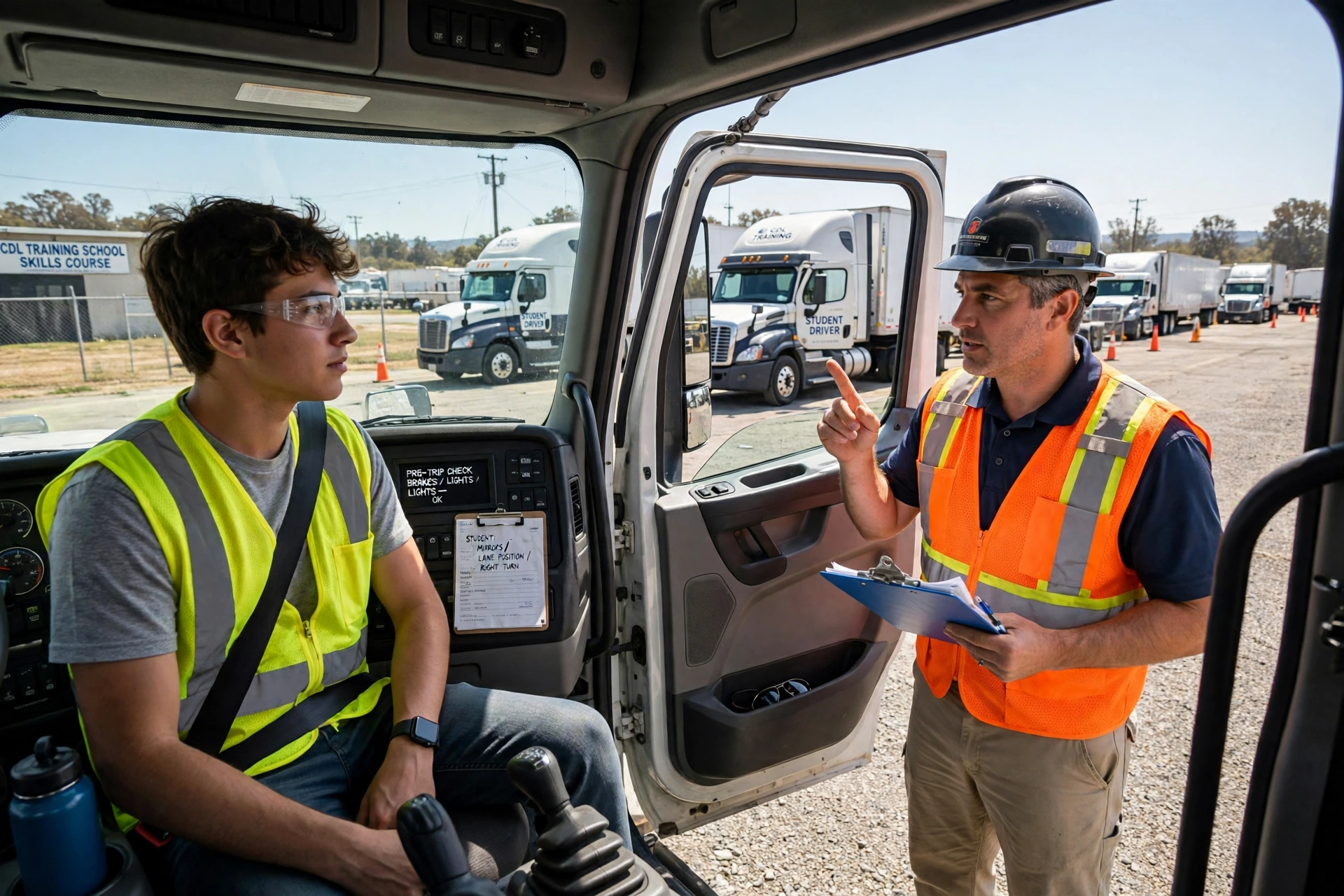
Yes, you need a Class A commercial driver’s license (CDL) to drive most semi trucks. A Class A CDL is required for any combination with a gross combination weight rating of 26,001 lb (11,794 kg) or more when the towed unit is rated above 10,000 lb (4,536 kg). Federal rules set the minimum standards. Each state then issues the license itself.
This table compares the three CDL classes and what each one covers.
| CDL Class | What It Covers | Example Vehicles |
|---|---|---|
| Class A | GCWR 26,001 lb+, towed unit over 10,000 lb | Tractor-trailers, flatbed combinations |
| Class B | Single vehicle 26,001 lb+, towed unit 10,000 lb or less | Heavy box trucks, dump trucks, buses |
| Class C | Smaller vehicles carrying hazmat or 16+ passengers | Passenger vans, small hazmat trucks |
With the right endorsements added to the license, a Class A CDL holder can also drive Class B and Class C vehicles. Endorsements are add-ons. They cover hazardous materials (H), tankers (N), doubles and triples (T) and passengers (P).
Do Box Trucks Require a CDL?
No, most box trucks do not require a CDL when their GVWR is 26,000 lb (11,793 kg) or less. Heavier ones do. A box truck rated at 26,001 lb (11,794 kg) or more requires a Class B CDL, and any box truck hauling placarded hazardous materials needs a CDL with a hazmat endorsement.
The CDL for box truck question explains something you’ll notice at rental counters: many rental and moving trucks stop at a 26,000 lb rating. That’s no accident. It lets drivers with a standard license operate them.
How to Get a Class a CDL
Class A CDL requirements follow federal minimums, and each state layers on its own fees and testing schedule. Work through these steps in order.
- Pass a Department of Transportation (DOT) physical with a certified medical examiner listed on the FMCSA National Registry.
- Pass your state’s written knowledge tests to earn a commercial learner’s permit (CLP).
- Hold the CLP for at least 14 days before taking the skills test.
- Complete Entry-Level Driver Training (ELDT) with a provider listed on the FMCSA Training Provider Registry.
- Pass the skills test, which covers a vehicle inspection, basic control maneuvers and an on-road drive.
- Clear the FMCSA Drug and Alcohol Clearinghouse query before your first driving job.
The ELDT rule took effect on February 7, 2022. It changed the order of things. Anyone earning a Class A CDL for the first time now has to complete approved training before testing.
Hours of Service Rules for Semi Truck Drivers
Hours of Service (HOS) rules are federal limits on how long property-carrying CDL drivers can drive and work. A driver can drive up to 11 hours after 10 consecutive hours off duty and cannot drive past the 14th hour after coming on duty. The Federal Motor Carrier Safety Administration (FMCSA) enforces these limits.
This table lists the main HOS limits for property-carrying drivers.
| Rule | Limit | Purpose |
|---|---|---|
| Driving limit | 11 hours | Caps time behind the wheel |
| Duty window | 14 hours | Caps the workday |
| Required break | 30 minutes after 8 hours driving | Reduces fatigue |
| Off-duty reset | 10 consecutive hours | Restores the daily limits |
| Weekly limit | 60 hours in 7 days or 70 in 8 | Caps weekly duty time |
| Restart | 34 consecutive hours off | Resets the weekly clock |
Most drivers log HOS on an electronic logging device (ELD). Breaks can be split. Under sleeper berth rules, the 10-hour break can be divided into two periods, such as 7 and 3 hours or 8 and 2 hours.
A short-haul exception covers drivers who stay within 150 air miles (241 km) of their work reporting location and return within 14 hours. They can skip the ELD. Time records take its place.
Day Cab vs Sleeper Cab Semi Trucks
A day cab is a semi tractor with no sleeping area, built for local and regional routes that return home daily. A sleeper cab adds a rear berth so drivers can take required rest breaks on long-haul routes. The choice depends on how many nights a driver spends on the road.
This table compares day cabs and sleeper cabs on the factors carriers weigh most.
| Factor | Day Cab | Sleeper Cab |
|---|---|---|
| Sleeping area | None | Rear bunk, sometimes two |
| Typical routes | Local, regional, port drayage | Long-haul and over-the-road |
| Length | Shorter wheelbase | Longer wheelbase |
| Maneuvering | Easier in cities and yards | Wider turning radius |
| Driver home time | Usually nightly | Often days or weeks out |
Day cabs fit drop-and-hook work and port drayage, plus the short regional runs where a driver never needs a bunk. Sleepers are another story. Owner-operators hauling freight across several states depend on them.

Is It Better to Lease or Buy a Semi Truck?
Buying a semi truck is better for an owner-operator with strong credit, cash reserves and a plan to keep the truck for years. Leasing a semi truck is better for a new driver who needs lower upfront cash and predictable payments. Credit and freight access shape the right path. So does the maintenance budget.
The leasing a semi truck vs buying decision shifts two things: who owns the equipment and who covers repairs. This table compares the three most common paths.
| Factor | Lease | Lease-Purchase | Buy |
|---|---|---|---|
| Upfront cash | Lower | Lower | Highest, down payment required |
| Ownership | None | Possible at term end | Full or financed equity |
| Maintenance | Sometimes included | Usually driver pays | Owner pays |
| Flexibility | Return at term end | Often tied to one carrier | Sell or trade anytime |
| Main risk | No equity built | Losing payments if terminated | Repair and resale costs |
Prices swing widely. Lease terms and interest rates shift with the lender and the buyer’s credit score, while truck prices move with the market. No verified average price is available, so buyers collect written quotes from several dealers and lenders before signing.
What Is a Lease-Purchase Program?
A lease-purchase program lets a driver lease a semi truck, often from a motor carrier, with an option to own it at the end of the term. Payment is built in. Weekly installments usually come straight out of the driver’s settlement checks.
Read the contract closely before signing, and check these points.
- Confirm who pays for maintenance, tires and major repairs.
- Check whether you must haul only for the leasing carrier.
- Ask what happens to your payments if the contract ends early.
- Compare the total cost of the lease with buying a similar truck.
- Have an attorney or trusted accountant review the agreement.
Ownership Costs Beyond the Truck Payment
Owner-operator costs run well past the monthly truck payment. Those extras are unavoidable. Federal and interstate obligations stick to the operator no matter which path put the truck in the yard, leased or bought.
This table lists the main recurring ownership costs and filings.
| Cost or Filing | What It Covers | Frequency |
|---|---|---|
| Form 2290 (HVUT) | Federal tax on vehicles 55,000 lb+ | Yearly, July 1 tax period |
| IFTA | Fuel tax shared among member states | Quarterly returns |
| IRP | Apportioned registration for interstate travel | Yearly renewal |
| Unified Carrier Registration | Fee for interstate carriers | Yearly |
| Liability insurance | Federal minimum $750,000 for general freight | Ongoing premiums |
| Maintenance and tires | Repairs, service and replacement | Ongoing |
The maximum HVUT is $550 per year for vehicles with a taxable gross weight of 75,000 lb (34,019 kg) or more. Then there’s the road itself. Fuel, tolls, parking and permits pile on operating costs that shift from route to route.
Conclusion
The truck vs semi truck choice shapes every decision that follows for a driver or fleet. It’s not a small call. That one choice sets the license required and the routes available, along with the legal weight limits and the yearly tax filings.
Anyone aiming to drive semi trucks should start with a DOT physical. Next comes the permit. A commercial learner’s permit opens the door to approved ELDT training, which has to be finished before testing.
Buyers have their own math to run. Leasing, lease-purchase and buying should be priced side by side, with HVUT, IFTA, IRP and insurance folded into every comparison.
Federal rules on size and weight don’t stay put, and safety standards shift too as new legislation passes and FMCSA issues fresh rulemaking. Verify before acting. Check the FMCSA, FHWA and IRS sources below before buying equipment or booking a CDL test, and again before crossing a new state line.
Frequently Asked Questions
Sources
- Federal Motor Carrier Safety Administration, Hours of Service: https://www.fmcsa.dot.gov/regulations/hours-of-service
- Federal Motor Carrier Safety Administration, Commercial Driver’s License: https://www.fmcsa.dot.gov/registration/commercial-drivers-license
- Federal Motor Carrier Safety Administration, Entry-Level Driver Training: https://www.fmcsa.dot.gov/registration/commercial-drivers-license/entry-level-driver-training-eldt

Esther Howard
Esther Howard leads trucking and commercial driving content at TruckingHow, covering CDL training, trucking regulations, fleet operations, and truck maintenance. With over a decade of experience researching the transportation industry, she brings a practical, research-driven approach to driver education and safety standards. Her guides help drivers, fleet owners, and trucking professionals make informed decisions on and off the road.
Related Posts