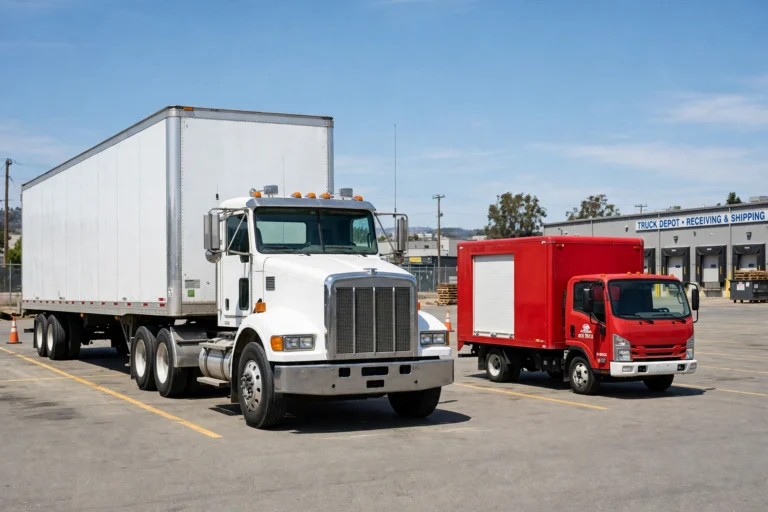
How to Get an MC Number: Costs, Steps and Timeline Guide

To get an MC number, create a Login.gov account and apply through the FMCSA Unified Registration System (URS), paying $300 per authority type. The MC number arrives at submission. Your authority turns active only after your insurance and BOC-3 filings post and a 10-day protest period ends.
Key Takeaways

- An MC number is the operating authority FMCSA requires for for-hire carriers and brokers moving regulated freight in interstate commerce.
- The USDOT number is free, and each MC operating authority type costs a $300 FMCSA filing fee.
- A newly issued MC number is not active until insurance, a BOC-3 and a 10-day protest period are complete.
- Hauling for-hire interstate freight before FMCSA records show the authority as active is illegal.
What Is an MC Number?
An MC number is a federal operating authority number that the Federal Motor Carrier Safety Administration (FMCSA) assigns to for-hire carriers, brokers and freight forwarders moving regulated goods or passengers across state lines. Brokers and shippers use the number to see which type of business the company is approved to operate legally. Roadside inspectors check it too.
MC stands for Motor Carrier. Inside FMCSA’s system, the MC number lives as a docket number attached to your company’s USDOT record, which is why the two always travel together.
Learning how to get an MC number for trucking starts with one question: will you haul someone else’s freight for pay across state lines? Say yes, and you need operating authority.
Who Needs an MC Number
Any business that arranges or performs for-hire transportation of regulated commodities in interstate commerce needs an MC number under federal rules. The definition is broader than it sounds. FMCSA counts trade that crosses state lines as interstate commerce, plus intrastate legs of a shipment that started or will end in another state.
Operating authority applies to these business types:
- For-hire motor carriers of property, such as dry van, reefer, flatbed, box truck and hotshot operators
- For-hire passenger carriers, such as charter bus companies
- Household goods carriers, also called interstate movers
- Freight brokers of property or household goods
- Freight forwarders, which receive an FF number instead of an MC number
Who Does Not Need One
No, not every trucking business needs an MC number. Four groups don’t. Each one below can legally run trucks for its business without holding any federal operating authority registered in its own name:
- Private carriers hauling their own goods, such as a contractor moving its own equipment
- Carriers hauling only exempt commodities, such as certain unprocessed agricultural products
- Intrastate-only carriers that never touch interstate freight
- Owner-operators leased onto another carrier and running under that carrier’s authority
Exempt doesn’t mean unregistered. Private and exempt carriers still need a USDOT number once their vehicles hit an FMCSA weight or passenger threshold, and hauling placarded hazardous materials triggers the same requirement.
Do I Need Both an MC Number and a DOT Number?
Yes, most for-hire interstate carriers need both numbers, because the USDOT number identifies the company for safety tracking and the MC number grants legal authority to haul for pay. First-time registrants get both at once. Both numbers arrive through a single Unified Registration System application, so there’s no separate filing order to follow.
Private carriers and exempt haulers can get by with a USDOT number alone, since they don’t need authority to haul for pay. No MC number exists without one.
This table compares the two identifiers side by side.
| Feature | USDOT Number | MC Number |
|---|---|---|
| Purpose | Safety identification and tracking | For-hire operating authority |
| Cost (USD) | $0 | $300 per authority type |
| Who Needs It | Operators meeting FMCSA vehicle thresholds | For-hire interstate carriers, brokers |
| Upkeep | MCS-150 update every 24 months | Insurance and BOC-3 kept on file |
| Public Lookup | SAFER Company Snapshot | Licensing and Insurance (L&I) system |
FMCSA requires a USDOT number for interstate vehicles with a gross vehicle weight rating (GVWR) or gross combination weight rating (GCWR) of 10,001 lbs (4,536 kg) or more. Weight isn’t the only trigger. The same rule covers vehicles carrying 9 or more passengers (including the driver) for compensation, or 16 or more passengers without compensation. Placarded hazardous materials loads also qualify.
Many states also require a USDOT number for commercial vehicles that never leave state lines, and Texas and California are two of them. Check yours before registering.

How to Get an MC Number in 8 Steps
Here is how to get an MC number: confirm your authority type, form your business, create a Login.gov account, complete the URS application, pay the $300 fee, file insurance and a BOC-3, then wait out the protest period. Each step names its form or system.
- Confirm the authority type you need: property carrier, passenger carrier, household goods carrier, broker or freight forwarder.
- Form your business entity, such as a limited liability company (LLC) or corporation, under your state’s rules.
- Get a free Employer Identification Number (EIN) from the Internal Revenue Service (IRS) at irs.gov.
- Create a Login.gov account, which FMCSA requires for portal access and registration.
- Complete the URS application on the FMCSA registration site with your company, vehicle, cargo and safety details.
- Pay the $300 filing fee for each authority type you request. FMCSA assigns your USDOT number and MC number at this point.
- Arrange filings: have your insurer file Form BMC-91 or BMC-91X, and have a process agent file Form BOC-3.
- Monitor your status on the FMCSA Licensing and Insurance system until the 10-day protest period ends and the authority shows “Active.”
FMCSA can dismiss an application when the required insurance and BOC-3 filings don’t arrive within 90 days. Don’t cut it close. Line up an insurance agent and a process agent before submitting, and you’ll stay well inside that window.
How Much Does It Cost to Get an MC Number?
It costs $300 to get an MC number for one authority type, paid to FMCSA during the URS application, while the USDOT number costs nothing. Extra authority types cost extra. A company requesting both carrier and broker authority pays $600, since FMCSA charges $300 for each authority type on the application.
No, an MC number isn’t free. Only the USDOT number costs nothing, because it serves as a safety identifier, while the MC number is a licensing filing that carries a federal fee.
Third-party filing services charge their own fees on top of the $300. They’re legal. Still, FMCSA doesn’t require them, and any applicant can file directly on the FMCSA website for the base fee alone.
Startup Compliance Costs Beyond the MC Fee
The $300 fee is only the start. Several more costs arrive before a new interstate carrier reaches active authority, and some of them depend on fleet size or base state. This table lists the main startup costs and labels figures that vary.
| Cost Item | Who Pays | Cost (USD) |
|---|---|---|
| USDOT Number | All registrants | $0 |
| MC Operating Authority | Carriers, brokers, forwarders | $300 per authority type |
| BOC-3 Process Agent | Carriers and brokers | Varies by provider; no verified figure available |
| Liability Insurance | Motor carriers | Varies by driver, cargo, state; no verified figure |
| BMC-84 Broker Bond | Freight brokers | Premium varies; $75,000 bond amount |
| Unified Carrier Registration (UCR) | Interstate carriers, brokers | Set by fleet size; see ucr.gov |
| Form 2290 Heavy Vehicle Use Tax | Vehicles 55,000 lbs (24,948 kg)+ | Up to $550 per vehicle yearly |
| IFTA License and Decals | Qualified vehicles | Set by base state |
| IRP Apportioned Plates | Qualified vehicles | Set by state and miles driven |
The International Fuel Tax Agreement (IFTA) and the International Registration Plan (IRP) apply to qualified motor vehicles operating in 2 or more jurisdictions. The qualifying test is simple. A qualified vehicle has 2 axles and a gross weight above 26,000 lbs (11,793 kg), or 3 or more axles at any weight.
Form 2290 carries its own ceiling. The Heavy Vehicle Use Tax (HVUT) reaches its $550 maximum at a taxable gross weight above 75,000 lbs (34,019 kg), and lighter trucks owe less.
How Long Does It Take to Get an MC Number?
FMCSA assigns the MC number the moment you submit the URS application and pay, but the authority becomes active only after insurance and BOC-3 filings post and the 10-day protest period ends. The total wait varies. It depends on how fast your filings arrive and on FMCSA vetting, so no verified fixed timeline is available.
Most of the confusion here comes from blurring two separate events: the moment FMCSA assigns your MC number and the date your operating authority turns active. Assignment happens instantly. You can’t legally haul until activation.
This table maps each stage from account setup to active status.
| Stage | What Happens | Timing |
|---|---|---|
| Login.gov Setup | Create and verify your account | Same day |
| URS Application | Submit details and pay $300 | Same day |
| Number Assignment | USDOT and MC numbers issued | At submission |
| Insurance Filing | Insurer files BMC-91 or BMC-91X | Within 90 days |
| BOC-3 Filing | Process agent files BOC-3 | Within 90 days |
| Protest Period | Public may object to the application | 10 days |
| Authority Active | FMCSA grants operating authority | After filings and vetting |
FMCSA tightened application vetting in response to registration fraud, and that extra review can push activation past the end of the protest period. Don’t expect a guaranteed date. The agency doesn’t publish one.
Ways to Shorten the Wait
The fastest path to activation comes from having every filing lined up before the application goes in, not after the MC number appears. These steps remove the most common delays.
- Request insurance quotes before applying, so your insurer can file the BMC-91 or BMC-91X right after the MC number appears.
- Choose a blanket process agent in advance and send your MC number the same day you receive it.
- Match your legal business name, address and EIN exactly across the URS application, insurance policy and IRS records.
- Check the FMCSA Licensing and Insurance system daily to confirm each filing posts.
- Answer any FMCSA verification request promptly through your Login.gov-linked account.

How Much Insurance Do I Need for MC Authority?
A general freight carrier using vehicles of 10,001 lbs (4,536 kg) or more needs at least $750,000 in public liability insurance, filed with FMCSA by the insurer on Form BMC-91 or BMC-91X. That figure isn’t universal. Higher minimums apply to hazardous materials and passenger carriers, and lighter vehicles qualify for a lower $300,000 minimum.
FMCSA sets these minimums in Title 49 of the Code of Federal Regulations (CFR), Part 387, and checks them against each carrier’s insurance filing. Hazmat raises the bar. This table compares the federal liability minimums by operation type.
| Operation Type | Vehicle Weight or Size | Minimum Liability (USD) |
|---|---|---|
| General Freight | 10,001 lbs (4,536 kg)+ | $750,000 |
| General Freight | Under 10,001 lbs (4,536 kg) | $300,000 |
| Oil and Listed Hazmat | 10,001 lbs (4,536 kg)+ | $1,000,000 |
| Bulk or High-Hazard Hazmat | Any weight | $5,000,000 |
| Passenger Carrier | 15 or fewer passengers | $1,500,000 |
| Passenger Carrier | 16 or more passengers | $5,000,000 |
Federal rules don’t require cargo insurance for general freight carriers, so that coverage is a business decision rather than a legal one. Movers are the exception. Household goods carriers must file cargo coverage on Form BMC-34.
Many brokers and shippers set their own cargo and liability requirements before they’ll tender a load, and those figures can sit above the federal floor. Ask them before binding a policy.
FMCSA doesn’t set insurance prices, and there’s no verified figure available for what a typical new carrier pays in premiums each year. Quotes vary. Driving records, cargo type, operating radius, equipment and state all affect the price.
What Is a BOC-3 Filing?
A BOC-3 filing is the FMCSA form that designates a process agent in every state where you operate, so legal papers can be served on your company in any of those states. The form is mandatory. FMCSA won’t activate operating authority until a valid BOC-3 appears on your record.
BOC-3 stands for Designation of Process Agents. A process agent is a person or company authorized to accept court documents on your behalf whenever legal action reaches your business.
Most new carriers hire a blanket process agent company, which covers every state in a single electronic filing for the whole operation. Finding one is easy. FMCSA publishes a list of blanket process agent companies on its website.
Motor carriers must have a process agent submit the BOC-3, while brokers and freight forwarders may file their own form directly.
How to Get an MC and DOT Number as a Freight Broker
A freight broker gets an MC and DOT number through the same URS application as a carrier, but selects broker authority, pays $300, and files a $75,000 BMC-84 surety bond or BMC-85 trust fund instead of liability insurance. Broker authority stands alone. A company doing both must request both.
The broker process follows these steps.
- Select broker of property, or broker of household goods, in the URS application.
- Pay the $300 filing fee for broker authority.
- Obtain a $75,000 BMC-84 surety bond from a surety company, or set up a $75,000 BMC-85 trust fund.
- File the BOC-3, either yourself or through a process agent.
- Wait for the 10-day protest period to end and for FMCSA to grant the authority.
This table compares carrier authority with broker authority.
| Requirement | Motor Carrier | Freight Broker |
|---|---|---|
| Filing Fee (USD) | $300 | $300 |
| Financial Filing | BMC-91 or BMC-91X insurance | BMC-84 bond or BMC-85 trust |
| Required Amount (USD) | $750,000+ for most freight | $75,000 |
| BOC-3 Filer | Process agent only | Self or process agent |
| Can Haul Freight | Yes | No |
A broker arranges transportation but doesn’t operate trucks under broker authority, no matter how many loads the company books each month. Hauling freight requires carrier authority too.
Do Box Trucks and Hotshots Need an MC Number?
Yes, a box truck or hotshot operator needs an MC number when hauling other people’s freight for pay across state lines, regardless of vehicle weight. Weight still matters. It changes the insurance minimum and the driver license class. The same figure decides whether the USDOT number requirement applies, though it never removes the need for operating authority.
A box truck under 10,001 lbs (4,536 kg) GVWR still needs authority for for-hire interstate work. The insurance math changes, though. Federal rules set its liability minimum at $300,000 for non-hazardous freight, less than half the $750,000 floor heavier trucks face.
Hotshot setups usually pair a heavy-duty pickup with a gooseneck or flatbed trailer. That pairing adds up fast. Together, the two often exceed 10,001 lbs (4,536 kg) GCWR, triggering both the USDOT number requirement and the $750,000 liability minimum.
A Class A commercial driver’s license (CDL) applies when the GCWR reaches 26,001 lbs (11,794 kg) or more and the towed unit exceeds 10,000 lbs (4,536 kg) GVWR. Check the trailer rating before you buy. That number decides your license class.
Do I Need an MC Number for Intrastate Trucking?
No, a carrier that operates only within one state and never handles interstate freight does not need an MC number, but many states require their own intrastate authority, a USDOT number, or both. Requirements differ by state. Check with your state’s transportation or motor vehicle agency to learn what an intrastate-only carrier must file.
In Texas, intrastate operating authority comes from the Texas Department of Motor Vehicles (TxDMV), the same agency that handles vehicle registration statewide. California uses a permit instead. Carriers there need a Motor Carrier Permit from the California Department of Motor Vehicles (DMV).
A load that stays inside one state can still count as interstate commerce. Origin matters. Freight arriving from a port or rail yard keeps its interstate character on the final in-state leg, and that leg requires federal authority. Shipments that started with an out-of-state shipper work the same way.
How Do I Check My MC Number Status?
Check your MC number status on the FMCSA Licensing and Insurance (L&I) system at li-public.fmcsa.dot.gov, which shows whether your authority is pending, active, inactive or revoked, plus your insurance and BOC-3 filings. A second tool covers the USDOT side. The SAFER Company Snapshot at safer.fmcsa.dot.gov shows your USDOT record and operating status.
Follow these steps to check status.
- Open the FMCSA L&I system in a web browser.
- Search by MC number, USDOT number or legal company name.
- Review the authority status for each authority type.
- Confirm that your insurance and BOC-3 filings appear on the record.
“Pending” means FMCSA has your application but hasn’t granted the authority yet. Four causes explain most cases. Those causes are a missing insurance filing, a missing BOC-3, an open protest period or ongoing FMCSA review of the application.
“Inactive” or “revoked” means the authority isn’t valid for hauling, and any load moved under it counts as operating without authority. Canceled insurance is a common culprit. The insurer notifies FMCSA when coverage ends.
Can I Haul Loads as Soon as I Get My MC Number?
No, an MC number does not authorize hauling until FMCSA records show the operating authority as active, which happens only after insurance and BOC-3 filings post and the protest period ends. Pending isn’t permission. Running for-hire interstate loads on pending authority is illegal operation without authority.
Roadside inspectors and enforcement officers check authority status during inspections. They’ll spot pending status. A carrier caught operating without active authority faces out-of-service orders, and federal civil penalties come on top of the downtime.
Brokers check carrier status before tendering freight, and most broker onboarding systems reject pending authority outright. Age matters too. Plenty of brokers set a minimum authority age before working with a new carrier, though the cutoff varies from one broker to the next.
There’s a legal workaround. An owner-operator who needs revenue during the wait can lease onto an established carrier and haul under that carrier’s active authority until their own authority goes active.

What Happens After Your Authority Goes Active
Active authority starts a new set of obligations: the 18-month New Entrant Safety Assurance Program, a safety audit, recurring federal and state filings, and drug and alcohol testing for CDL drivers. None are optional. Missing any of these obligations can deactivate your USDOT number or revoke your authority.
New Entrant Safety Assurance Program
Every new motor carrier spends 18 months in FMCSA’s New Entrant Safety Assurance Program. The audit comes early. Property carriers receive a safety audit within the first 12 months of operation, so the clock starts running right away.
The auditor reviews driver qualification files, hours of service records, vehicle maintenance records, drug and alcohol testing and insurance. Gaps get flagged. A failed audit requires a corrective action plan, and an unresolved failure can lead to revocation of the USDOT registration.
Build these files from day one, because reconstructing months of records the week before an auditor arrives is far harder than keeping them current. A clean paper trail makes passing simple.
CDL drivers fall under the federal drug and alcohol testing rules. That includes owner-operators. Most of them join a testing consortium and register with the FMCSA Drug and Alcohol Clearinghouse, since a one-person company can’t build a random testing pool on its own.
Ongoing Filings and Renewals
Active authority stays valid only while the required filings stay current, and several of them renew on different schedules throughout the year. Deadlines stagger. This table lists the main recurring filings for an interstate carrier.
| Filing | Who Needs It | Frequency |
|---|---|---|
| Form MCS-150 Update | All USDOT holders | Every 24 months |
| UCR Registration | Interstate carriers and brokers | Annually |
| Form 2290 HVUT | Vehicles 55,000 lbs (24,948 kg)+ | Annually |
| IFTA Fuel Tax Return | IFTA licensees | Quarterly |
| IRP Plate Renewal | Apportioned vehicles | Annually |
| Insurance Filing | Motor carriers | Continuous coverage required |
FMCSA can deactivate a USDOT number when the MCS-150 update runs late, even if every other filing on the record is perfectly in order. Set calendar reminders for each deadline.
How to Avoid MC Number Scams
Avoid MC number scams by filing only on official fmcsa.dot.gov pages, never paying anyone who calls claiming to be FMCSA, and verifying any “compliance” invoice against FMCSA records before paying. New registrants are frequent targets. Their contact details become public once the USDOT record goes live.
Knowing how to get an MC number safely matters as much as knowing the steps, since one fake invoice can wipe out the savings from filing directly. Use these practices to protect your business.
- File directly on the FMCSA registration site through your Login.gov account.
- Ignore unsolicited calls, texts or emails demanding payment to “activate” your authority.
- Verify any third-party service’s fees before signing, since the FMCSA authority fee is $300.
- Protect your Login.gov credentials and turn on multi-factor authentication.
- Monitor your L&I record for unexpected changes to your address, phone number or filings.
- Report suspected fraud to FMCSA through the contact options on fmcsa.dot.gov.
Established carriers aren’t safe either. Identity thieves target them through fake load offers and double brokering, so confirm a broker’s authority on the L&I system before accepting any load.
Is FMCSA Getting Rid of MC Numbers?
Yes, FMCSA plans to retire MC numbers and use the USDOT number as the single identifier, but MC numbers remain valid and required until FMCSA announces and reaches an official effective date. Nothing changes yet. No verified effective date is available, so new applicants still receive and use an MC number today.
FMCSA has tied the transition to a new registration system, which means the MC phase-out moves only as fast as that system’s rollout. Check FMCSA’s registration page first.
Existing MC numbers won’t stop working without notice, so there’s no reason to strip yours from any paperwork before the official switch. Keep it on invoices and rate confirmations until FMCSA confirms the change. Broker packets need it too.
Carriers can prepare now by making sure every customer and business partner already has the company’s USDOT number on file. It’s one small step. That habit makes the eventual switch painless.
Conclusion
An MC number arrives fast. Active authority takes planning, and most of that planning happens before the application goes in. Have your insurer and process agent ready before you apply. Matching business records matter just as much, and with everything in place, the protest period becomes the only real wait. After activation, the New Entrant program and recurring filings decide whether your authority stays in good standing. FMCSA is moving toward a USDOT-only system. The carriers best positioned for that change keep both numbers accurate today while watching FMCSA updates closely. Start with the Login.gov account, then build your safety files from the first load forward.
FAQs
Sources
- FMCSA, Get an MC Number (Authority to Operate): https://www.fmcsa.dot.gov/registration/get-mc-number-authority-operate
- FMCSA, Registration: https://www.fmcsa.dot.gov/registration
- FMCSA, Do I Need a USDOT Number?: https://www.fmcsa.dot.gov/registration/do-i-need-usdot-number

Esther Howard
Esther Howard leads trucking and commercial driving content at TruckingHow, covering CDL training, trucking regulations, fleet operations, and truck maintenance. With over a decade of experience researching the transportation industry, she brings a practical, research-driven approach to driver education and safety standards. Her guides help drivers, fleet owners, and trucking professionals make informed decisions on and off the road.
Related Posts