
DOT Inspection Checklist: Vehicle Repair, Maintenance & Driving Law Guide
A DOT inspection checklist is a written list of vehicle components, driver documents, and safety items that the Federal Motor Carrier Safety Administration (FMCSA) requires officers to verify before a commercial motor vehicle (CMV) can legally operate. It covers brakes, tires, lights, steering, coupling devices, cargo securement, and driver credentials like a commercial driver’s license (CDL) and medical certificate. It also works as a maintenance and repair standard: shops, mechanics, and fleet technicians use it to keep a truck legally roadworthy under state and federal driving law. Fleet managers run internal audits against the same list between official stops, and a driver hauling steel coils through Ohio checks tie-downs and chain tension against the same securement standard an inspector will apply at a weigh station.
There’s no single government form here. The checklist draws from several regulations, mainly 49 CFR Part 396 (Inspection, Repair, and Maintenance) and Part 393 (Parts and Accessories Necessary for Safe Operation), plus whatever state vehicle codes and driving laws layer on top of the federal baseline. Carriers build their own paper or digital versions from these rules, and third-party providers like Geotab and TruckingOffice package them into downloadable formats.
Why a DOT Inspection Checklist Matters for Repair and Compliance
Skip the checklist and you’re gambling with violations that cost carriers money, time, and safety points on their federal record. Brake-related defects accounted for 41.1% of all vehicle out-of-service violations during the 2025 International Roadcheck, which makes brake repair and maintenance the single largest cause of failed inspections in North America. A truck placed out of service loses an average of $850 or more in revenue per incident, according to Commercial Vehicle Safety Alliance (CVSA) data. And that’s before you count parts, labor, repair shop costs, or a missed delivery window.
The financial hit is only part of it. Unresolved maintenance defects and driving-law violations follow a carrier’s Compliance, Safety, Accountability (CSA) profile and can trigger a full FMCSA audit. A single missed pre-trip check on a worn brake chamber can lead to an out-of-service order, a delayed load, and a CSA point increase that raises insurance premiums for months. Running through a DOT inspection checklist daily catches these mechanical and regulatory issues before an officer does.
The 8 DOT Inspection Levels Explained
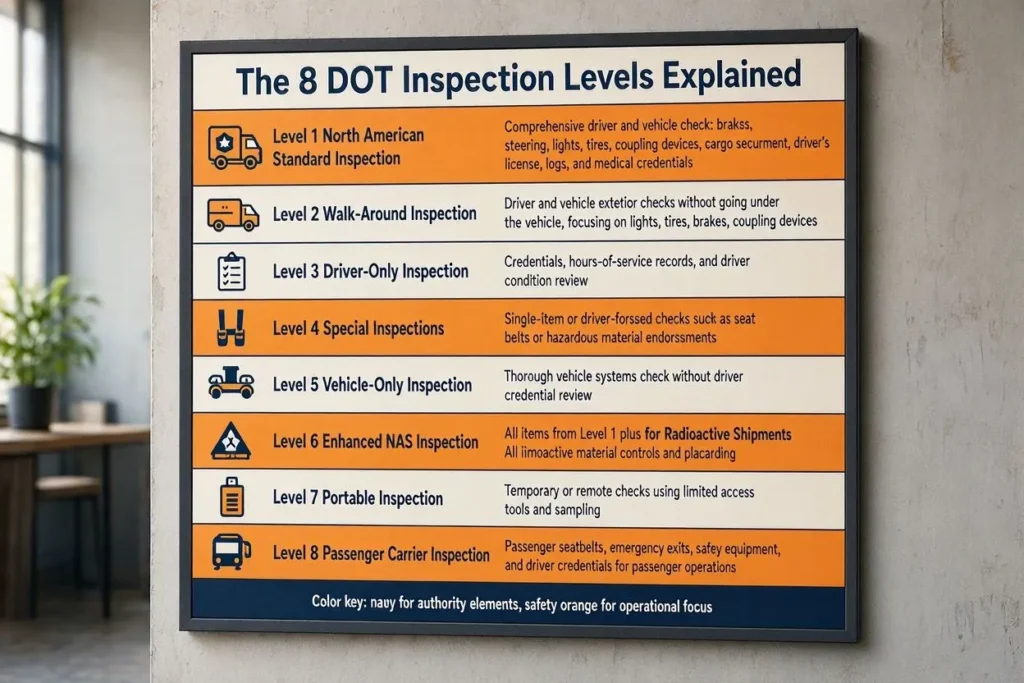
DOT inspections fall into 8 distinct levels, each covering a different mix of driver credentials, vehicle systems, and cargo type. Knowing which one applies tells you what you actually need on hand.
- Level 1 (North American Standard Inspection): The most thorough level, covering both driver and vehicle. Inspectors check brakes, steering, lights, tires, coupling devices, and cargo securement, plus the driver’s license, logs, and medical card. Takes about 60 minutes.
- Level 2 (Walk-Around Inspection): Similar to Level 1 but skips items that would require the inspector to get underneath the vehicle.
- Level 3 (Driver-Only Inspection): Focuses entirely on driver credentials, hours of service (HOS) records, and administrative documents. No mechanical check.
- Level 4 (Special Inspection): A one-time check targeting a specific item or trend, like a suspected defect pattern across a fleet.
- Level 5 (Vehicle-Only Inspection): Same scope as Level 1 but without the driver present, often done at a yard or impound lot.
- Level 6 (Enhanced NAS Inspection): Reserved for vehicles carrying radioactive shipments. Adds radiological screening on top of a Level 1 check.
- Level 7 (Jurisdictional Inspection): Applies to vehicles like school buses and public transit under local or state authority rather than FMCSA.
- Level 8 (Electronic Inspection): Conducted remotely through data exchange, verifying driver identity, vehicle location, and operating authority without a physical stop.
A furniture-delivery driver stopped at a routine weigh station usually gets a Level 1 or Level 2. A tanker hauling low-level radioactive medical isotopes faces a Level 6.
Pre-Trip DOT Inspection Checklist
Drivers have to check lights, tires, brakes, fluids, and coupling devices before every shift, as mandated under 49 CFR 396.13. This isn’t optional paperwork. It’s the first line of defense against roadside violations and mechanical breakdowns.
Work through these items in order:
- Test headlights, brake lights, turn signals, and reflectors for function and cleanliness.
- Check tire tread depth: at least 4/32 of an inch (3.2 mm) on steer axles and 2/32 of an inch (1.6 mm) on all other tires.
- Inspect air lines, brake chambers, and slack adjusters for leaks or damage.
- Verify fluid levels, including engine oil, coolant, and power steering fluid.
- Confirm the fifth wheel is locked, greased, and free of cracks, with the kingpin properly seated.
- Test the horn, windshield wipers, and mirrors for full operation.
If the previous vehicle inspection report flagged a defect, confirm the repair before departure and sign off on the correction. Skip the air-line check on a below-freezing morning in Minnesota and you’re risking a frozen valve failure mid-route, something a two-minute pre-trip inspection would have caught. This is also where state driving law intersects with mechanical upkeep: several states treat unrepaired lighting or brake defects as a standalone traffic code violation, separate from anything FMCSA records.
Full DOT Vehicle Inspection Checklist by Component
A full DOT vehicle inspection checklist covers 14 major systems, matching what FMCSA inspectors check during a Level 1 or Level 5 stop. Each system has its own failure points, so it helps to know them before you start.
- Brake System: service brakes, parking brake, drums or rotors, hoses, tubing, air compressor, and automatic slack adjusters.
- Coupling Devices: fifth wheels, pintle hooks, safety chains, and drawbar connections.
- Exhaust System: no leaks near the driver or sleeper compartment, secure mounting.
- Fuel System: no visible leaks, a secured tank, and a properly fitted filler cap.
- Lighting Devices: all required lights and reflectors operable and correctly positioned.
- Safe Loading: cargo, dunnage, and spare tires secured against shifting.
- Steering Mechanism: free play within limits, no worn linkage or leaking gear box.
- Suspension: intact springs, tight U-bolts, no cracked hangers.
- Frame: no cracks, corrosion, or bent members.
- Tires: adequate tread, no cuts or bulges, correct inflation.
- Wheels and Rims: no cracks, secure lug nuts, intact welds.
- Windshield Glazing: no cracks obstructing the driver’s view.
- Windshield Wipers: fully functional, no missing blades.
- Rear Impact Guard: properly attached, correct size and placement.
A carrier running a mixed fleet of flatbeds and reefers applies this same 14-point structure to both, adjusting only the cargo securement details for load type. Every item traces back to a specific rule under 49 CFR 393, so a defect in any category can generate a citable violation, a mandatory repair order, and sometimes a separate ticket under the local vehicle code.
DOT Driver Documentation Checklist
Drivers need to carry 7 core documents during any DOT inspection to satisfy Level 1, 2, or 3 requirements. Missing paperwork counts as a violation even when the vehicle itself is in perfect shape.
- Valid commercial driver’s license (CDL) with correct endorsements
- Medical examiner’s certificate, current and unexpired
- Record of Duty Status (RODS) or electronic logging device (ELD) data
- Driver Vehicle Inspection Report (DVIR) from the prior trip
- Vehicle registration
- Proof of insurance
- Skill Performance Evaluation certificate, if applicable to the vehicle class
A driver pulled over three states from home base without a current medical card faces an automatic out-of-service order, no matter how well-maintained the truck is. Keeping digital backups of these documents on a phone or tablet saves you if the physical copies get lost or damaged in transit.
Most Common DOT Inspection Violations and Repair Fixes
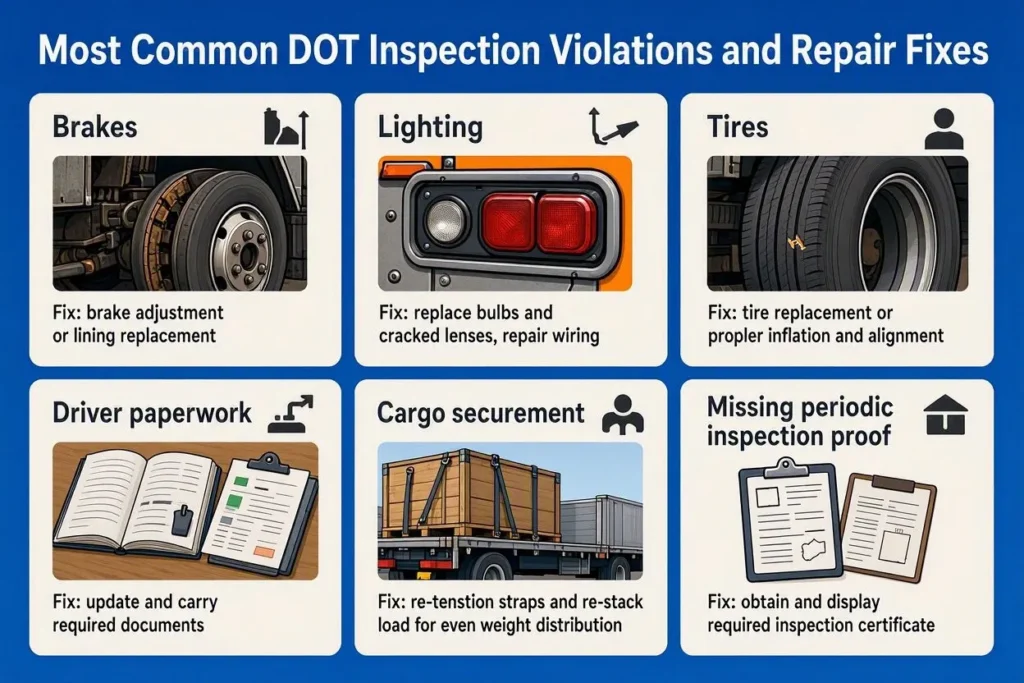
Six violations show up more than any others: brakes, lighting, tires, driver paperwork, cargo securement, and missing periodic inspection proof.
- Brake defects: out-of-adjustment brakes and worn linings remain the leading cause of out-of-service orders nationwide. The fix is almost always a straightforward brake adjustment or lining replacement, caught early.
- Inoperable lighting: burned-out bulbs, cracked lenses, missing reflectors. One of the easiest violations to prevent with a five-minute walk-around and a spare bulb kit.
- Tire problems: low tread depth, flat spots, slow air leaks. These create a safety hazard and an automatic inspection stop, though most get caught and repaired at the shop before ever reaching the road.
- Driver paperwork issues: expired medical cards, missing CDL endorsements, incomplete hours-of-service logs. These are documentation problems, not mechanical ones, but they’re just as likely to draw a citation under state driving law.
- Cargo securement failures: loose straps, damaged chains, improperly rated tie-downs for the load weight.
- Missing periodic inspection proof: failing to carry documentation of the annual inspection required under 49 CFR 396.17.
Every one of these ties directly to a line item on the standard checklist. Fleets that run pre-trip checks and stay current on scheduled repairs see fewer roadside failures than those relying on memory alone.
How a DOT Inspection Affects Your CSA Score
A DOT inspection affects a carrier’s Compliance, Safety, Accountability (CSA) score by adding points to one of seven BASIC (Behavior Analysis and Safety Improvement Category) categories every time a violation is recorded. These categories include Unsafe Driving, Hours-of-Service Compliance, Vehicle Maintenance, and Hazardous Materials Compliance, among others. Points build up over a rolling 24-month window and directly influence a carrier’s standing with FMCSA’s Safety Measurement System (SMS).
A carrier that racks up repeated Vehicle Maintenance violations, like brake and lighting defects, can watch its BASIC score climb into a range that triggers a targeted intervention or full compliance review. If a carrier believes an inspection result was recorded in error, it can file a challenge through FMCSA’s DataQs system to request a correction. High CSA scores also affect insurance underwriting, since many carriers now check a fleet’s SMS profile before extending competitive rates.
What Happens If You Fail a DOT Inspection
Failing a DOT inspection results in an out-of-service order. The vehicle can’t legally operate until every cited defect is repaired and verified. The driver has to deliver the roadside inspection report to the motor carrier within 24 hours, and the carrier has 15 days to sign and return the corrected report confirming repairs.
Consequences scale with severity. A minor lighting violation might only need a quick repair and a signature. A cracked frame or brake failure can strand a loaded trailer for days while parts get sourced and repairs get installed at a certified shop. Carriers must retain the corrected report for 12 months following the inspection date, and repeated failures on the same vehicle or driver raise flags in the carrier’s SMS profile, inviting closer scrutiny on future stops under both federal regulation and state driving law.
How to Prepare for a DOT Inspection
Run a full pre-trip check against the vehicle checklist, confirm all driver documents are current, and address any open DVIR defects before departure. That’s really the whole game.
Follow these steps in sequence:
- Walk the full 14-point vehicle checklist, starting with brakes and tires since they cause the most violations.
- Confirm the CDL, medical card, and insurance documents are current and accessible, either in a physical folder or a digital backup.
- Review the prior DVIR for unresolved defects and verify the repair was signed off.
- Check that the annual periodic inspection sticker or decal is displayed and current, as required under 49 CFR 396.21.
- Keep the cab and exterior clean and organized. A cluttered workspace slows down an inspector’s review of both the vehicle and the paperwork.
- Digitize key records so a lost paper copy doesn’t cause a documentation violation.
A fleet manager overseeing 40 trucks can cut inspection failures significantly by requiring photo-documented pre-trip checks through a mobile DVIR app instead of relying on paper logs that are easy to skip. Preparation this consistent turns a DOT inspection checklist from a reactive tool into a daily habit, one that protects both safety and the bottom line.
Vehicle Maintenance and Repair Schedule
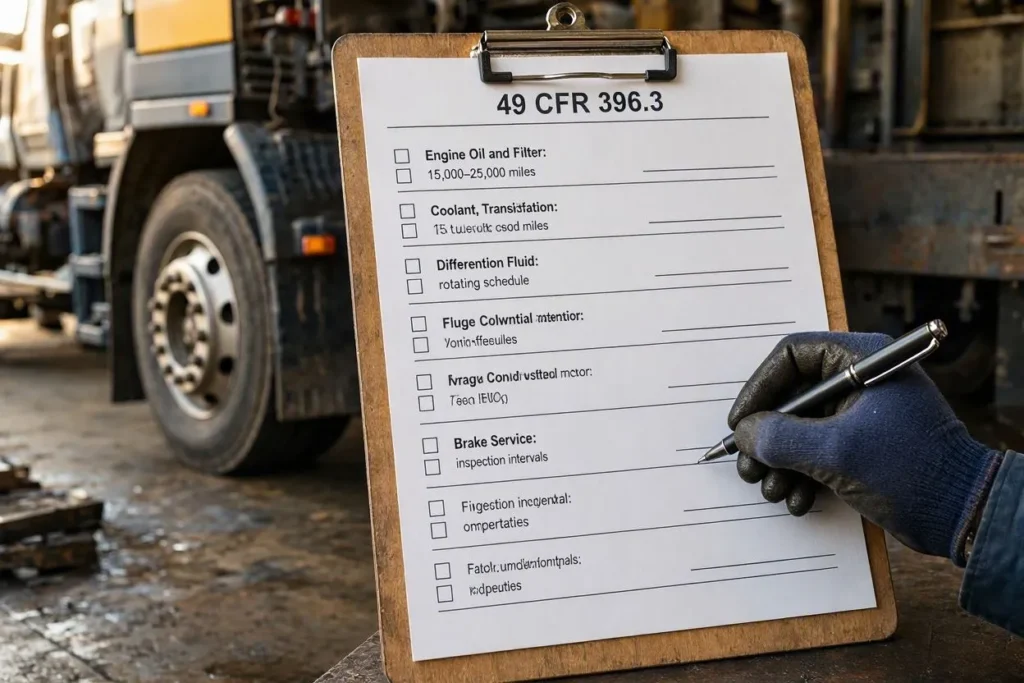
Preventive maintenance is what keeps a truck out of the repair bay and off the out-of-service list. A written maintenance schedule, required under 49 CFR 396.3, spells out how often each system gets serviced and who signs off on the work.
- Oil and fluid changes: engine oil and filter every 15,000 to 25,000 miles depending on duty cycle, with coolant, transmission fluid, and differential fluid checked on a rotating schedule.
- Brake service: inspect linings, drums, and rotors at every service interval, and replace brake shoes before they wear past the minimum thickness spec.
- Tire rotation and replacement: rotate tires to even out wear, replace when tread drops below the legal minimum, and repair slow leaks before they become blowouts.
- Belt and hose replacement: swap serpentine belts and coolant hoses on a mileage or age-based interval. A snapped belt on the highway can strand a loaded trailer.
- Filter changes: air, fuel, and cabin filters cause drivability problems long before they cause outright failures, so replacing them on schedule is cheaper than the diagnostic time later.
- Battery and electrical checks: corrosion on terminals and a weak alternator both show up as slow-crank symptoms before they cause a dead battery on the road.
A shop technician logging repair work should record parts replaced, labor hours, and the mechanic’s certification number on the maintenance record. That paperwork is exactly what an auditor or inspector will ask to see if a defect resurfaces. Carriers that outsource repairs to a third-party garage still own the compliance risk, so it’s worth confirming the shop’s work matches the same standard a Level 1 inspector applies.
Driving Laws, Codes, and Regulatory Requirements
DOT inspections sit inside a bigger web of driving laws and vehicle codes that vary by jurisdiction. Federal rules set the floor, but states layer on their own codes for registration, weight limits, and equipment standards.
- Federal Motor Carrier Safety Regulations (FMCSRs): the core body of federal law under 49 CFR Parts 350 to 399, covering everything from hours-of-service rules to drug and alcohol testing.
- State vehicle codes: each state maintains its own code for things like maximum axle weight, permitted trailer length, and local equipment requirements that go beyond the federal minimum.
- Hazardous materials regulations: 49 CFR Parts 171 to 180 govern placarding, packaging, and driver endorsements for carriers hauling regulated hazmat loads.
- International Registration Plan (IRP) and IFTA: interstate carriers register under these agreements to distribute registration fees and fuel tax across the states they operate in.
- CDL law under 49 CFR Part 383: sets the licensing standard, endorsement categories, and disqualification rules that every commercial driver has to meet.
Violating any of these codes, not just the mechanical items on the inspection checklist, can result in citations separate from an FMCSA out-of-service order. A driver who’s mechanically compliant but running an expired IRP cab card or missing a state-specific permit can still get cited under local driving law. A full compliance check has to cover both the federal inspection checklist and whatever state-level legal requirements sit on top of it.
Conclusion
A DOT inspection checklist works best as a daily habit, not a once-a-year scramble before the annual sticker expires. Carriers that walk through the full 14-point vehicle checklist, keep up with scheduled repair work, keep driver documentation current, and correct DVIR defects immediately see fewer out-of-service orders and lower CSA points over time. Staying ahead of the mechanical repair schedule and the state and federal driving codes that govern a fleet is what actually keeps trucks legal and on the road. Brakes and tires still cause most roadside failures nationwide, so those two systems deserve the first look, and the first repair dollar, every time a truck leaves the yard.
FAQs

Esther Howard
Esther Howard leads TruckingHow’s trucking, commercial driving, and transportation content division. She specializes in CDL training, trucking regulations, fleet operations, truck maintenance, and logistics best practices. With over a decade of experience researching the commercial transportation industry, Esther brings a practical, research-driven approach to driver education, safety standards, and industry regulations. She is the primary author of TruckingHow’s CDL guides, trucking career resources, maintenance tips, and transportation content, helping drivers, fleet owners, and trucking professionals make informed decisions on and off the road
Related Posts