
What Is a Dry Van? Dimensions, Freight and Driver Guide
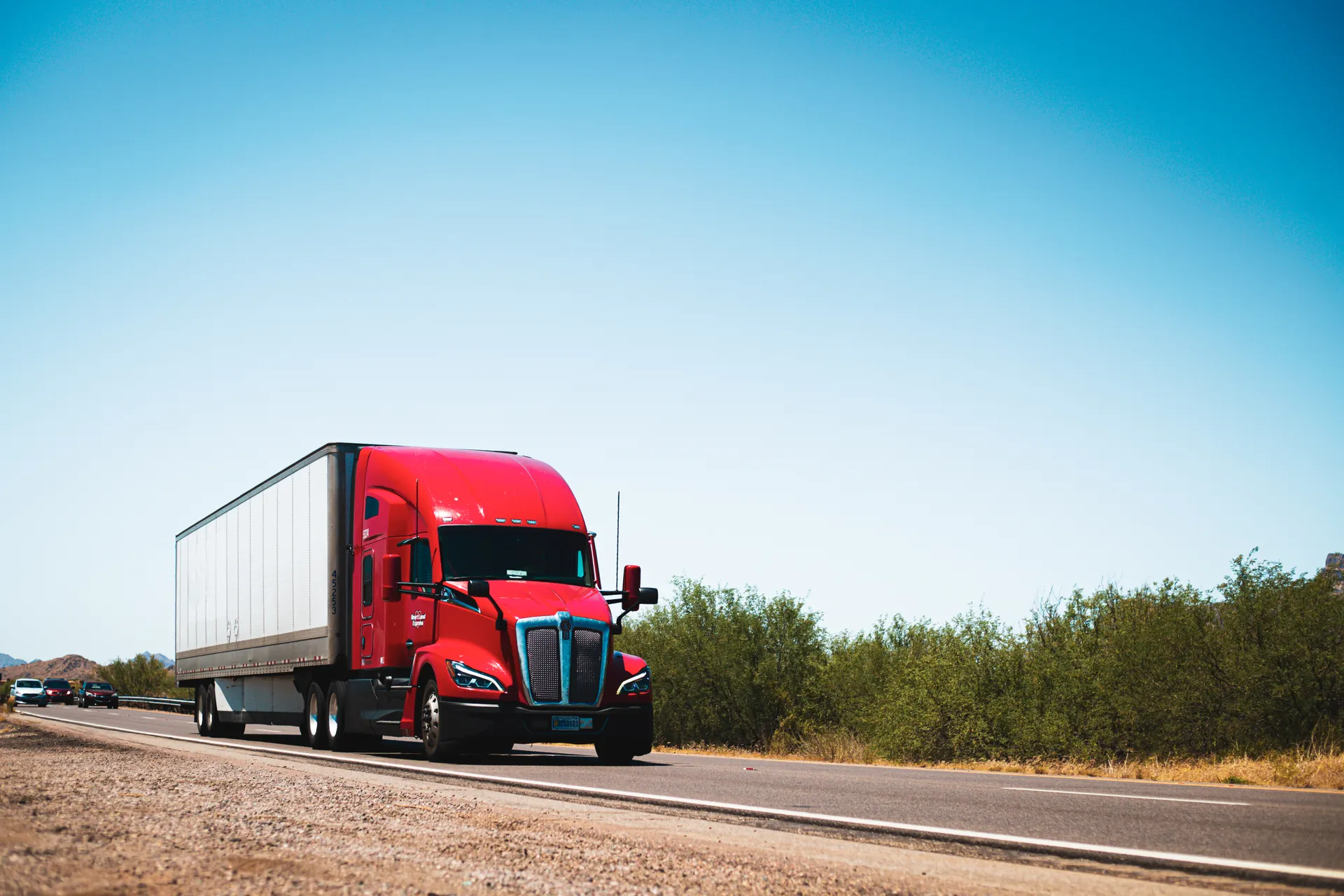
A dry van is an enclosed, non-temperature-controlled semi-trailer that shippers, carriers and freight brokers use to transport boxed and palletized general freight while protecting it from weather, theft and road debris. It’s the standard equipment for US truckload freight transport. Most units measure 53 ft (16.15 m) long and 102 in (2.59 m) wide, and each shipment rides behind a semi-tractor with a licensed commercial driver at the wheel, moving freight from shipper to receiver across the supply chain.
Key Takeaways
- A dry van is an enclosed, non-temperature-controlled trailer that transports packaged, palletized, non-perishable general freight for shippers and freight carriers.
- The standard US dry van measures 53 ft (16.15 m) long and 102 in (2.59 m) wide and holds 26 standard pallets loaded straight and single-stacked.
- Federal rules cap gross vehicle weight at 80,000 lb (36,287 kg) on the Interstate System, so a 53 ft dry van typically carries 42,000 to 45,000 lb (19,051 to 20,412 kg) of cargo.
- A reefer adds insulation and a refrigeration unit, so a dry van is the right choice whenever a freight shipment needs no temperature control.
- Driving a tractor-trailer dry van requires a Class A commercial driver’s license (CDL) and compliance with Federal Motor Carrier Safety Administration (FMCSA) hours-of-service rules.
What Is a Dry Van in Trucking?
In trucking and freight transport, a dry van is a fully enclosed box trailer with no refrigeration or heating that a semi-tractor pulls to move dry, packaged, non-perishable cargo, such as boxed consumer goods, paper products and canned food, from a shipper’s loading dock to a receiver’s loading dock.
“Dry” means no temperature control. It has nothing to do with moisture in the cargo. The label simply signals that the freight can ride safely at whatever the outside air temperature happens to be on that trip.
The box shields cargo from rain, snow, sun and road spray. Theft is harder too. Solid walls and sealed rear doors mean nobody can see the load, let alone reach it, without first breaking the seal on the back of the trailer.
Dry vans handle both full truckload (FTL) and less-than-truckload (LTL) freight, which keeps them busy across very different kinds of shipments and makes them the most common equipment type in US freight logistics. Load boards such as DAT tag them “V” for van, and freight brokers post more dry van loads than any other equipment type.
Dry Van Truck vs Dry Van Trailer
A dry van trailer is the enclosed box that holds the freight, and a dry van truck is the full rig that transports it: a semi-tractor coupled to the trailer through a fifth wheel and kingpin.
The terms get mixed up constantly. Someone asking what is a dry van truck usually means the complete tractor-trailer dry van combination seen on the highway.
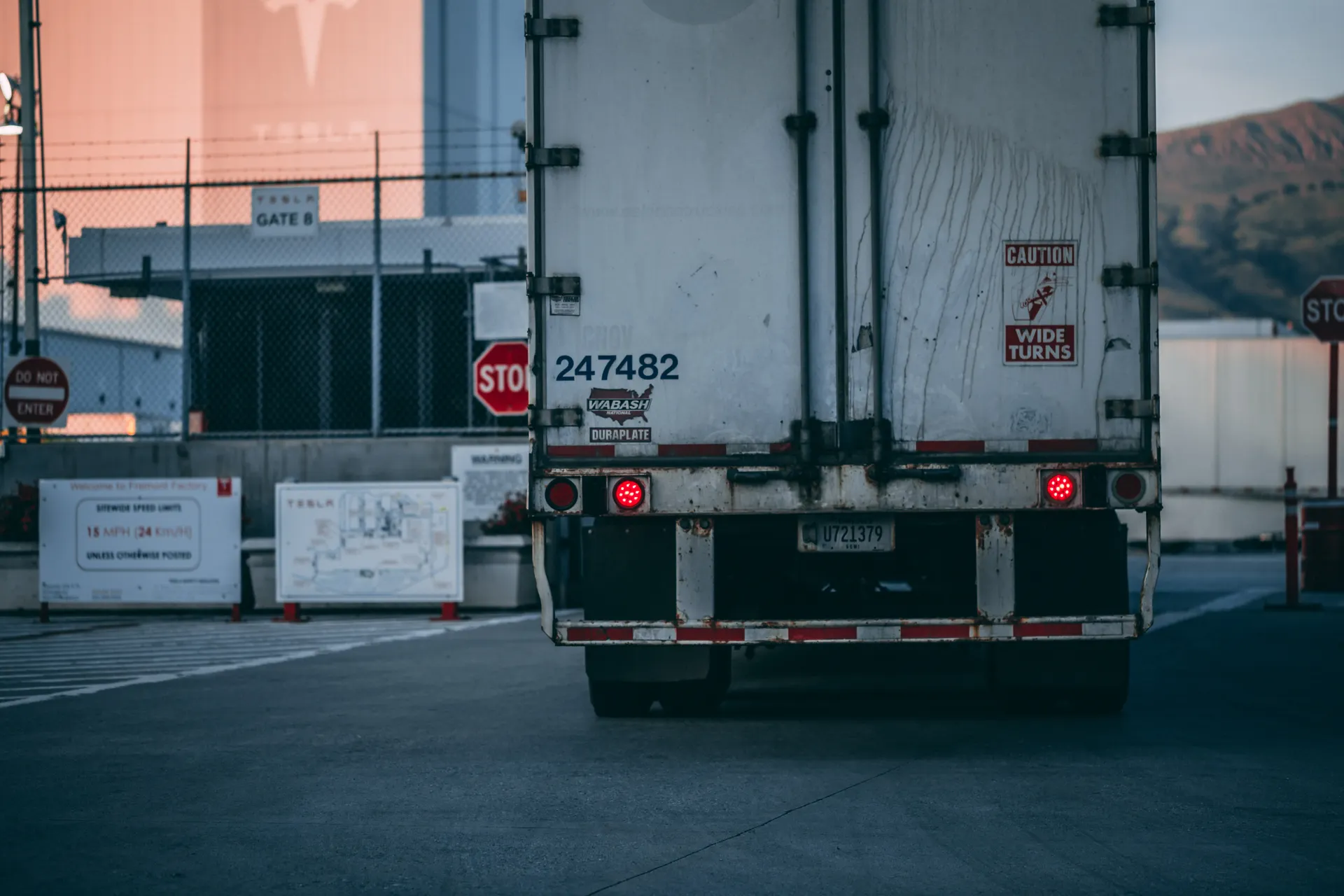
A search for what is a dry van trailer points only to the unpowered box. It has no engine. Freight carriers drop these trailers at shipper docks for loading and return to collect them once the freight is aboard and the doors are sealed, then haul the shipment to the receiver or distribution center.
How a Dry Van Trailer Is Built
A dry van trailer combines a flat floor, solid walls, a sealed roof and rear doors on a steel frame with two rear axles, all designed to keep freight secure from pickup to delivery. Each part comes in several versions, and each choice affects how much freight a carrier can haul and how fast a shipment loads.
| Component | Common Options | Purpose |
|---|---|---|
| Walls | Composite plate or sheet-and-post aluminum | Protect cargo and maximize interior width |
| Floor | Laminated hardwood or composite | Supports forklifts and pallet jacks |
| Rear Doors | Swing doors or roll-up door | Full-height access or tight-dock opening |
| Roof | Aluminum or translucent fiberglass | Translucent panels let daylight inside |
| Axles | Sliding tandem axles | Shift weight and meet state length rules |
| Cargo Control | Logistic posts, E-track, load bars | Stop freight from shifting in transit |
Swing doors clear the full rear opening. Roll-up doors fit tight docks where swing doors can’t open, though they cost usable door height because the door panels roll up and store against the ceiling.
Freight carriers and fleets source their dry van equipment from major US manufacturers such as Wabash, Great Dane, Utility Trailer, Hyundai Translead and Stoughton Trailers. Spec sheets differ by brand, so shippers should confirm the carrier’s equipment before tendering tall or heavy freight.
What Are Standard Dry Van Dimensions?
For freight planning, a standard US dry van trailer measures 53 ft (16.15 m) long and 102 in (2.59 m) wide on the outside, with an exterior height of about 13 ft 6 in (4.11 m), while 48 ft (14.63 m) and 28 ft (8.53 m) trailers serve older fleets, doubles and city work.
Dry van dimensions follow federal freight transportation size rules. Title 23 of the Code of Federal Regulations (CFR) Part 658 caps width at 102 in (2.59 m) for trucks running on the National Network.
That regulation also stops states from limiting semitrailers on the National Network to anything shorter than 48 ft (14.63 m). Most states allow 53 ft trailers there.
Height is different. No federal limit exists, so each state sets its own, and the figure is most often 13 ft 6 in (4.11 m) or 14 ft (4.27 m).
| Trailer | Length (ft / m) | Width (in / m) | Typical Use |
|---|---|---|---|
| 28 ft Pup | 28 ft / 8.53 m | 102 in / 2.59 m | Double trailers for LTL linehaul |
| 48 ft Van | 48 ft / 14.63 m | 96 or 102 in / 2.44 or 2.59 m | Older fleets and some regional routes |
| 53 ft Van | 53 ft / 16.15 m | 102 in / 2.59 m | Standard FTL and long-haul freight |
53-Foot Dry Van Interior Measurements
For loading freight, a 53 ft dry van offers about 52 ft 6 in (16.0 m) of interior length, roughly 98 to 101 in (2.49 to 2.57 m) of interior width and roughly 108 to 110 in (2.74 to 2.79 m) of interior height. Builders differ. Exact figures vary by manufacturer and wall construction, so two 53 ft trailers from different builders rarely match inch for inch.
| Measurement | Imperial Value | Metric Value |
|---|---|---|
| Interior Length | About 52 ft 6 in | About 16.0 m |
| Interior Width | 98 to 101 in | 2.49 to 2.57 m |
| Interior Height | 108 to 110 in | 2.74 to 2.79 m |
| Cubic Capacity | 3,800 to 4,000 cu ft | 108 to 113 m³ |
The cubic capacity figures are calculated by multiplying the typical interior measurements in this table, so treat them as estimates rather than guarantees when planning a freight shipment. Tall freight needs a spec check with the carrier. A roll-up door reduces the opening height at the rear.
How Many Pallets Fit in a Dry Van?
A 53 ft dry van shipment holds 26 standard 48 in by 40 in (1.22 m by 1.02 m) pallets loaded straight and single-stacked, and up to 30 pallets when the pallets are turned sideways. Stackable freight doubles those counts.
The math is simple. Divide about 630 in (16.0 m) of interior length by a 48 in pallet and you get 13 rows, with two pallets side by side for 26 total. Turn each pallet so its 40 in side faces forward, and the trailer fits 15 rows, or 30 pallets.
| Loading Pattern | Pallet Count | Notes |
|---|---|---|
| Straight, Single-Stacked | 26 | Most common pattern |
| Turned, Single-Stacked | 30 | Needs careful forklift work |
| Straight, Double-Stacked | 52 | Only for stackable, lighter freight |
| Turned, Double-Stacked | 60 | Rare; watch the weight limit |
Shorter trailers work the same way. Take the interior length from the 48 ft or 28 ft spec sheet and divide it by whichever pallet side faces forward.
How Much Weight Can a Dry Van Carry?
A loaded tractor and dry van combination can weigh no more than 80,000 lb (36,287 kg) gross on the Interstate System under 23 CFR Part 658, which leaves a typical 53 ft dry van with a legal cargo payload of roughly 42,000 to 45,000 lb (19,051 to 20,412 kg).
To find the real freight payload, start at 80,000 lb and subtract the weight of the tractor, the empty trailer, the fuel and the driver. Lighter equipment helps. A lighter tractor or a composite-floor trailer frees up extra pounds for freight, which raises the revenue a carrier earns per load.
Don’t guess. Shippers and carriers should weigh every heavy freight load on a certified truck scale, such as a CAT Scale, before the truck reaches the first state weigh station on its route.
Freight often “cubes out” or “weighs out” first. Paper towels are the familiar light example, filling the trailer’s space while staying well below the weight limit. Bottled water does the opposite. It’s dense enough to hit the weight limit long before it covers the floor.
The Federal Bridge Formula and Axle Limits
The Federal Bridge Formula limits how much freight weight any group of axles can carry based on how many axles there are and how far apart they sit. It shields bridges from concentrated loads and shapes how shippers build heavy freight shipments.
The formula reads W = 500 [(LN / (N – 1)) + 12N + 36]. W stands for the maximum weight in pounds on the axle group. L measures the distance in feet between the outer axles, and N simply counts how many axles that group contains.
| Axle Group | Limit (lb) | Limit (kg) |
|---|---|---|
| Single Axle | 20,000 | 9,072 |
| Tandem Axle | 34,000 | 15,422 |
| Gross Vehicle Weight | 80,000 | 36,287 |
A five-axle tractor-trailer commonly reaches 80,000 lb with about 12,000 lb (5,443 kg) on the steer axle and 34,000 lb (15,422 kg) on each tandem. The numbers add up neatly.
Sliding tandem axles shift freight weight between the drive axles and the trailer axles. States add their own freight transportation rules. California, for example, caps the kingpin-to-rear-axle distance at 40 ft (12.19 m) for 53 ft trailers, and many other states set caps of their own.
What Goes in a Dry Van?
A dry van carries packaged, palletized and boxed freight that tolerates outside temperatures, including consumer packaged goods, shelf-stable food, retail and e-commerce merchandise, paper products, auto parts, packaged building materials and furniture, as long as the load fits through the rear doors and stays within legal weight limits.
| Freight Category | Examples | Dry Van Fit |
|---|---|---|
| Consumer Packaged Goods | Paper towels, detergent, snacks | Excellent |
| Shelf-Stable Food | Canned goods, dry pasta, bottled water | Excellent; water weighs out fast |
| Retail and E-Commerce | Apparel, electronics, toys | Excellent |
| Packaged Building Materials | Bagged cement, boxed flooring, shingles | Good; watch weight |
| Auto Parts | Boxed parts, tires | Good |
| Furniture and Appliances | Mattresses, washers, sofas | Good; cubes out before weight |
Food freight falls under the Food and Drug Administration (FDA) Sanitary Transportation rule, so carriers must supply clean trailers that protect food shipments from contamination. Dirty equipment fails that test.
Freight That Does Not Belong in a Dry Van
Some freight needs a different trailer and a different freight transport mode. Temperature needs and sheer size rule out plenty of loads, and some cargo fails simply because it can’t go in through the rear doors.
Perishable food, frozen goods and many pharmaceuticals need a refrigerated trailer.
Oversize machinery, steel beams and long lumber need a flatbed, step deck or lowboy.
Freight that loads by crane from the side or top cannot enter through rear doors.
Liquid bulk needs a tanker, and loose grain needs a hopper trailer.
Livestock needs a ventilated livestock trailer.
Hazardous materials are a separate freight case. They can ride in a dry van with proper placards and shipping papers, but the driver also needs a hazardous materials (H) endorsement on the license.
Dry Van vs Reefer, Flatbed and Box Truck
Choose a dry van for packaged freight that needs weather protection but no temperature control, a reefer for perishable or temperature-sensitive cargo, a flatbed for oversized loads that need crane or side loading, and a box truck for small local deliveries that cannot fill a full semi-trailer.
| Equipment | Best For | Temp Control | Loading Method | CDL Required |
|---|---|---|---|---|
| Dry Van | Packaged, palletized general freight | None | Rear dock, forklift | Class A |
| Reefer | Produce, meat, frozen food | Heating and cooling unit | Rear dock, forklift | Class A |
| Flatbed | Steel, lumber, machinery | None | Side, top or crane | Class A |
| Box Truck | Local deliveries, small loads | Usually none | Rear door or liftgate | Only above 26,000 lb rating |
Dry Van vs Reefer
The verdict: pick a dry van when freight can ride at outside temperature, and pick a reefer when it cannot. A reefer is a refrigerated trailer with insulated walls and a diesel-powered unit that cools or heats the load.
| Feature | Dry Van | Reefer |
|---|---|---|
| Temperature Control | None | Refrigeration unit cools or heats |
| Insulation | None | Insulated walls, roof and floor |
| Interior Width | Wider | Slightly narrower from insulation |
| Equipment Cost | Lower | Higher |
| Driver Tasks | Load checks and seals | Pre-cooling and temperature monitoring |
| Freight Options | Dry freight only | Cold or dry freight |
Reefer freight usually pays freight carriers higher rates, since the equipment costs more and the refrigeration unit burns its own fuel. How much more? No verified rate gap is available here, so check DAT for current dry van vs reefer rates.
Dry Van vs Flatbed
The verdict: a dry van wins for freight that fits through rear doors and needs protection, while a flatbed wins for loads that are too tall, too long or too heavy to load from the back. A flatbed has no walls or roof.
On a flatbed, the driver secures the freight shipment with chains and straps, then covers it with tarps, all under FMCSA cargo securement rules. Dry vans need less. Their walls hold freight in place, and load bars on E-track handle the rest.
Is a Dry Van the Same as a Box Truck?
No, a dry van is not the same as a box truck, because a dry van is a detachable freight semi-trailer pulled by a separate tractor, while a box truck mounts its cargo box permanently on the same chassis as the cab. Box trucks, also called straight trucks, typically run 10 to 26 ft (3.05 to 7.92 m) long.
Many box trucks carry a gross vehicle weight rating (GVWR) of 26,000 lb (11,793 kg) or less, which means drivers can run them without a CDL. Their niche is local freight. They suit local deliveries and liftgate drops, along with small freight shipments that would waste space in a 53 ft trailer.
Which Trailer Do I Need for My Freight?
Match the trailer to the freight’s temperature needs, size, weight and loading method: a dry van fits most palletized, non-perishable loads, while perishables need a reefer, oversize or crane-loaded freight needs a flatbed or lowboy, and small local shipments are cheaper in a box truck or LTL service.
| Freight Type | Best Trailer | Dry Van Fit Reason |
|---|---|---|
| Pallets of Bottled Water | Dry van | Fits; watch the weight limit |
| Fresh Produce | Reefer | No temperature control in a dry van |
| Ice Cream | Reefer | Needs frozen temperatures |
| Steel Beams | Flatbed | Too long; needs crane loading |
| Excavator | Lowboy or step deck | Too tall and too heavy |
| Four Pallets for Local Stores | Box truck or LTL | A full trailer wastes capacity |
| Bulk Grain | Hopper trailer | Loose bulk needs top loading |
Dry Van Shipping for Shippers
Shippers book dry van capacity by choosing full truckload (FTL) or less-than-truckload (LTL) service and tendering the load to a carrier or freight broker at a spot rate for one-time moves or a contract rate for recurring lanes, with price driven by distance, lane demand, fuel and accessorial charges.
A spot rate is a one-time freight price for a single load at current freight market conditions. Contract rates differ. Shipper and carrier negotiate one freight rate for repeat loads on the same lane, and that price holds over a set period.
Full Truckload vs Less-Than-Truckload
The verdict: choose FTL when freight fills most of a dry van or needs fast, direct transit, and choose LTL when a shipment covers only a few pallets. LTL carriers consolidate freight from several shippers in one trailer and route it through their terminal network.
| Factor | FTL | LTL |
|---|---|---|
| Trailer Use | One shipper fills the trailer | Several shippers share the trailer |
| Handling | Loaded once, no terminal transfers | Moves through terminals |
| Transit Speed | Direct and faster | Slower due to terminal stops |
| Pricing Basis | Per mile or flat per load | Freight class, weight and distance |
| Damage Risk | Lower | Higher from extra handling |
LTL pricing uses the National Motor Freight Classification (NMFC) class system, which rates freight by density, handling, stowability and liability. Get the class right.
What Changes Dry Van Shipping Rates?
No verified figure for current dry van freight rates per mile is available here, because freight rates change weekly; DAT Freight & Analytics publishes current spot and contract trends. Several factors move the price of every freight load.
| Factor | Effect on Rate |
|---|---|
| Lane Balance | Outbound-heavy markets cost more; return trips lack freight |
| Deadhead Miles | Empty miles to reach the pickup raise the price |
| Season | Fourth-quarter retail peak tightens capacity |
| Fuel Prices | Fuel surcharges rise with diesel prices |
| Lead Time | Same-day tenders pay spot premiums |
| Accessorials | Detention, lumper and layover fees add cost |
| Loading Method | Drop and hook saves driver time versus live loading |
How to Prepare a Dry Van Shipment
- Measure and weigh every pallet, and record the total weight and pallet count.
- Choose FTL or LTL service based on how much of the trailer the freight fills.
- Request quotes from carriers or brokers, and compare spot and contract options.
- Confirm dock hours, appointment times and whether the facility offers drop and hook.
- Stretch-wrap pallets tightly, and label each pallet with the shipper and receiver.
- Load heavy pallets on the floor and spread weight evenly from nose to tail.
- Secure the load with load bars or straps on E-track to stop shifting.
- Seal the doors, record the seal number on the bill of lading and share it with the receiver.
What Is a Dry Van Driver?
A dry van driver is a Class A commercial driver who transports an enclosed, non-refrigerated trailer of general freight between shippers, receivers, distribution centers and terminals, handling pre-trip inspections, trailer swaps, paperwork and safe over-the-road (OTR), regional or local driving under federal hours-of-service rules.

Many freight loads are drop and hook. The driver leaves one trailer at a facility and hooks to a preloaded one, then gets back on the road without waiting at the dock. Live loads work differently, since the driver waits while the shipper loads or the receiver unloads the trailer.
Dry van drivers usually stay out of the trailer during loading, which keeps the physical work light compared with jobs where drivers handle freight. Some loads are “no-touch.” Others require the driver to count pallets or check seals.
| Route Type | Typical Home Time | Description |
|---|---|---|
| OTR | Measured in weeks | Long trips across many states |
| Regional | Often weekly | Runs within a group of nearby states |
| Local | Daily | Short runs around one metro area |
Do You Need a CDL to Drive a Dry Van?
Yes, driving a dry van tractor-trailer requires a Class A commercial driver’s license (CDL), because the combination exceeds a 26,001 lb (11,794 kg) gross combination weight rating with a towed unit heavier than 10,000 lb (4,536 kg), the federal threshold under 49 CFR 383.91.
Interstate CDL holders must be at least 21 years old, and that federal minimum applies no matter which state issued the license. Intrastate rules differ. Most states allow intrastate driving at 18.
Follow these steps to earn a Class A CDL for dry van freight work.
- Pass a Department of Transportation (DOT) physical and get a medical examiner’s certificate.
- Pass the state knowledge tests and obtain a commercial learner’s permit (CLP).
- Complete Entry-Level Driver Training (ELDT) with a provider listed on the FMCSA Training Provider Registry.
- Pass the state skills test, which covers a pre-trip inspection, basic control and an on-road drive.
- Apply to freight carriers that hire new drivers for dry van freight.
Training isn’t optional anymore. ELDT has been mandatory for new Class A applicants since February 7, 2022, so first-time applicants must finish it before they take the skills test.
Hours of Service Rules for Dry Van Drivers
Federal hours-of-service rules limit how long dry van drivers can haul freight and work before they must stop to rest. The clock is electronic. Most drivers record their hours on an electronic logging device (ELD).
| Rule | Limit |
|---|---|
| Driving Limit | 11 hours after 10 consecutive hours off duty |
| Duty Window | No driving after the 14th hour on duty |
| Rest Break | 30 minutes after 8 cumulative hours of driving |
| Weekly Limit | 60 hours in 7 days or 70 hours in 8 days |
| Restart | 34 consecutive hours off resets the weekly limit |
How Much Do Dry Van Drivers Make?
No verified figure for dry van driver pay is available here, because the Bureau of Labor Statistics (BLS) reports wages for all heavy and tractor-trailer truck drivers rather than by trailer type. For live numbers, check the current BLS Occupational Outlook Handbook alongside carrier job postings.
| Pay Method | How It Works |
|---|---|
| Cents per Mile | Paid per dispatched or practical route mile |
| Percentage of Load | Share of linehaul revenue, common for owner-operators |
| Hourly | Common in local and dedicated jobs |
| Weekly Guarantee | Fixed minimum regardless of miles driven |
| Accessorial Pay | Extra pay for detention, layovers and stops |
Reefer and flatbed jobs add tasks such as temperature monitoring and load securement, and some carriers pay premiums for that work. Extra tasks, extra pay.
Pros and Cons of Dry Van Trailers
Dry vans offer shippers and carriers weather protection, cargo security, steady freight volume and simpler driver work, while their limits include rear-only loading, no temperature control, an interior height of about 9 ft (2.74 m) and rates that typically trail specialized trailers such as reefers and flatbeds.
| Factor | Dry Van Strength | Dry Van Limit |
|---|---|---|
| Cargo Protection | Sealed from weather and theft | Contents cannot be inspected in transit |
| Freight Volume | Most general freight fits | Perishables and oversize freight excluded |
| Loading | Fast dock and forklift loading | No side or crane loading |
| Driver Workload | No tarping or temperature checks | Long dock waits on live loads |
| Equipment Cost | Lower purchase and upkeep cost | Lower rates than specialized trailers |
Frequently Asked Questions
Conclusion
Anyone asking what is dry van freight now has a clear answer: enclosed, non-temperature-controlled cargo that moves in a 53 ft (16.15 m) trailer within an 80,000 lb (36,287 kg) federal gross limit. The rest is detail.
Shippers should keep using dry vans for packaged, palletized goods and switch to reefers, flatbeds or box trucks only when temperature, size or volume demands it. Budgets need planning too. Track DAT rate trends before contract season starts.
New drivers should expect dry van freight work to stay a common entry point into Class A careers. The equipment will keep changing. Trailer tracking and lighter materials are part of that shift, along with aerodynamic devices, but the basic enclosed box will keep moving most everyday freight across US supply chains.

Esther Howard leads trucking and commercial driving content at TruckingHow, covering CDL training, trucking regulations, fleet operations, and truck maintenance. With over a decade of experience researching the transportation industry, she brings a practical, research-driven approach to driver education and safety standards. Her guides help drivers, fleet owners, and trucking professionals make informed decisions on and off the road.
Related Posts