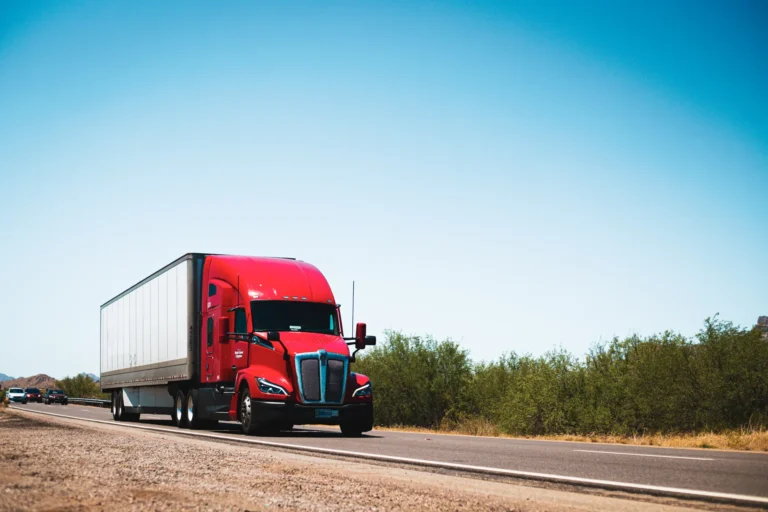
Class a vs Class B CDL: Key Differences Explained
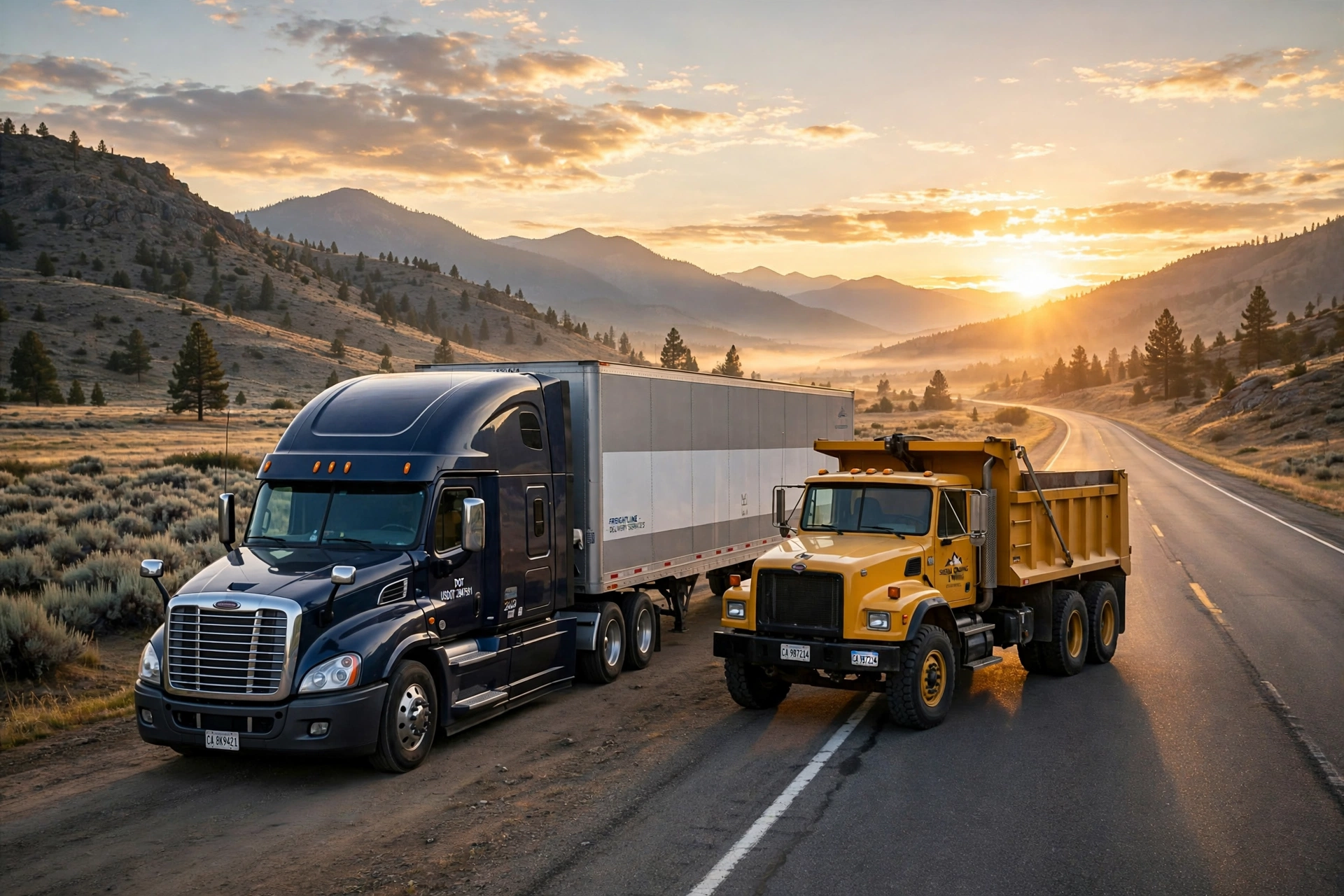
The Class A vs Class B CDL difference comes down to what the truck tows. A Class A commercial driver’s license (CDL) covers combination vehicles with a gross combination weight rating (GCWR) of 26,001 lb (11,794 kg) or more when the towed unit tops 10,000 lb (4,536 kg). A Class B CDL covers heavy single vehicles that tow 10,000 lb or less. Ratings decide it, not scale weight.
Key Takeaways
• A Class A CDL is required for combination vehicles rated at 26,001 lb (11,794 kg) or more GCWR when the trailer’s gross vehicle weight rating (GVWR) exceeds 10,000 lb (4,536 kg).
• A Class B CDL is required for single vehicles rated at 26,001 lb (11,794 kg) or more GVWR that tow no more than 10,000 lb (4,536 kg).
• Class A holders can drive Class B and Class C vehicles if they hold the right endorsements, under 49 CFR 383.91.
• First-time Class A and Class B applicants must complete Entry-Level Driver Training (ELDT) from a provider on the FMCSA Training Provider Registry, a rule in force since February 7, 2022.
• A Class B to Class A upgrade requires Class A ELDT, a Combination Vehicles knowledge test and a skills test in a combination vehicle.
• Interstate CDL drivers must be at least 21, and most states license intrastate CDL drivers at 18.
What Is the Difference Between Class a and Class B CDL?
The difference between Class A and Class B CDL license privileges is towed weight: Class A covers combination vehicles pulling a unit rated over 10,000 lb (4,536 kg), while Class B covers single vehicles rated 26,001 lb (11,794 kg) or more that tow 10,000 lb or less. Both classes come from federal rules. Your state issues the license.
A commercial driver’s license is a state-issued credential that lets a driver run commercial motor vehicles past federal limits on weight and passenger count, plus hazardous materials. Who sets those limits? The Federal Motor Carrier Safety Administration (FMCSA) does, while each state Department of Motor Vehicles (DMV) runs testing and issues the card.
Federal CDL license classifications fall into three groups, Classes A through C, all defined in 49 CFR 383.91. Non-commercial license names differ by state. A state can label its everyday license however it likes, but the commercial classes follow identical federal weight rules in every state.
This table compares the federal weight rules for each commercial class.
CDL Class | Vehicle Type | Weight Rule (lb / kg) | Towed Unit Limit (lb / kg) |
Class A | Combination vehicle | GCWR 26,001+ / 11,794+ | Over 10,000 / 4,536 |
Class B | Single vehicle | GVWR 26,001+ / 11,794+ | 10,000 / 4,536 or less |
Class C | Single or combination | Below Class A and B limits | N/A |
Class C is the narrow one. It applies only when a vehicle falls below the Class A and Class B limits yet is built to carry 16 or more passengers, counting the driver, or hauls hazardous materials in amounts that require placards.
How GCWR and GVWR Set the Line
Gross vehicle weight rating is the manufacturer’s maximum loaded weight for a single vehicle, printed on the manufacturer’s certification label. It’s a fixed number.
Gross combination weight rating covers more. It’s the maximum loaded weight of a power unit plus everything it tows. If the manufacturer lists no GCWR, federal rules add the power unit’s GVWR to the total weight of the towed unit and its load.
Scale weight doesn’t decide your license class; the ratings do, no matter what the truck weighs at the scale on a given day. Take a dump truck rated at 33,000 lb (14,969 kg) GVWR. Empty, it still needs a Class B CDL.
Why the Towed Unit Weight Matters
Most borderline cases turn on the 10,000 lb (4,536 kg) towed-unit rule. A truck and trailer can top 26,001 lb (11,794 kg) combined and still stay in Class B, provided the trailer’s own GVWR is 10,000 lb or less. The trailer’s rating is the hinge.
This table compares common truck-and-trailer setups and the license each one requires.
Vehicle Setup | Truck GVWR (lb / kg) | Trailer GVWR (lb / kg) | License Needed |
Straight truck, light trailer | 33,000 / 14,969 | 7,000 / 3,175 | Class B |
Straight truck, heavy trailer | 33,000 / 14,969 | 14,000 / 6,350 | Class A |
Heavy pickup, gooseneck trailer | 11,000 / 4,990 | 16,000 / 7,257 | Class A |
Heavy pickup, light trailer | 11,000 / 4,990 | 9,000 / 4,082 | No CDL |
The “No CDL” row assumes commercial use, with fewer than 16 occupants and no hazardous materials that require placards on the vehicle. Separate state rules govern personal RV towing.
Class a vs Class B CDL Side-By-Side Comparison
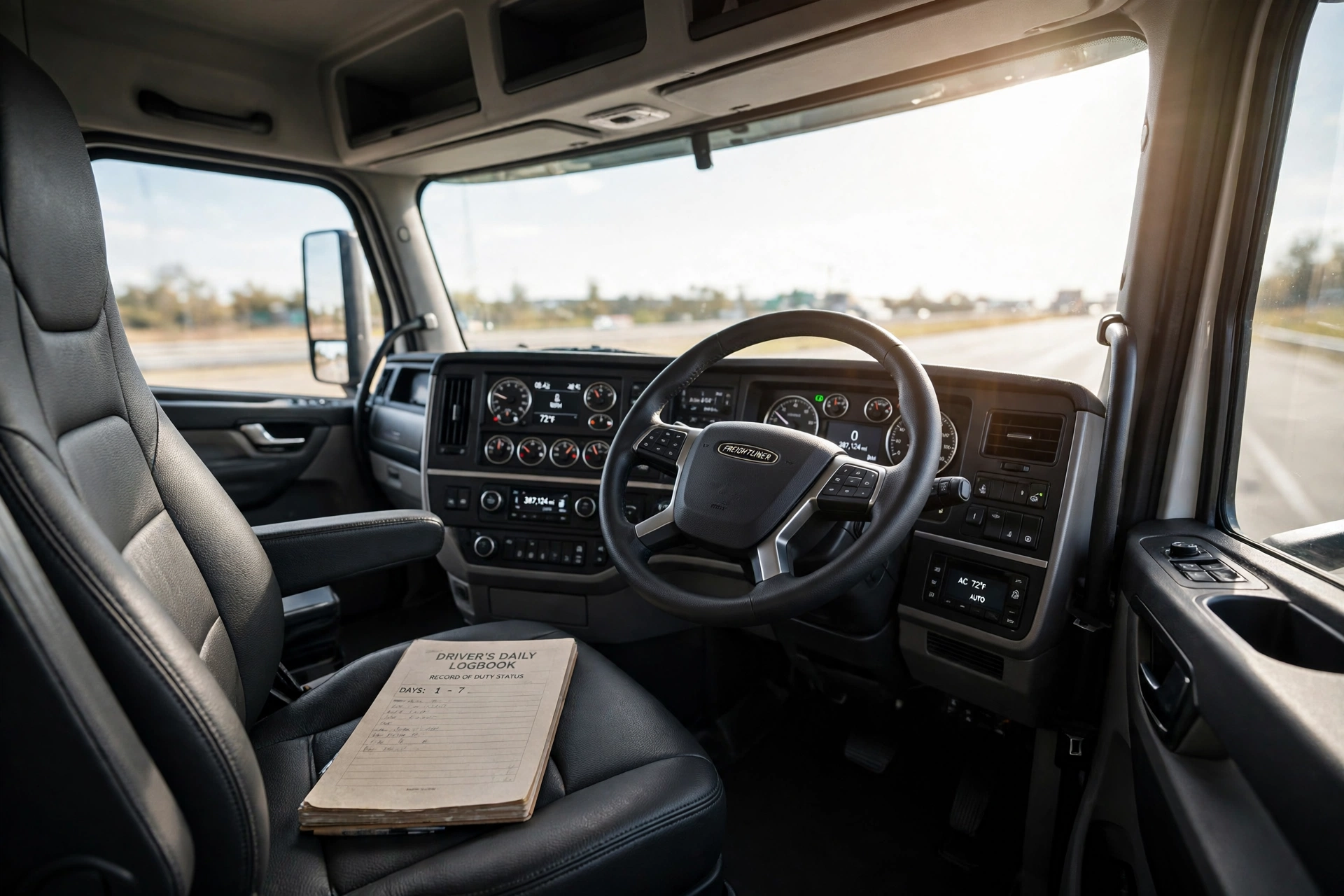
A Class A CDL is the broader license, because a Class A holder can drive tractor-trailers and, with the right endorsements, every Class B and Class C vehicle, while a Class B CDL stops at heavy single vehicles such as dump trucks, box trucks and buses. Class B still fits plenty of local careers.
The CDL Class A vs Class B split goes well past vehicle types, showing up again in how each license is tested and trained. Endorsement options differ too.
This table compares the two licenses factor by factor.
Factor | Class a CDL | Class B CDL |
Typical vehicles | Tractor-trailers, tankers, flatbeds | Dump trucks, box trucks, buses |
Trailer privilege | Heavy trailers allowed | Light trailers only |
Lower classes allowed | Class B and C, with endorsements | Class C, with endorsements |
Extra knowledge test | Combination Vehicles | None beyond General Knowledge |
T endorsement | Available | Not available |
ELDT curriculum | Class A theory and behind-the-wheel | Class B theory and behind-the-wheel |
Common route types | Local, regional, over-the-road | Mostly local and regional |
In a Class A CDL vs Class B matchup, Class A wins on flexibility, while Class B gets you licensed with fewer tests to pass. Pick based on the work.
What Is a Class a CDL?
A Class A CDL is a commercial driver’s license that authorizes the holder to operate a combination vehicle with a GCWR of 26,001 lb (11,794 kg) or more when the towed unit’s GVWR exceeds 10,000 lb (4,536 kg), which makes Class A the standard license for tractor-trailers.
Over-the-road (OTR) freight runs on Class A. Carriers require it for that work, where drivers haul freight across several states and spend their nights away from home.
The T endorsement belongs to Class A alone. Holders of that endorsement can pull double and triple trailers wherever state law allows them, a privilege no other CDL class can add.
Trucks That Require a Class a CDL
Each setup below requires a Class A CDL when the combination reaches 26,001 lb (11,794 kg) GCWR and the towed unit exceeds 10,000 lb (4,536 kg):
• Tractor-trailers pulling dry vans, refrigerated trailers or flatbeds
• Tanker combinations, which usually also need the N endorsement
• Livestock haulers and car haulers
• Dump trucks pulling heavy pup trailers
• Hotshot rigs, where heavy pickups tow gooseneck trailers
• Doubles and triples, which also need the T endorsement
What Can You Drive with a Class B CDL?
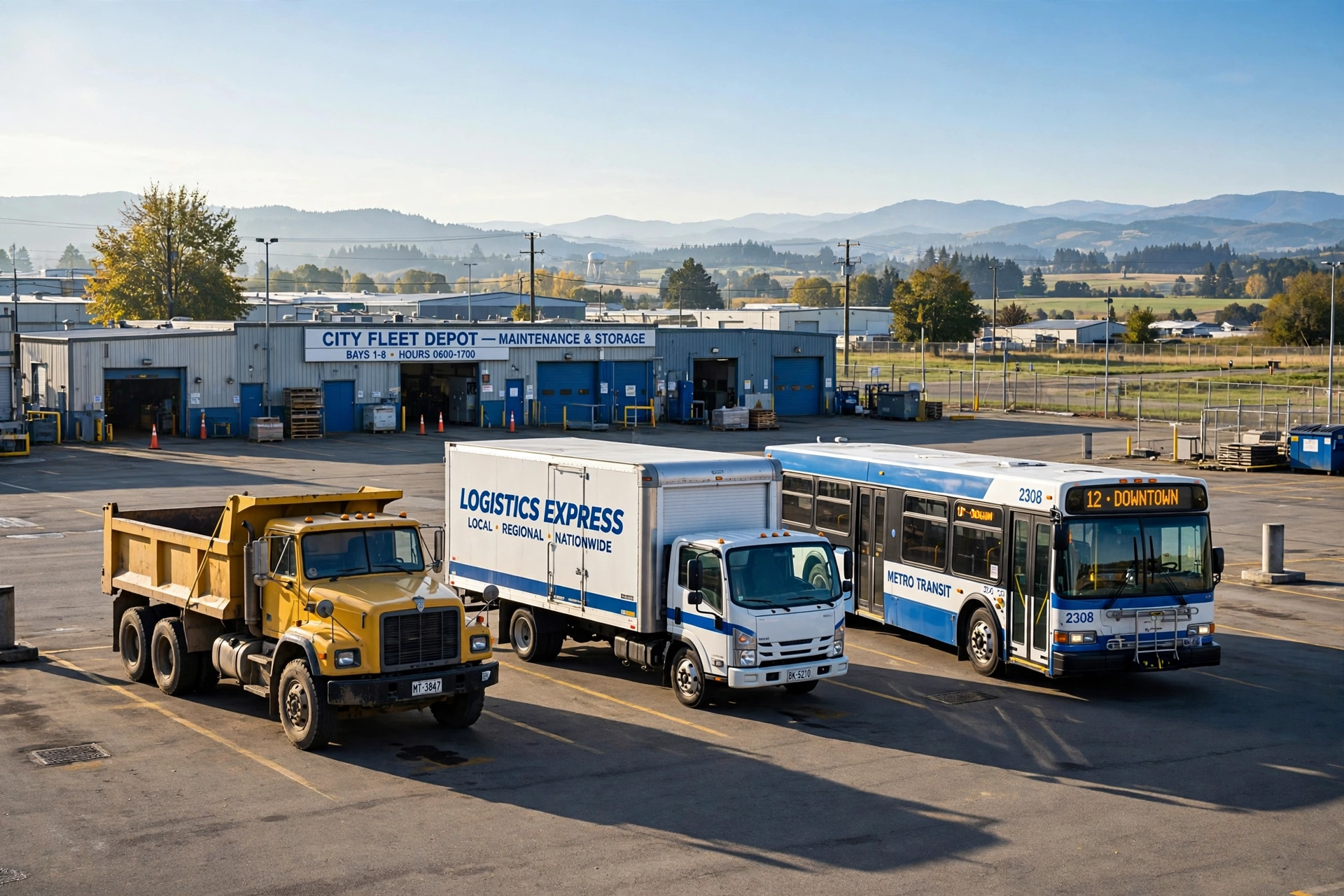
A Class B CDL lets you drive any single vehicle with a GVWR of 26,001 lb (11,794 kg) or more, including dump trucks, large box trucks, garbage trucks, cement mixers, city buses and school buses, and that vehicle may tow a trailer rated at 10,000 lb (4,536 kg) or less.
Class B vehicles show up most in local and regional work, where drivers start and end each shift at the same yard. Many of them sleep at home nightly. That’s the main reason career changers with families pick this license.
A Class B holder can drive Class C vehicles too. Any endorsement the vehicle requires still has to be on the license, such as the Passenger (P) endorsement for a bus. No class skips that step.
This table compares common Class B vehicles and the endorsements each one usually needs.
Class B Vehicle | Typical Work | Common Endorsement |
Dump truck | Construction, aggregate hauling | None |
Large box truck | Furniture, appliance and freight delivery | None |
Garbage truck | Municipal and private waste routes | None |
Cement mixer | Ready-mix concrete delivery | None |
City bus | Public transit routes | P |
School bus | Student transportation | P and S |
Straight tank truck | Fuel or water delivery | N, or X for fuel |
Can a Class B Driver Pull a Trailer?
Yes. A Class B driver can pull a trailer when the trailer’s GVWR is 10,000 lb (4,536 kg) or less. Think of a landscaping trailer hitched behind a straight truck, or a small equipment trailer riding behind a dump truck.
Any trailer rated over 10,000 lb (4,536 kg) behind a vehicle that pushes the combination to 26,001 lb (11,794 kg) or more GCWR requires a Class A CDL. Ratings count. The trailer’s actual load on a given day doesn’t.
Can a Class a CDL Drive Class B Vehicles?
Yes. A Class A CDL holder can drive Class B and Class C vehicles under 49 CFR 383.91, as long as the holder carries every endorsement the specific vehicle requires and no restriction on the license blocks that vehicle. A city bus still needs a P endorsement.
Endorsements stay mandatory in every class. A Class A driver who wants to haul fuel in a straight tank truck needs the Tank Vehicle (N) endorsement, or the combined X endorsement when the fuel requires hazmat placards.
Restrictions carry over too. A driver with an L restriction can’t drive an air-brake-equipped Class B dump truck, even with a Class A license.
This table compares which classes each license covers.
License Held | Class a Vehicles | Class B Vehicles | Class C Vehicles |
Class A CDL | Yes | Yes, with endorsements | Yes, with endorsements |
Class B CDL | No | Yes | Yes, with endorsements |
Class C CDL | No | No | Yes |
What Is a Class C Driver’s License?
A Class C driver’s license means two different things in the USA: a commercial Class C CDL for smaller vehicles that carry 16 or more passengers or placarded hazmat, or, in states such as California and Texas, the standard non-commercial license for ordinary cars and light trucks.
The commercial Class C CDL covers vehicles below the Class A and Class B weight limits. Think smaller. Passenger vans and small shuttle buses designed for 16 or more occupants, driver included, fall here, along with smaller trucks carrying placarded hazardous materials.
A commercial Class C license always requires at least one endorsement, usually P for passenger vehicles or Hazardous Materials (H) for hazmat. None comes without one.
Commercial Class C vs Standard Class C
Non-commercial Class C is never a CDL. California and Texas both use “Class C” for the regular license that most adults carry, while other states pick other letters, with New York using Class D and Florida using Class E.
This table compares the two meanings of Class C.
License Type | Commercial License | Typical Vehicles | Issued In |
Commercial Class C CDL | Yes | 16-passenger vans, small hazmat trucks | Every state |
Standard Class C license | No | Cars, pickups, SUVs | California, Texas and others |
Not sure which you hold? Look for the words “commercial” or “CDL” printed on the card, since either one confirms you’re holding the commercial version.
CDL Endorsements and Restrictions by Class
CDL endorsements add privileges to a Class A, B or C license, and restrictions remove privileges, so two drivers with the same license class can legally drive different vehicles depending on the endorsement and restriction codes printed on each card. Codes appear in 49 CFR 383.93 and 383.95.
Every endorsement means an extra knowledge test, and some also call for a skills test or ELDT before the code goes on the card. Restrictions work differently. Most come from the vehicle used during the skills test.
CDL Endorsements by Code
This table compares the federal CDL endorsements and their requirements.
Code | Endorsement | Key Requirement | Available Classes |
H | Hazardous materials | Knowledge test and TSA threat assessment | A, B, C |
N | Tank vehicle | Knowledge test | A, B, C |
P | Passenger | Knowledge test, skills test, ELDT | A, B, C |
S | School bus | P endorsement, tests, ELDT | A, B, C |
T | Double and triple trailers | Knowledge test | A only |
X | Hazmat plus tank | H and N requirements | A, B, C |
The Hazardous Materials (H) endorsement requires a security threat assessment from the Transportation Security Administration (TSA), which includes fingerprinting and a background check. Plan ahead for it.
Restrictions That Limit Your License
This table compares the most common CDL restrictions and what triggers each one.
Code | Restriction | Common Cause |
E | No manual transmission | Skills test taken in an automatic |
L | No air brakes | Air brake test not passed |
Z | No full air brakes | Skills test in air-over-hydraulic vehicle |
O | No tractor-trailer | Class A test without a fifth wheel |
M | No Class A passenger vehicle | Class B passenger test only |
N | No Class A or B passenger vehicle | Class C passenger test only |
Take the skills test in a manual vehicle with full air brakes, and the E, L and Z restrictions never land on your license. Why bother? Many carriers won’t hire drivers who carry them.
How to Get a Class a or Class B CDL
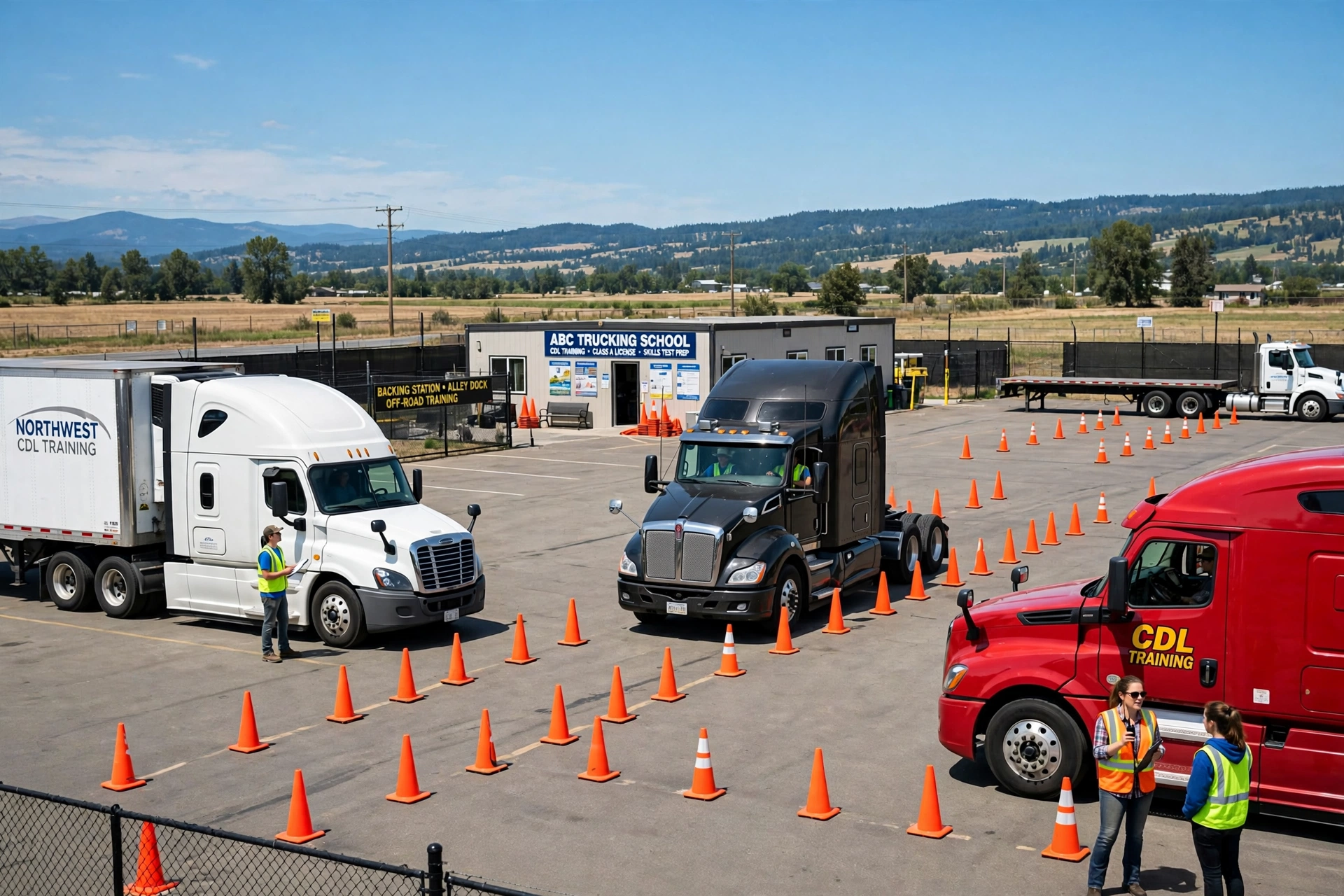
Getting a Class A or Class B CDL takes six stages: a DOT medical exam, a knowledge test for a commercial learner’s permit, ELDT from a registered provider, a minimum 14-day permit period, a three-part skills test and final license issuance by your state DMV. Some states shuffle the order.
1. Pass a DOT physical. Get a medical examiner’s certificate from an examiner listed on the FMCSA National Registry of Certified Medical Examiners.
2. Complete ELDT theory. Finish the theory portion with a provider on the Training Provider Registry and score at least 80% on the theory assessment.
3. Pass the knowledge tests. Take General Knowledge at the DMV, plus Combination Vehicles for Class A and Air Brakes for air-brake vehicles, to receive a commercial learner’s permit (CLP).
4. Hold the CLP for 14 days. Federal rules require at least 14 days between CLP issuance and the skills test.
5. Finish behind-the-wheel training. Complete range and public-road ELDT training until the instructor certifies proficiency, which then appears in the Training Provider Registry.
6. Pass the skills test. Complete the pre-trip inspection, basic control maneuvers and on-road driving test in a vehicle of the class you want.
7. Receive the CDL. Pay state fees and receive the license after the state queries the Drug and Alcohol Clearinghouse, which states have been required to do since November 18, 2024.
ELDT sets no minimum hours for behind-the-wheel training. There’s no clock to run out. Proficiency decides when training ends, which is why program length swings from one school to the next and from one student to another.
Is Class a Harder to Get Than Class B?
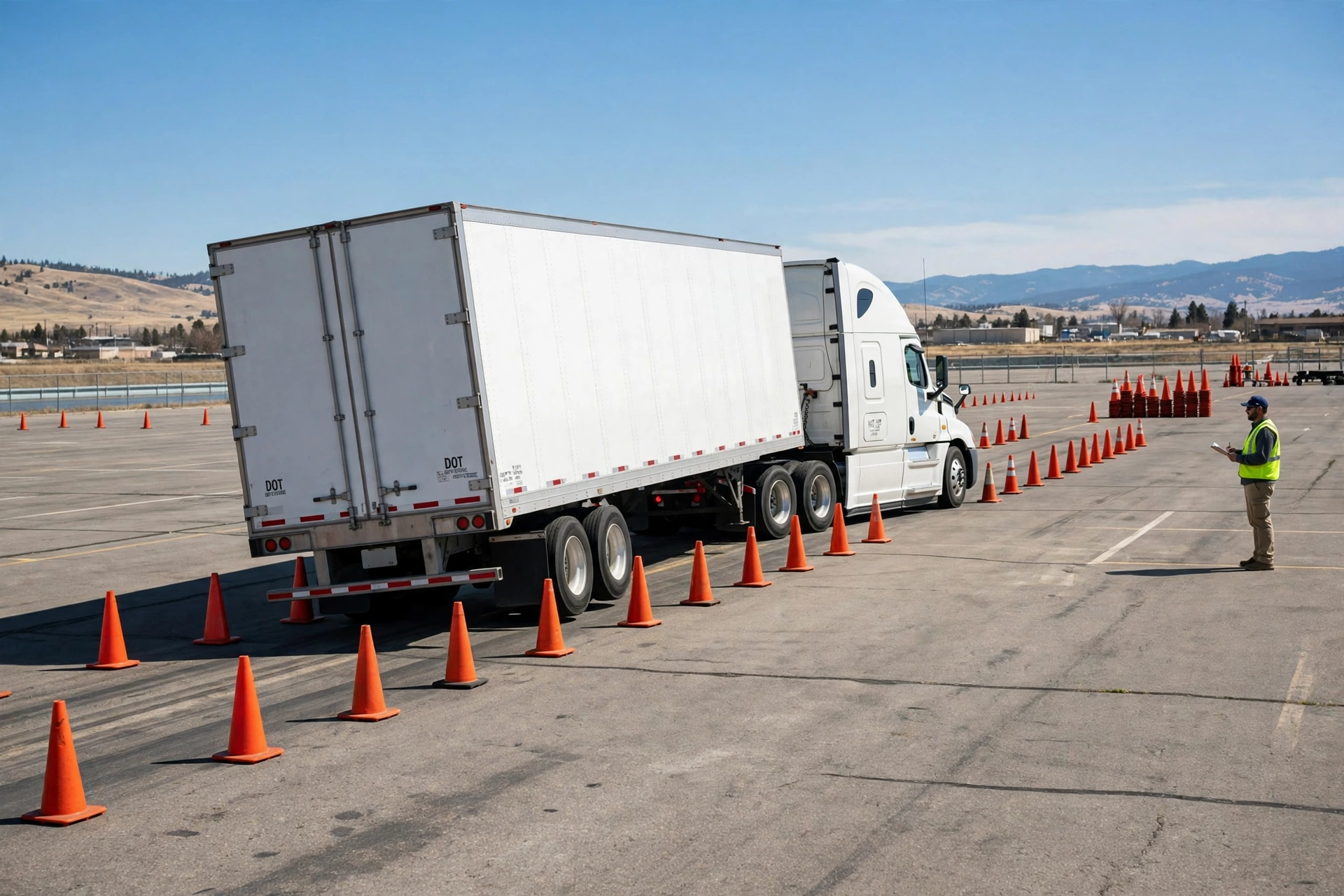
Yes. A Class A CDL is harder to get than a Class B CDL because Class A adds the Combination Vehicles knowledge test, coupling and uncoupling checks, and backing maneuvers with an articulated trailer, which pivots behind the tractor and reacts opposite to steering input during reverse. Class B tests use one rigid vehicle.
This table compares the test elements for Class A vs B CDL applicants.
Test Element | Class A | Class B |
General Knowledge test | Required | Required |
Combination Vehicles test | Required | Not required |
Air Brakes test | Required for air-brake vehicles | Required for air-brake vehicles |
Coupling and uncoupling inspection | Required | Not required |
Trailer backing maneuvers | Required | Not required |
ELDT curriculum | Class A | Class B |
Most Class A students spend the longest stretch of practice on one skill: backing a tractor-trailer. Class B isn’t a free pass. Students in that class still run straight-line and offset backing, plus parking maneuvers, just without a pivot point behind them.
Class a and B CDL Jobs and Pay
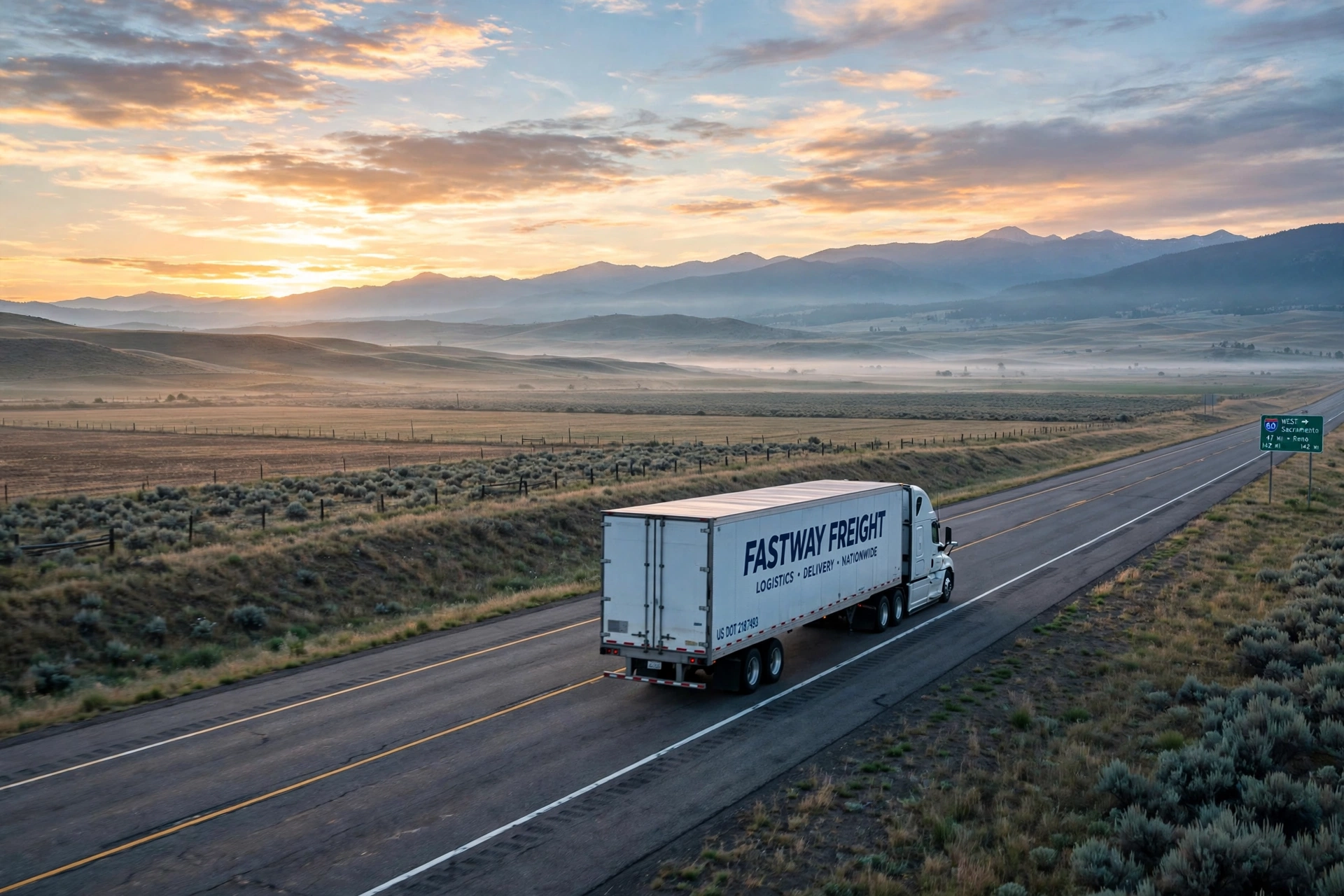
Class A and B CDL jobs split by route length and vehicle type: Class A drivers dominate over-the-road, regional and tanker freight, while Class B drivers fill local delivery, construction, waste and transit roles that usually return home every night. Pay follows the employer and route. Endorsements and region move it too.
This job-to-class decision table compares common driving jobs and the license each one needs.
Job | License Needed | Common Endorsements | Typical Route |
OTR dry van driver | Class A | None | Multi-state, weeks out |
Regional flatbed driver | Class A | None | Several states, home weekly |
Fuel tanker driver | Class A | X | Local or regional |
Dump truck driver | Class B | None | Local |
Garbage truck driver | Class B | None | Local |
City bus operator | Class B | P | Local |
School bus driver | Class B or C | P and S | Local |
Delivery box truck driver | Class B | None | Local |
Class a Career Paths
Class A opens trucking’s widest job market. With one license, a driver can move among OTR, regional, dedicated and local work, then branch into specialized freight such as tankers or livestock, all without retesting for a new class. Oversize loads count too.
Many carriers put new Class A graduates on OTR work first and offer regional or local routes only after those drivers build experience. Home time comes later.
Class B Career Paths
Class B careers center on local routes and public service. The employer list is long. Cities and school districts hire Class B drivers. So do waste haulers and construction companies, along with ready-mix suppliers, and many of those jobs come with predictable shifts.
Class B is no dead end. Drivers who later want freight or tanker work can upgrade to Class A without starting over on medical or general knowledge requirements.
Finding Verified Pay Data
No verified figure is available in this guide for Class A vs Class B salary. Pay shifts by year and state. Employers differ too, so check the Bureau of Labor Statistics (BLS) Occupational Outlook Handbook for heavy and tractor-trailer truck drivers and for bus drivers.
Want local numbers? The BLS Occupational Employment and Wage Statistics program publishes wages by state and metro area for occupation code 53-3032, heavy and tractor-trailer truck drivers.
Can You Upgrade from Class B to Class A?
Yes. A Class B CDL holder can upgrade to Class A by completing Class A ELDT from a registered provider, passing the Combination Vehicles knowledge test, holding a Class A CLP for at least 14 days and passing the full skills test in a combination vehicle. General Knowledge doesn’t need a retake.
Upgrade from Class B with these steps:
1. Confirm medical status. Keep your medical examiner’s certificate current and on file with your state.
2. Enroll in Class A ELDT. Choose a provider listed on the Training Provider Registry, since a B-to-A upgrade triggers the ELDT requirement.
3. Pass the Combination Vehicles test. Take the test at your state DMV to receive a Class A CLP.
4. Wait 14 days. Hold the Class A CLP for the federal minimum period.
5. Pass the Class A skills test. Complete the pre-trip, basic control and on-road tests in a Class A vehicle.
Existing endorsements such as P or N transfer to the upgraded license in most cases, as does H, though state renewal rules still apply and TSA expiration dates govern hazmat. Watch those dates.
How Old Do You Have to Be for a CDL?
You must be at least 21 years old to drive a commercial motor vehicle across state lines, and most states issue Class A and Class B CDLs to drivers aged 18 to 20 for intrastate driving only, with a K restriction or similar code that limits operation to the home state.
This table compares federal age rules by driving type.
Driving Type | Minimum Age | Notes |
Interstate commerce | 21 | Federal rule under FMCSA |
Intrastate commerce | 18 in most states | State rules vary |
Safe Driver Apprenticeship Pilot | 18 | Interstate under a structured apprenticeship |
The FMCSA Safe Driver Apprenticeship Pilot Program lets a limited number of drivers aged 18 to 20 operate interstate after completing probationary periods with participating carriers. It’s a pilot, not a permanent rule. Check the program’s current status on the FMCSA website before you plan around it.
Which CDL Class Should a Beginner Get?
Most beginners should get a Class A CDL, because a Class A license covers tractor-trailers and, with endorsements, every Class B and Class C vehicle, so one round of training and testing keeps every trucking job open. Leaning toward Class B? Have a local Class B job lined up first.
This table compares the Class A vs Class B CDL decision by driver goal.
Driver Goal | Best License | Reason |
Widest job options | Class A | Covers all three classes |
Home every night, local job secured | Class B | Shorter, simpler testing |
Transit or school bus career | Class B | Matches bus vehicle class |
Tanker or hazmat freight | Class A | Most tank freight uses combinations |
Employer-paid training offer | Match the offer | Employer sets the class |
A Class B license takes less training time for many students, but a later B-to-A upgrade brings a second round of ELDT and testing. That adds up. Choose the license that fits the job you want over the next several years.
Conclusion
The Class A vs Class B CDL choice shapes the first years of a trucking career. Class A buys flexibility. It reaches freight and tankers, plus every lower class, while Class B fits drivers who are committed to local routes in buses or construction work.
Federal rules keep shifting. ELDT now applies to every new Class A and Class B applicant, and states query the Drug and Alcohol Clearinghouse before issuing licenses. FMCSA is still studying younger interstate drivers through its pilot program.
Verify before you enroll. Check the FMCSA website and your state DMV first, and confirm that your school appears on the Training Provider Registry. Then pick the class that matches the job you want next.
Frequently Asked Questions

Esther Howard leads trucking and commercial driving content at TruckingHow, covering CDL training, trucking regulations, fleet operations, and truck maintenance. With over a decade of experience researching the transportation industry, she brings a practical, research-driven approach to driver education and safety standards. Her guides help drivers, fleet owners, and trucking professionals make informed decisions on and off the road.
Related Posts