How to Get a CDL License: 8 Steps, Costs, and Requirements (2026)
To get a Commercial Driver’s License (CDL), you need to hold a valid state driver’s license, pass a DOT medical exam, obtain a Commercial Learner’s Permit (CLP), complete Entry-Level Driver Training (ELDT), hold the CLP for 14 days, then pass a 3-part skills test. Most applicants finish the whole process in 4 to 9 weeks. Below is the full walkthrough, requirements, documents, costs, and the parts of the process almost every other guide skips over.
CDL License Requirements
Four things stand between you and a CDL: minimum age, in-state residency, medical certification, and a driving record clean enough to pass review.
Age Requirements
You need to be at least 18 to drive commercially within your home state, and at least 21 to cross state lines or haul hazardous materials. A handful of states have pushed the intrastate minimum up to 19 or 21, so check the number with your own state’s licensing agency before you enroll in anything. And honestly, most large carriers won’t hire under 21 anyway, since interstate freight is where the jobs are.
State Residency and Driver’s License
Your CDL comes from the state where you hold a valid, non-suspended driver’s license. States won’t issue CDLs to out-of-state residents, and federal law bars holding CDLs from two states at once. If you move, you surrender the old CDL and apply fresh in the new state.
Medical Certification
Every applicant needs a Medical Examiner’s Certificate (MEC) from an examiner listed on the FMCSA National Registry, commonly called a DOT physical. Certification runs up to 24 months, though some health conditions shorten that to 3, 6, or 12 months. Blood pressure, vision, hearing, and diabetes management get the closest look.
Driving Record
States pull your Motor Vehicle Record (MVR) covering the last 10 years across all 50 states and DC. DUI convictions, license suspensions, and certain moving violations can delay or kill an application outright. If your record is complicated, call your state DMV before you pay a school a dime. A training program can’t override a disqualification, no matter how good the instructors are.
Documents You Need
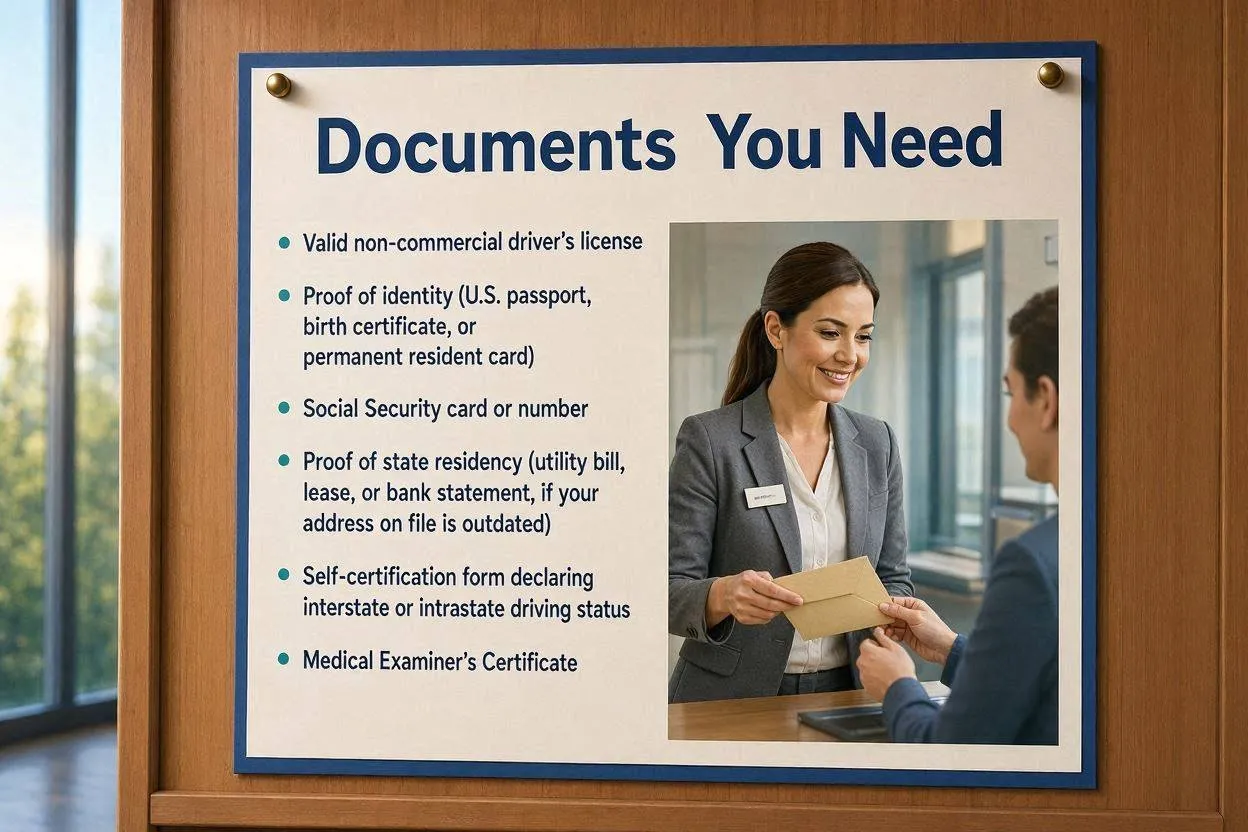
Bring these to your CLP and CDL appointments so you’re not making a second trip:
- Valid non-commercial driver’s license
- Proof of identity (U.S. passport, birth certificate, or permanent resident card)
- Social Security card or number
- Proof of state residency (utility bill, lease, or bank statement, if your address on file is outdated)
- Self-certification form declaring interstate or intrastate driving status
- Medical Examiner’s Certificate
Requirements shift slightly by state, so check your state DMV’s CDL manual first.
How to Get a CDL License: 8 Steps
- Get your DOT physical. Book the exam with a certified medical examiner from the FMCSA National Registry. It takes 30 to 60 minutes, and you walk away with your MEC if you pass.
- Study your state’s CDL manual. Every state publishes a free handbook covering general knowledge, air brakes, and combination vehicles. Give yourself 10 to 20 hours before the knowledge test.
- Pass the knowledge test and get your CLP. Take the written exam at your state’s licensing office. Most states hand you the CLP the same day, once your documents and scores clear.
- Hold your CLP for 14 days. Federal law sets a mandatory 14-day minimum between getting the CLP and taking the skills test. No state can waive it.
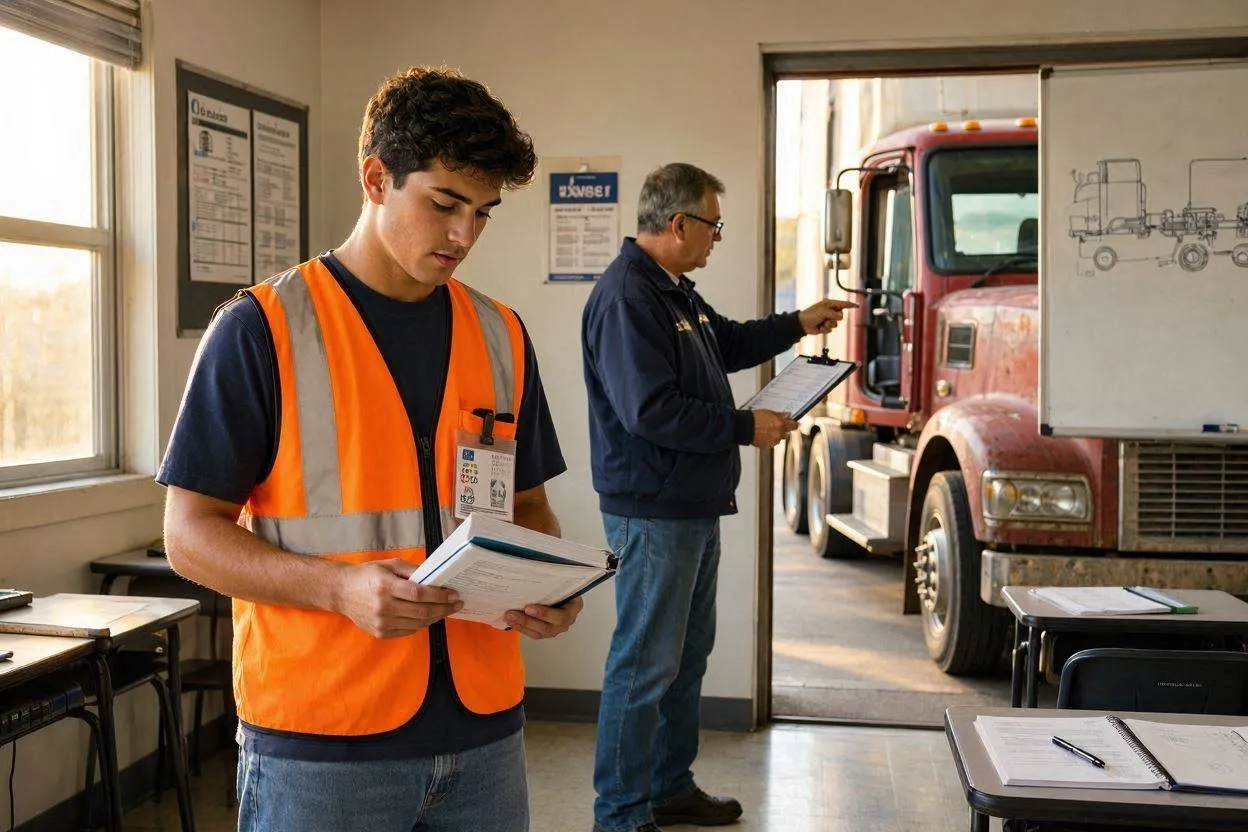
- Complete ELDT. First-time applicants have to finish Entry-Level Driver Training through a school on the FMCSA Training Provider Registry (TPR) before testing. Check that your school is actually on the registry before you enroll or hand over a deposit.
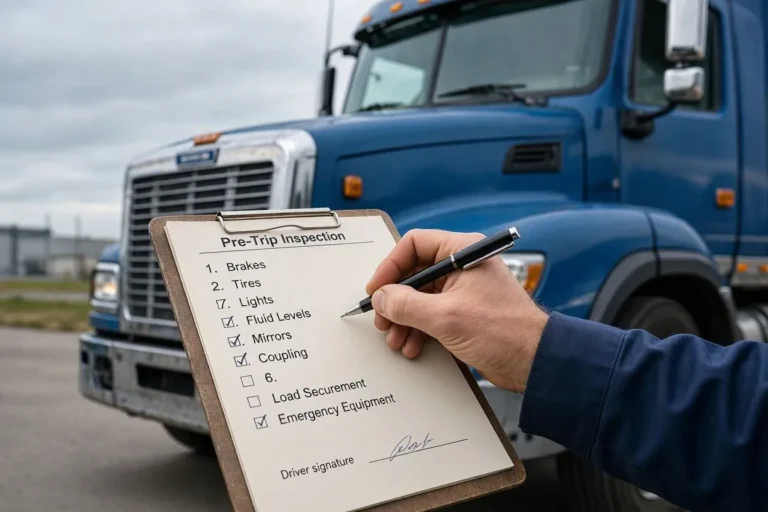
- Pass the 3-part skills test. It covers a pre-trip vehicle inspection, basic vehicle control in a controlled yard, and an on-road evaluation. All three sections need a pass in one sitting.
- Receive your CDL. Some states issue it the same day; others mail it within a few weeks.
- Add endorsements, if your job needs them. Hazmat, passenger, tanker, and school bus endorsements each need a separate written test, and hazmat adds a federal background check.
The pre-trip inspection trips up more first-timers than any other part of the test. You have to name 30 to 50 truck components from memory, in sequence, out loud. Drill it until it’s automatic, not just familiar.
CDL License Classes Explained
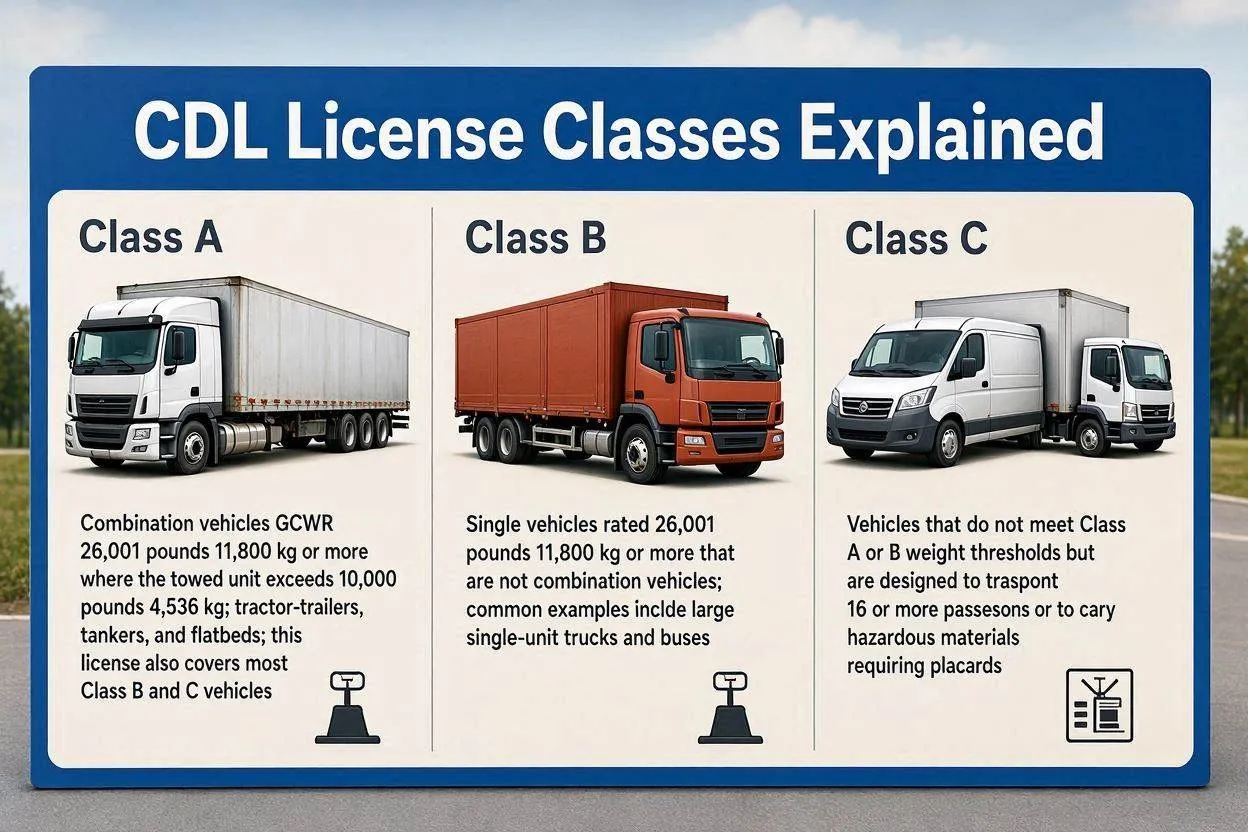
Your CDL falls into one of three classes, based on vehicle weight and configuration.
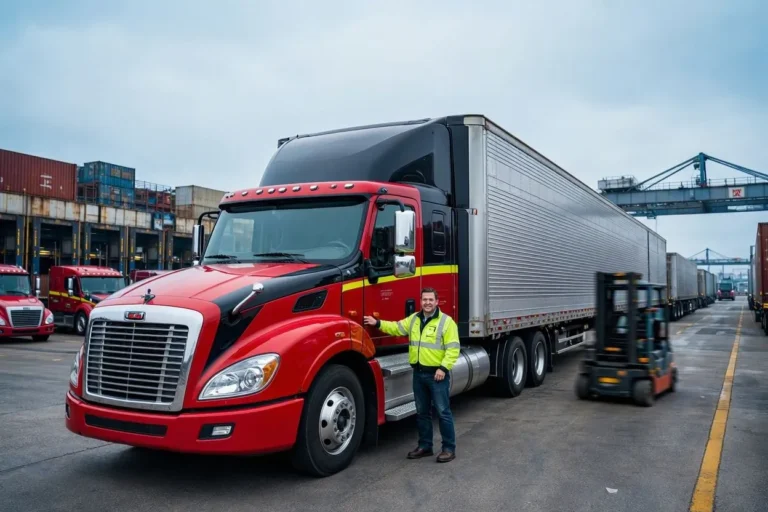
Class A covers combination vehicles with a gross combination weight rating (GCWR) of 26,001 pounds (11,800 kg) or more, where the towed unit exceeds 10,000 pounds (4,536 kg). Tractor-trailers, tankers, and flatbeds fall here, and this license also covers most Class B and C vehicles.
Class B covers single vehicles rated 26,001 pounds (11,800 kg) or more that tow nothing, or tow a trailer under 10,000 pounds (4,536 kg). Think straight trucks, dump trucks, city buses.
Class C covers vehicles below the Class A and B weight thresholds that carry 16 or more passengers (driver included) or transport placarded hazardous materials. Passenger vans and small shuttle buses land in this class.
Endorsements and the TSA Hazmat Background Check
Each endorsement adds privileges beyond your base CDL class, and each one comes with its own test.
- Hazmat (H): written test plus a Transportation Security Administration (TSA) Security Threat Assessment, including fingerprinting and a background check
- Passenger (P): written and skills test for buses carrying passengers
- School Bus (S): written test, plus most states require a separate background check for working around minors
- Tanker (N): written test covering liquid or gas cargo in bulk tanks
- Combination endorsements: hauling hazardous liquids in tankers requires both H and N together
Budget for the TSA hazmat check to add 4 to 6 weeks to your timeline, so start that process early if the job requires it.
How Much Does a CDL License Cost?
Total cost lands anywhere from $2,000 to $8,000, depending on training path and location.
| Item | Typical Cost |
| Private CDL school (Class A) | $4,000 – $8,000 |
| Community college CDL program | $2,000 – $5,000 |
| DOT physical exam | $75 – $150 |
| CLP and CDL state fees | $50 – $200, varies by state |
| Skills test fee | $50 – $250, varies by testing site |
Many large carriers pay tuition upfront through paid CDL training programs, in exchange for a driving commitment of 6 to 12 months after you graduate. That route wipes out most or all of the out-of-pocket cost, but it also locks you into one employer for a set stretch of time.
How Long Does It Take to Get a CDL License?
Most drivers finish in 4 to 9 weeks, start to finish.
Weeks 1 to 2 cover the DOT physical, handbook study, and the knowledge test for your CLP. Weeks 2 to 5 cover ELDT, which runs 3 to 4 weeks full-time or 6 to 8 weeks part-time, overlapping the mandatory 14-day CLP hold. Weeks 4 to 6 cover skills test scheduling. In busy metro areas, testing slots book out 1 to 3 weeks in advance, so plan around that. Weeks 5 to 9 cover final processing, after which your state mails or hands you the physical card.
What Happens If You Fail the Skills or Knowledge Test?
You can retake both, though states cap attempts and set waiting periods. Most allow 3 tries at the knowledge test before you need a new application, and charge $25 to $100 per retest. Skills test retakes often mean a 1 to 7 day wait, and some states cap total attempts at 3 before sending you back to square one on the CLP. Before you enroll anywhere, ask about the school’s first-attempt pass rate. A low number tells you something about the prep.
Can You Transfer a CDL to Another State?
Yes. States honor CDLs from other states, but you’ll need to surrender your old license and apply for a new one within 30 days of establishing residency in most places. The new state pulls your driving record and CDLIS (Commercial Driver’s License Information System) history instead of making you retake the full skills test, as long as your license is current and not suspended. Some states will still require a new knowledge test if your CDL has lapsed or your endorsements need updating.
Paying for CDL Training: Financing Options
Beyond employer-sponsored programs, four funding paths can cut or eliminate tuition:
- WIOA grants (Workforce Innovation and Opportunity Act) cover full or partial tuition for eligible unemployed or underemployed applicants, through local workforce boards
- GI Bill benefits cover CDL training at VA-approved schools for eligible veterans and, sometimes, dependents
- Employer tuition reimbursement pays back training costs after a set employment period, common among regional and dedicated freight carriers
- State workforce grants vary by state, often targeting specific counties or economically distressed regions
WIOA approval can take 2 to 4 weeks, so check eligibility with your local American Job Center before paying anything out of pocket.
Under-21 Drivers and the Safe Driver Apprenticeship Pilot (SDAP)
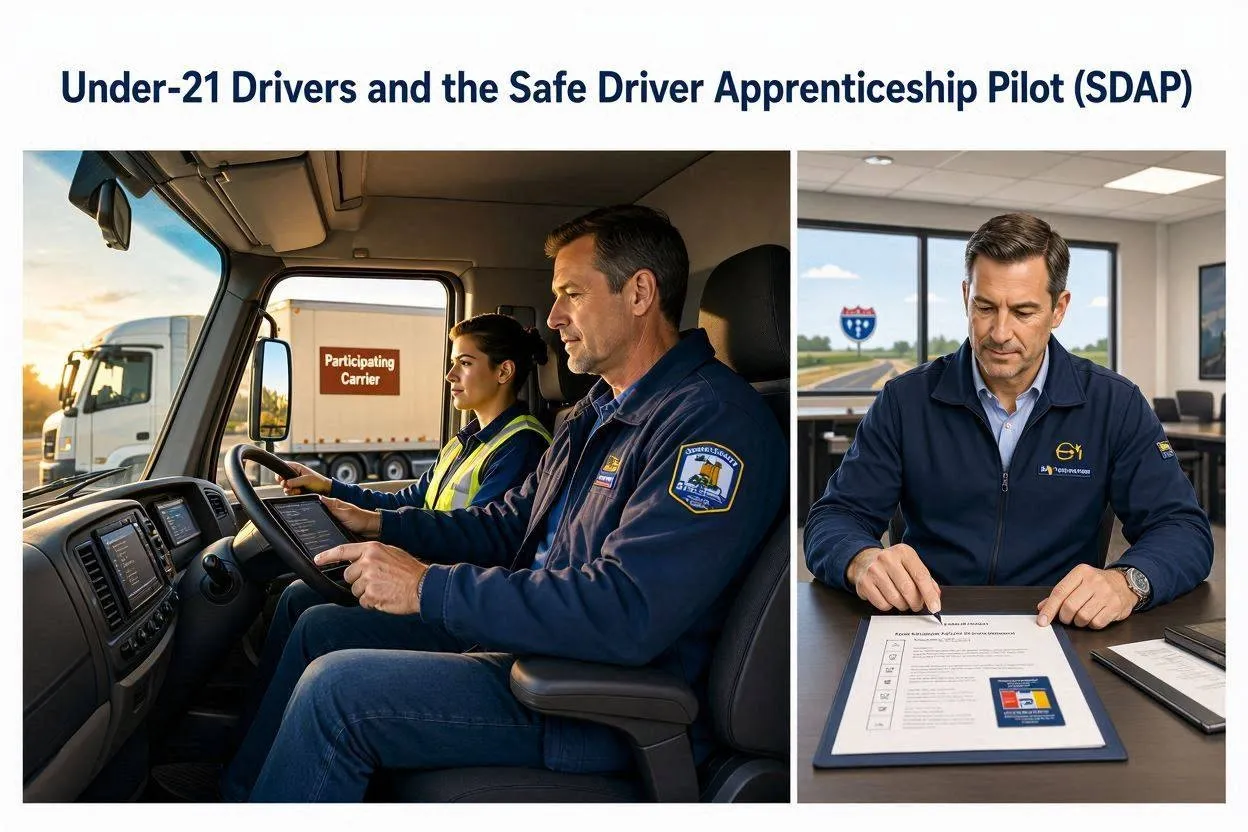
Federal law keeps drivers under 21 on intrastate routes only, but SDAP carves out an exception. It lets 18-to-20-year-olds drive interstate under a qualified mentor for a probationary period, as long as the sponsoring carrier meets FMCSA safety criteria. It closes a gap that used to keep younger, licensed drivers out of interstate freight entirely. Enrollment runs through participating carriers rather than state DMVs, so that’s who to ask about openings.
Conclusion
Eight steps: physical, study, knowledge test, CLP, 14-day hold, ELDT, skills test, license. The whole thing takes 4 to 9 weeks and runs $2,000 to $8,000 out of pocket, unless employer-sponsored training, WIOA grants, or GI Bill benefits cover it for you. Under-21 drivers aren’t locked out of interstate work either, thanks to SDAP, and a failed test isn’t the end of the road since retesting is built into every state’s system. Confirm your state’s specific age minimums, fees, and disqualifying offenses directly with your DMV before you enroll in training. State rules shift more often than federal ones do.
FAQs

Esther Howard
Esther Howard leads TruckingHow’s trucking, commercial driving, and transportation content division. She specializes in CDL training, trucking regulations, fleet operations, truck maintenance, and logistics best practices. With over a decade of experience researching the commercial transportation industry, Esther brings a practical, research-driven approach to driver education, safety standards, and industry regulations. She is the primary author of TruckingHow’s CDL guides, trucking career resources, maintenance tips, and transportation content, helping drivers, fleet owners, and trucking professionals make informed decisions on and off the road
Related Posts