
How to Become a Truck Driver: A Complete 2026 Step-by-Step Guide
Truck driving is still one of the rare careers where someone can hit middle-class income in about three months, no college degree required. But most guides gloss over a federal training rule that will derail your whole timeline if you skip it, and the cost picture shifts a lot depending on which state you’re in. This one walks through the entire path using current 2026 FMCSA rules, including the parts that trip people up.
What Does a Truck Driver Actually Do?
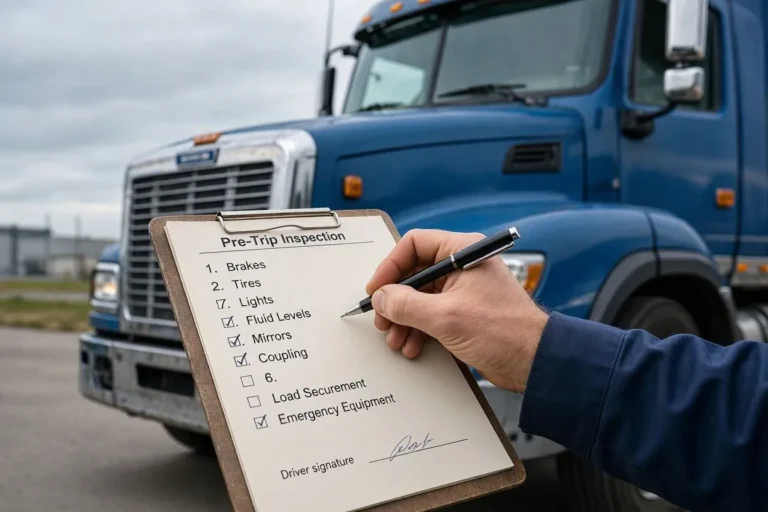
Move goods from point A to point B, sure. But that’s the headline, not the job. Drivers load and unload cargo, secure freight so it doesn’t shift mid-transport, and handle delivery paperwork. Pre-trip and post-trip inspections happen before every single shift, and hours get logged to stay on the right side of federal hours-of-service rules.
An 80,000-pound loaded rig doesn’t handle like a car. You learn to manage steep grades without cooking your brakes, and to account for trailer swing on tight turns. Nobody picks that up by instinct; it comes from training, and usually from a few uncomfortable moments in a truck with an instructor watching.
Types of Truck Driving Routes
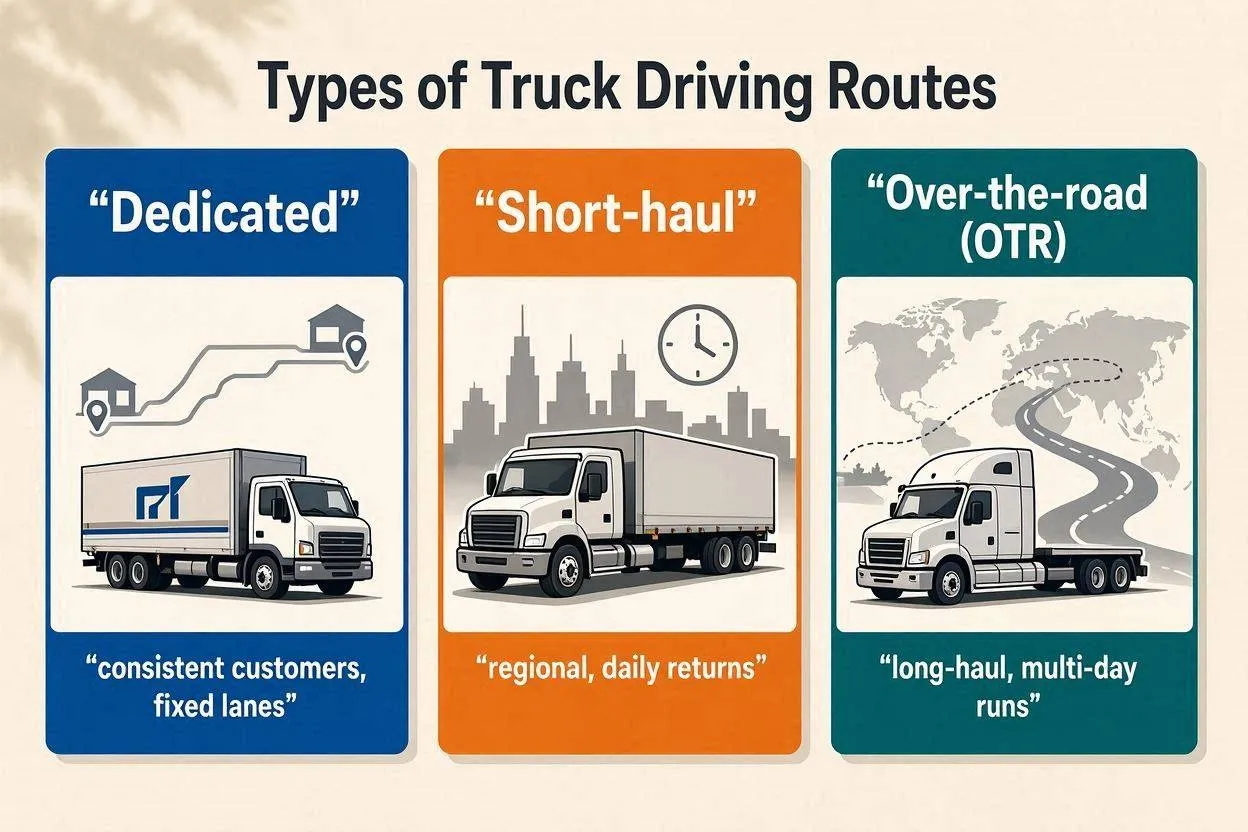
There are three main flavors: dedicated, short-haul, and over-the-road (OTR).
Dedicated route drivers work one primary customer on a repeating schedule. Same stops, same contacts, same timing week after week. If predictability matters to you more than variety, this is the one.
Short-haul covers roughly 150 to 250 miles from the starting point, with drivers usually finishing several deliveries in a day and sleeping in their own bed most nights.
OTR is the one people picture when they think “trucker.” Freight moves across state lines, sometimes across borders, and a driver might be gone two or three weeks before heading home. It pays better than the other two options on average, but the tradeoff is real: long stretches away from family aren’t for everyone.
Truck Driver Requirements
The floor is 18 for intrastate driving, 21 if you want to cross state lines, plus a valid regular license and a clean driving record. Most employers also want a high school diploma or GED, though a handful of entry-level jobs won’t even ask for that.
Expect a background check before anyone hires you. It usually covers driving history, criminal record, and drug test results going back several years, so if there’s something in your past, don’t assume it’ll just slide by unnoticed.
Vision and hearing standards apply as well: 20/40 in each eye (corrective lenses are fine), and you need to be able to hear a forced whisper from five feet away, hearing aid or not.
How to Become a Truck Driver: Step-by-Step
Eight steps, start to finish: eligibility, CLP, ELDT training, CDL exam, endorsements, DOT physical, entry-level job, and employer orientation.
Step 1: Confirm Eligibility
Check your age against your state’s intrastate minimum and the federal interstate minimum of 21. Pull your driving record and look for anything disqualifying before you spend a dime on training.
Step 2: Get a Commercial Learner’s Permit
A CLP lets you practice with a CDL holder riding shotgun. State DMVs issue these after a written knowledge test and a vision screening, and the permit’s good for at least 180 days in most states before it needs renewing.
Step 3: Complete ELDT Training
This is the step most guides skip, and it’s the one that’ll actually cost you money if you get it wrong. Every CDL applicant has to complete Entry-Level Driver Training through a provider listed on the FMCSA Training Provider Registry (TPR). It’s been required since February 2022, and it applies to first-time Class A or B applicants and to anyone upgrading their license or adding a hazmat, passenger, or school bus endorsement. Training providers submit your completion certificate straight to the registry. Train with a program that isn’t on that list, and none of it counts toward your CDL, no matter how good the instructor was.
Step 4: Pass the CDL Skills and Knowledge Tests
Two parts: a written test on federal and state trucking law, and a road test where an examiner rides along and watches your vehicle control, backing, and pre-trip inspection.
Step 5: Add Endorsements
Hauling hazmat, tankers, doubles, or passengers means passing extra knowledge tests on top of the base CDL. Hazmat also means a TSA background check, which takes longer than people expect.
Step 6: Pass the DOT Physical
A certified medical examiner from the FMCSA National Registry checks vision, hearing, blood pressure, and general fitness to operate a CMV.
Step 7: Apply for Entry-Level Positions
Many training schools have placement partnerships built in. Schneider National, Roehl Transport, and Swift Transportation all run structured pipelines for recent CDL graduates, so ask your school about this before you graduate, not after.
Step 8: Orientation and Finishing Training
Expect one to two weeks of company orientation covering policy, equipment, and paperwork. Most carriers then pair you with a mentor for 200 to 300 hours of supervised driving before you’re running a solo route.
CDL Classes and Endorsements, Explained
Class A covers combination vehicles over 26,001 pounds. Class B covers single vehicles over that weight without a heavy trailer. Class C covers smaller vehicles hauling hazardous materials or 16-plus passengers.
If you’re aiming for OTR or long-haul work, you want Class A; it covers tractor-trailers, tankers, and flatbeds. Class B fits drivers running straight trucks, box trucks, and some buses.
Common endorsements:
- H (Hazmat) — required for hauling hazardous materials, includes a TSA background check
- N (Tanker) — required for hauling liquids or gases in bulk tanks
- T (Doubles/Triples) — required for pulling two or three trailers at once
- X (Combination) — hazmat and tanker combined, for drivers hauling both
Federal ELDT Training Requirement (2026 Update)
Still mandatory, and still tripping people up. ELDT applies to every first-time CDL applicant and anyone upgrading their license class, and that’s been true since February 2022 with no signs of changing in 2026.
The rule exists because CDL prep quality used to swing wildly between providers. Now applicants complete a theory portion (classroom or online) plus a behind-the-wheel portion at a registered provider, and the FMCSA keeps the Training Provider Registry public so you can check a school’s status before you enroll.
Don’t gamble on this one. State DMVs check the TPR system before issuing a CDL. Train through an unregistered program and you’ll be retraining regardless of what you already paid.
How Much Does CDL Training Cost?
Somewhere between $1,000 and $12,000, and where you land depends on your state, the program length, and whether an employer’s footing the bill.
Community college programs tend to sit at the cheaper end. Private CDL schools with newer trucks and faster timelines charge more for it. Some carriers offer company-sponsored training and reimburse tuition once you’ve put in 9 to 12 months on the job, which is worth asking about before you pay out of pocket.
Federal and state workforce funding can help too. The Workforce Innovation and Opportunity Act (WIOA) funds CDL training in a lot of states, with eligibility tied to income and employment status. Veterans can often put GI Bill benefits toward VA-approved CDL programs.
State-by-State CDL Differences (California, Texas, Florida)
Same federal baseline everywhere, different paperwork order depending on where you live.
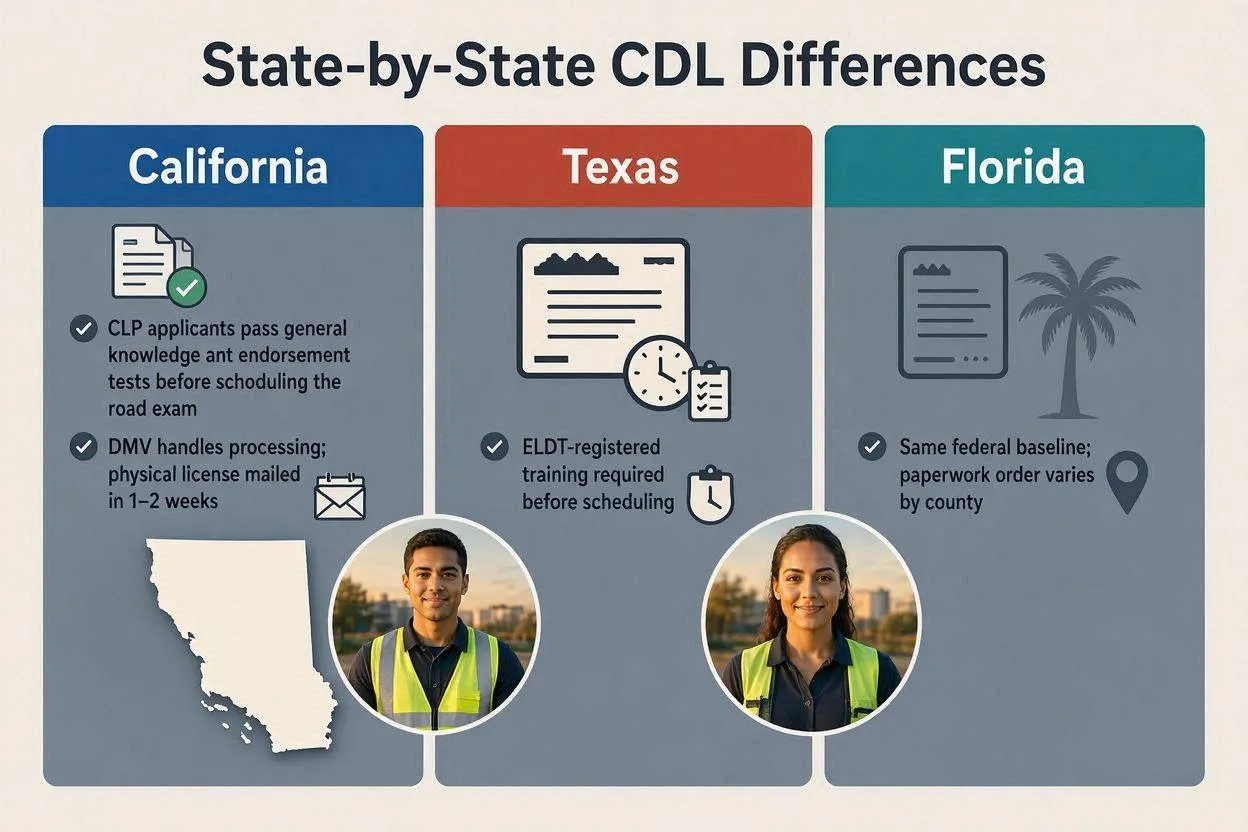
California
has CLP applicants pass both a general knowledge test and any endorsement-specific tests before scheduling the road exam. The DMV handles processing, and most people wait one to two weeks for the physical license after clearing everything.
Texas
wants the ELDT-registered training done before it’ll even schedule your skills test, earlier in the sequence than most states require. The Texas Department of Public Safety handles issuance here, not a standard DMV.
Florida
runs CLP knowledge tests first, then ELDT enrollment, then both the knowledge and road tests through the Department of Highway Safety and Motor Vehicles. Florida’s CDL manual comes in English and Spanish, which matters given how large the state’s bilingual trucking workforce is.
Check your own state’s DMV or equivalent site before you start anything. The processing order differs enough between states that it’s worth ten minutes of research up front.
How Long Does It Actually Take?
CDL training itself runs 3 to 20 weeks depending on the program. Add it all up, from enrollment to first solo route, and you’re looking at 4 to 6 months typically.
Accelerated programs cram classroom and behind-the-wheel work into three or four weeks. Community college routes stretch across a semester or longer, sometimes a full year if you’re going part-time.
Once you pass the CDL exam, most states mail the physical license within one to two weeks, though a few print it same-day. Tack on another two to four weeks for orientation and finishing training before you’re driving alone.
How Do Truck Drivers Get Paid?
Per mile, by the hour, on salary, or as a cut of load revenue if you’re an owner-operator.
Per-mile is the standard for OTR drivers, with rates shifting based on experience, freight type, and carrier. Hourly pay tends to show up for local and regional drivers running predictable daily routes. Some larger carriers put drivers on a fixed salary instead, especially on dedicated accounts.
Owner-operators earn a percentage of what the load brings in rather than a flat rate, sometimes called load sharing. More upside, but also more exposure when fuel prices spike or a load falls through.
There’s more money on the table than the base rate suggests. Accessorial pay covers work outside plain driving, like running a forklift, tarping a flatbed, or handling after-hours deliveries. Detention pay compensates for time burned waiting at a shipper or receiver past the scheduled window. Per diem reimburses meals and lodging for nights away from home, capped by whatever the carrier or IRS guidelines allow.
The Bureau of Labor Statistics puts the median hourly wage for heavy and tractor-trailer drivers at $23.41 as of the most recent reporting period. Experienced drivers with the right endorsements routinely clear well above that.
Company Driver vs. Owner-Operator vs. Independent Contractor
Company drivers are employees of one carrier. Owner-operators run their own trucking business under their own authority. Independent contractors sit in between, leasing or owning a truck but operating under someone else’s DOT authority.
Company driving means a steady paycheck, with the carrier covering fuel, maintenance, and insurance. It’s the path for people who want predictable income and benefits without taking on business management.
Owner-operators handle everything a small business owner handles: financing the equipment, fuel taxes, insurance, invoicing, negotiating loads. Higher ceiling on earnings and full control over what you haul, but you’re exposed to fuel swings, maintenance bills, and customers who pay slow.
Independent contractors get some of both. Buy or lease a truck, but operate under a carrier’s authority, so permits and load insurance are often the carrier’s problem rather than yours, while you still set your own schedule.
Most people who go on to become owner-operators spend two or three years as a company driver first, building both experience and savings. Skipping that step is one of the more common reasons new owner-operators don’t make it past year one.
DOT Medical Certification and Renewal
A DOT medical certificate is good for up to 24 months, though certain health conditions shorten that window.
Drivers with well-controlled diabetes, high blood pressure, or sleep apnea often get certified for 12 months or less, pending follow-up paperwork from their doctor. The exam happens through a medical examiner on the FMCSA National Registry, and results go straight into the agency’s database.
Let this lapse and you can’t legally operate a CMV until you retest. Carriers watch expiration dates closely, since a lapsed medical card is liability for them too, not just for you.
Background Checks and Disqualifying Violations
A DUI, a reckless driving charge, or other serious violations can knock you out of contention entirely, with lookback periods running anywhere from 3 to 10 years depending on the state and the violation.
Federally, a first DUI means a one-year disqualification; a second means permanent disqualification. States can and do add their own restrictions on top of that federal floor, sometimes extending the lookback for reckless driving or excessive speeding well past what federal law requires.
Employers pull Motor Vehicle Records and check the FMCSA Clearinghouse, a database tracking drug and alcohol violations industry-wide. Fail a drug test with one carrier and think you can just quietly apply somewhere else? The Clearinghouse flags it for any employer who checks.
Women in Trucking: Programs and Resources
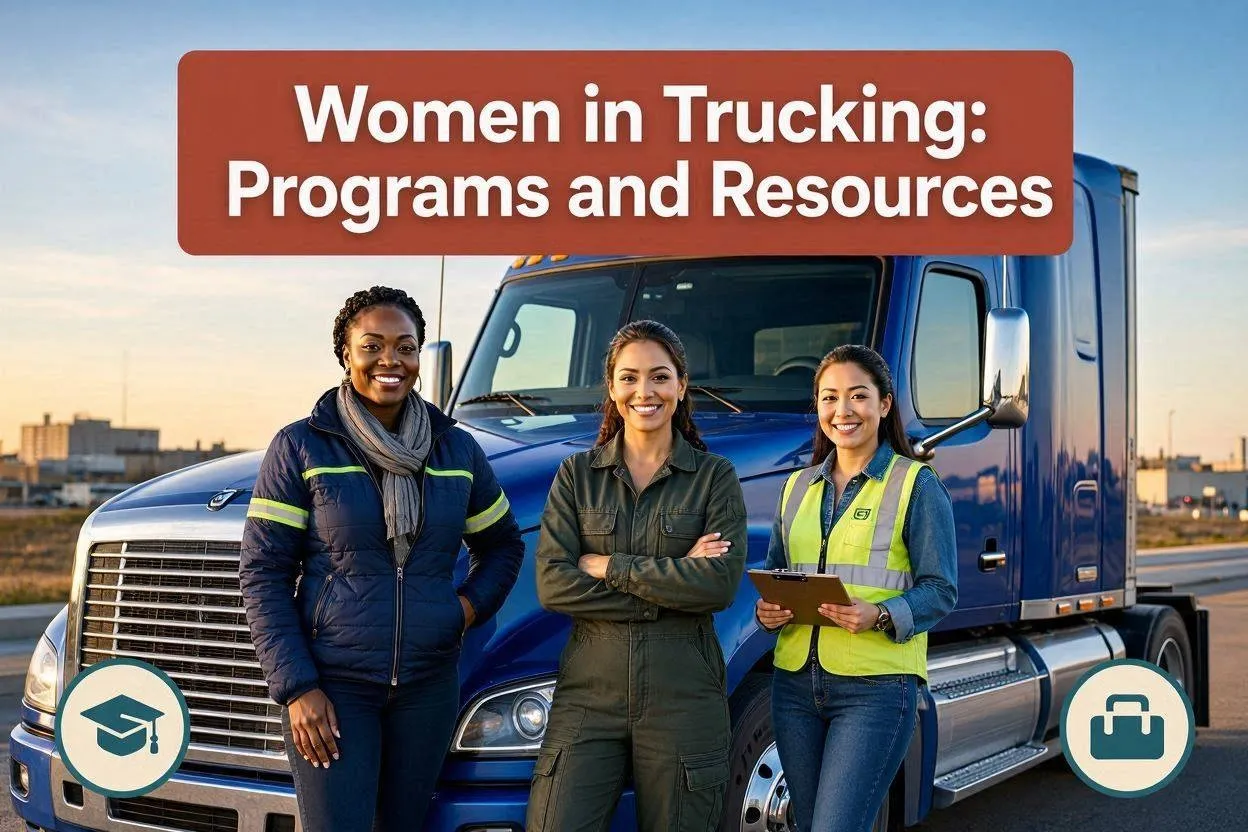
The Women in Trucking Association (WIT) runs mentorship, scholarships, and job placement help aimed specifically at women entering the industry.
Women currently make up roughly 8% of the CDL-holding workforce, a number that’s climbed steadily over the past decade. A growing number of carriers now run women-specific mentorship programs, pairing new hires with experienced female drivers for their first few months on the road.
WIT scholarships can help offset training costs, and some schools run dedicated cohorts or support groups for women trainees. Worth looking into before enrolling somewhere generic. It can cut both the cost and the isolation some new drivers report feeling in that first year.
Tips for New Truck Drivers
Do the pre-trip inspection properly, every time. Skipping it to save ten minutes is how a roadside inspection catches something and costs you a lot more than ten minutes.
Log your hours accurately. Hours-of-service violations follow a CDL for years, and it’s not worth the shortcut.
Stay in touch with dispatch, especially early on. Drivers who ask questions and keep communication open tend to land better load assignments faster than drivers who go quiet after week one, and route problems get sorted out faster with a phone call than with silence.
And take care of your body. It’s easy to forget about during the first few months, but long stretches of sitting add up to weight gain and blood pressure trouble over time. Drivers who build in short walks or basic stretching at delivery stops tend to report fewer aches and pains a year in.
Conclusion
Realistically, budget four to six months from enrollment to your first solo route: eligibility check, CLP, ELDT, CDL testing, endorsements, DOT physical, orientation. Costs land somewhere between $1,000 and $12,000, and WIOA grants or employer sponsorships can take a real bite out of that. Pay climbs with experience and endorsements, and the drivers who take hours-of-service rules seriously, keep their medical card current, and actually talk to dispatch tend to move into better routes, and eventually ownership, faster than the ones who don’t.
FAQs

Esther Howard
Esther Howard leads TruckingHow’s trucking, commercial driving, and transportation content division. She specializes in CDL training, trucking regulations, fleet operations, truck maintenance, and logistics best practices. With over a decade of experience researching the commercial transportation industry, Esther brings a practical, research-driven approach to driver education, safety standards, and industry regulations. She is the primary author of TruckingHow’s CDL guides, trucking career resources, maintenance tips, and transportation content, helping drivers, fleet owners, and trucking professionals make informed decisions on and off the road
Related Posts