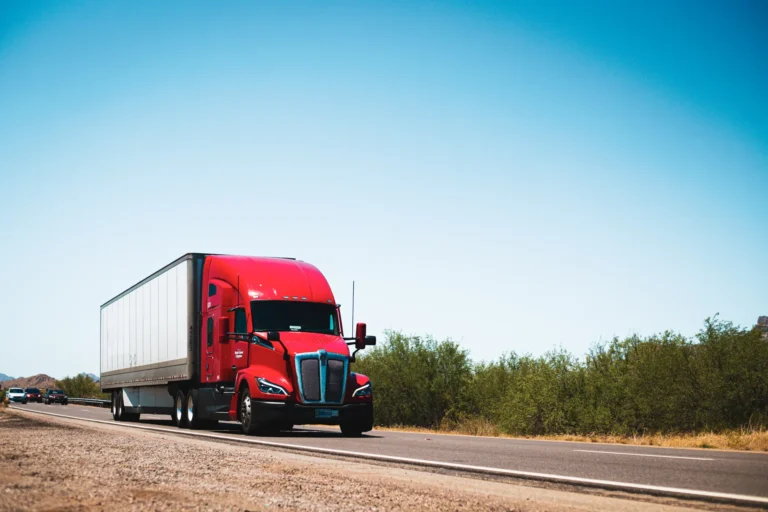
Dry Van vs Reefer: Differences, Pay, and Which Trailer to Choose
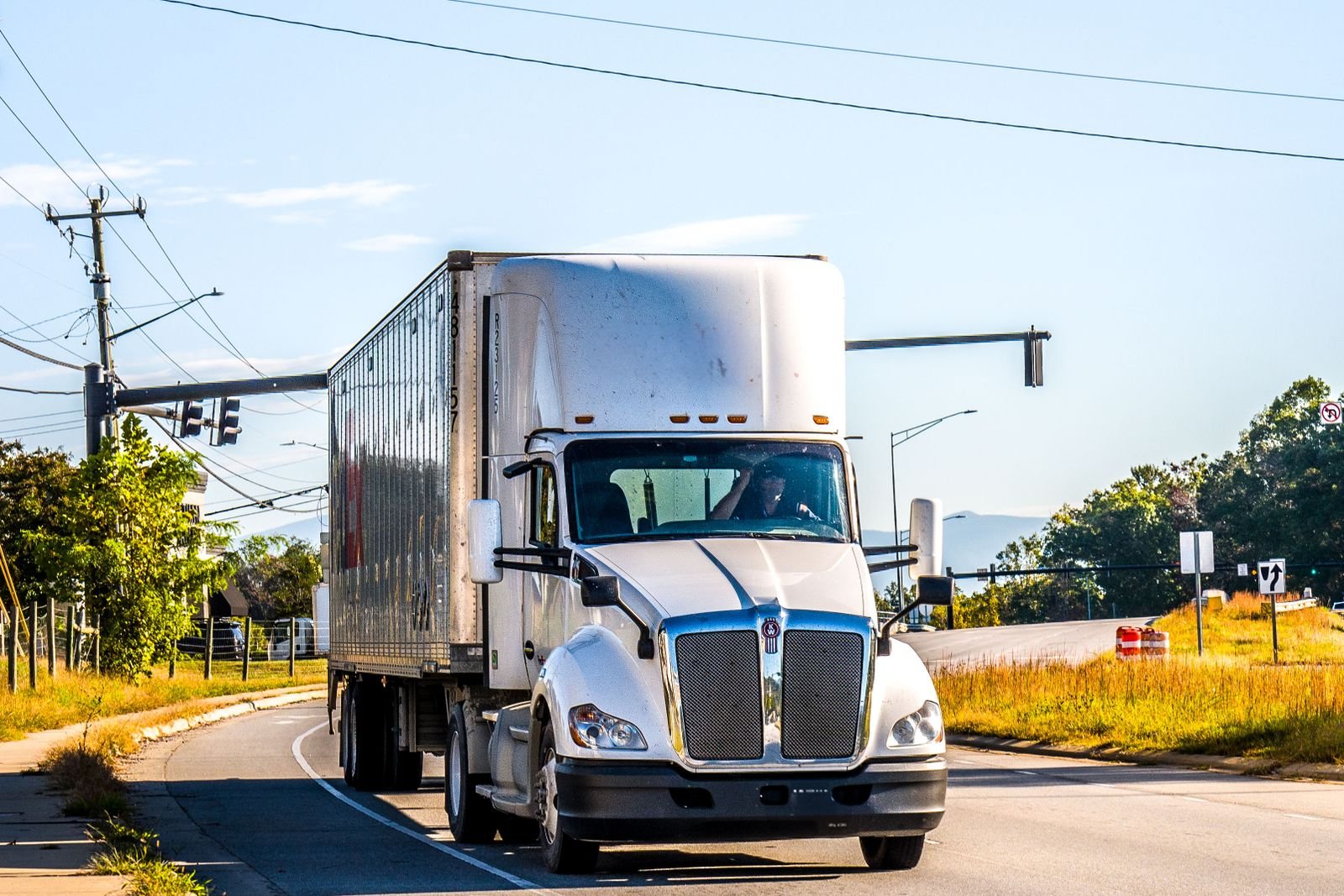
Temperature control decides the whole question. A dry van is an enclosed, unrefrigerated trailer for non-perishable palletized freight. A reefer is an insulated trailer with a refrigeration unit for temperature-controlled freight. Reefers usually pay more, though drivers earn that premium by sitting through longer waits at the dock and taking on extra compliance work that dry van loads rarely bring. The unit burns its own fuel, too. Dry vans offer simpler days.
Key Takeaways
- A dry van is an enclosed, non-refrigerated semi-trailer that hauls shelf-stable freight such as packaged goods, paper, electronics, and auto parts.
- A reefer trailer uses insulation and a diesel or electric refrigeration unit to hold a set temperature for perishable goods.
- Reefer loads usually pay more per mile than dry van loads, but night appointments and live unloads cut into that premium, as does the fuel the reefer unit burns.
- Dry van trucking suits most new Class A Commercial Driver’s License (CDL) holders because each load has fewer variables to manage.
- Reefer carriers handle FDA Food Safety Modernization Act (FSMA) duties and, in California, California Air Resources Board (CARB) rules for refrigeration units.
- Shippers pick a reefer whenever a product’s label or specification requires a temperature range, including protect-from-freeze loads in winter.
What Is a Dry Van?
A dry van is an enclosed, non-refrigerated semi-trailer that protects palletized and boxed freight from weather, theft, and road debris. The US standard runs 53 feet (16.15 m) long and 102 inches (2.59 m) wide. A Class 8 tractor pulls the trailer. Crews load it at a dock through rear swing doors or a roll-up door.
“Dry” describes the trailer, not the cargo. It means the box has no heating or cooling. You’ll also hear it called an enclosed trailer or a box trailer, and it carries non-perishable goods that stay safe at whatever temperature the weather outside brings.
Typical dry van freight includes canned food, bottled drinks, paper products, household goods, auto parts, building supplies, and retail store replenishment. Most of it rides on pallets. Some loads, though, are floor-loaded boxes that a crew stacks by hand.
What Is a Dry Van Truck?
A dry van truck is a tractor-trailer combination in which a semi-tractor pulls a separate enclosed dry van trailer. Licensing follows weight. Any combination with a gross combination weight rating (GCWR) of 26,001 lb (11,794 kg) or more requires a Class A CDL when the towed unit weighs more than 10,000 lb (4,536 kg).
A dry van truck isn’t the same as a box truck. A box truck is a straight truck with its cargo box mounted on the same chassis as the cab, so the two parts can’t separate. Box trucks run shorter and often handle local delivery. Many fall below the weight threshold that requires a CDL.
What Sizes Do Dry Vans Come In?
Dry vans come in three common US lengths. The 53-foot trailer dominates truckload freight, while shorter trailers stay busy with older fleets and with less-than-truckload (LTL) carriers that pull doubles. This table compares each size and its typical use.
| Trailer Size | Length (ft / m) | Common Use |
|---|---|---|
| 53-foot van | 53 / 16.15 | Most US truckload freight |
| 48-foot van | 48 / 14.63 | Older fleets and some regional lanes |
| 28-foot pup | 28 / 8.53 | Pulled as doubles by LTL carriers |
LTL carriers favor 28-foot pups because two short trailers sort freight faster at terminals. Interior dimensions vary by builder. Wabash and Great Dane build to their own interior numbers, as does Utility Trailer, so pull the spec sheet before booking tall or wide freight.
What Is Dry Van Trucking?
Dry van trucking is the hauling of non-perishable freight in enclosed, unrefrigerated trailers, and it is one of the most common types of truckload freight in the USA. Carriers move consumer goods, packaged food, paper, and parts for manufacturers and retailers, plus the distribution centers that sit between them. Much of this freight runs on repeat lanes under contract rates. That keeps it steady.
Dry van freight is priced two main ways. Contract rates come from agreements between a shipper and a carrier covering steady lanes. Spot rates, by contrast, are one-time prices posted on load boards such as DAT and Truckstop, and they swing with daily supply and demand.
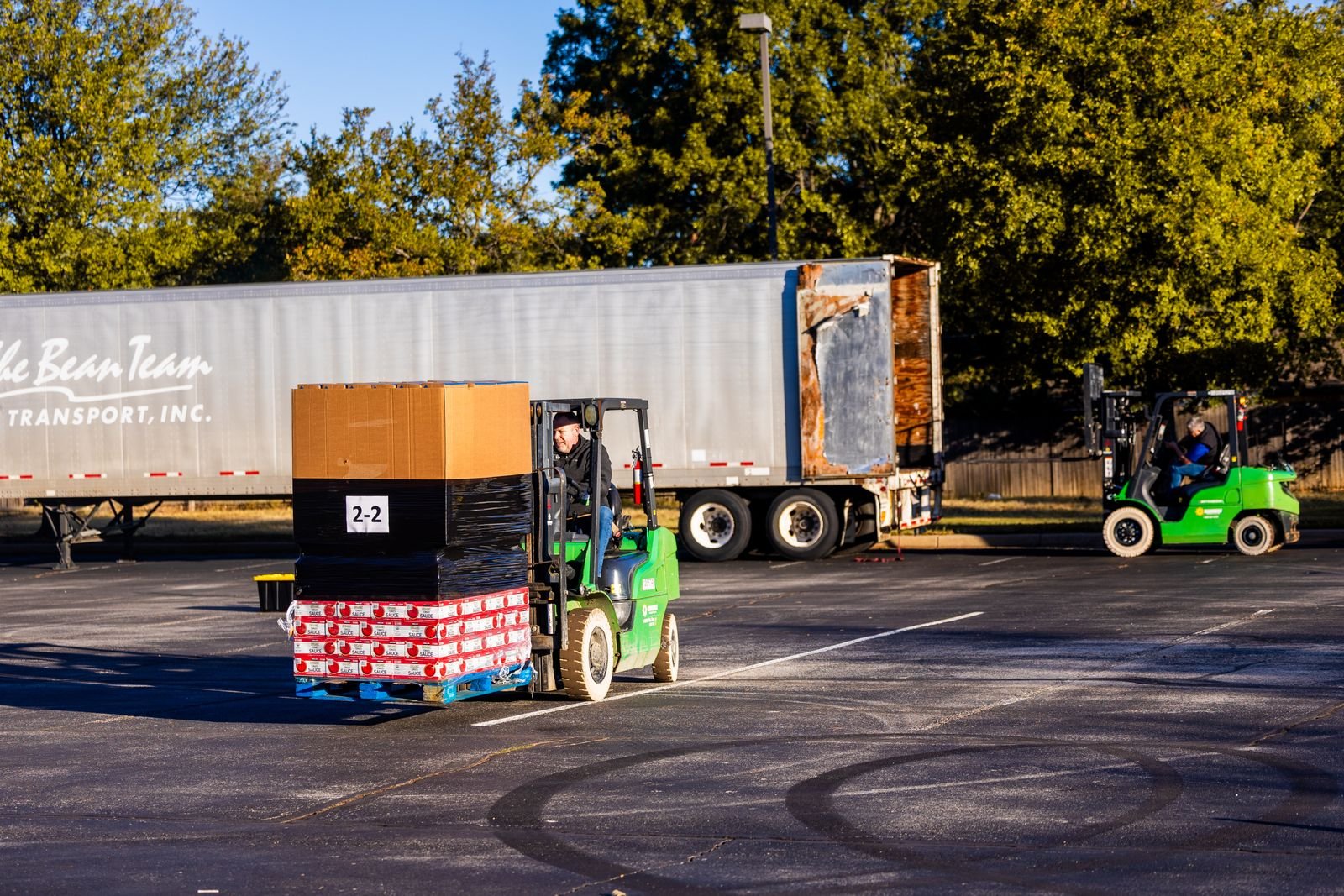
Drop and hook is common in dry van trucking. The driver leaves an empty trailer and hooks a preloaded one, then pulls out without waiting for anyone to load it. A live unload works differently: the driver waits at the dock while the consignee, meaning the receiver of the freight, empties the trailer. Long waits can earn detention pay. Whether they do depends on the carrier or broker agreement.
What Does a Dry Van Driver Do?
A dry van driver is a CDL holder who picks up enclosed freight from a shipper and delivers it to the consignee, staying within federal Hours of Service (HOS) limits the whole way. A typical load goes like this:
- Inspect the tractor and trailer before the trip, including doors, lights, tires, and brakes.
- Check in with the shipper and get a dock door or a preloaded trailer number.
- Verify the seal number and piece count on the bill of lading (BOL).
- Secure the load with load bars or straps if the freight could shift.
- Drive the route while an Electronic Logging Device (ELD) records driving time.
- Deliver to the consignee and get the BOL signed, noting any shortages or damage.

Is Dry Van Trucking Good for Beginners?
Yes, dry van trucking suits most beginners because each load has fewer variables than reefer work. Fewer things go wrong. A new driver can focus on backing and trip planning while learning HOS rules. There’s no set point to monitor or second engine to keep fueled, and spoilage simply isn’t a risk.
Dry van freight is widely available, so many carriers that train new drivers run dry vans. It isn’t all easy. Beginners still face detention and tight urban docks, and every so often a load will call for a driver-assist unload.
What Is a Reefer Trailer?
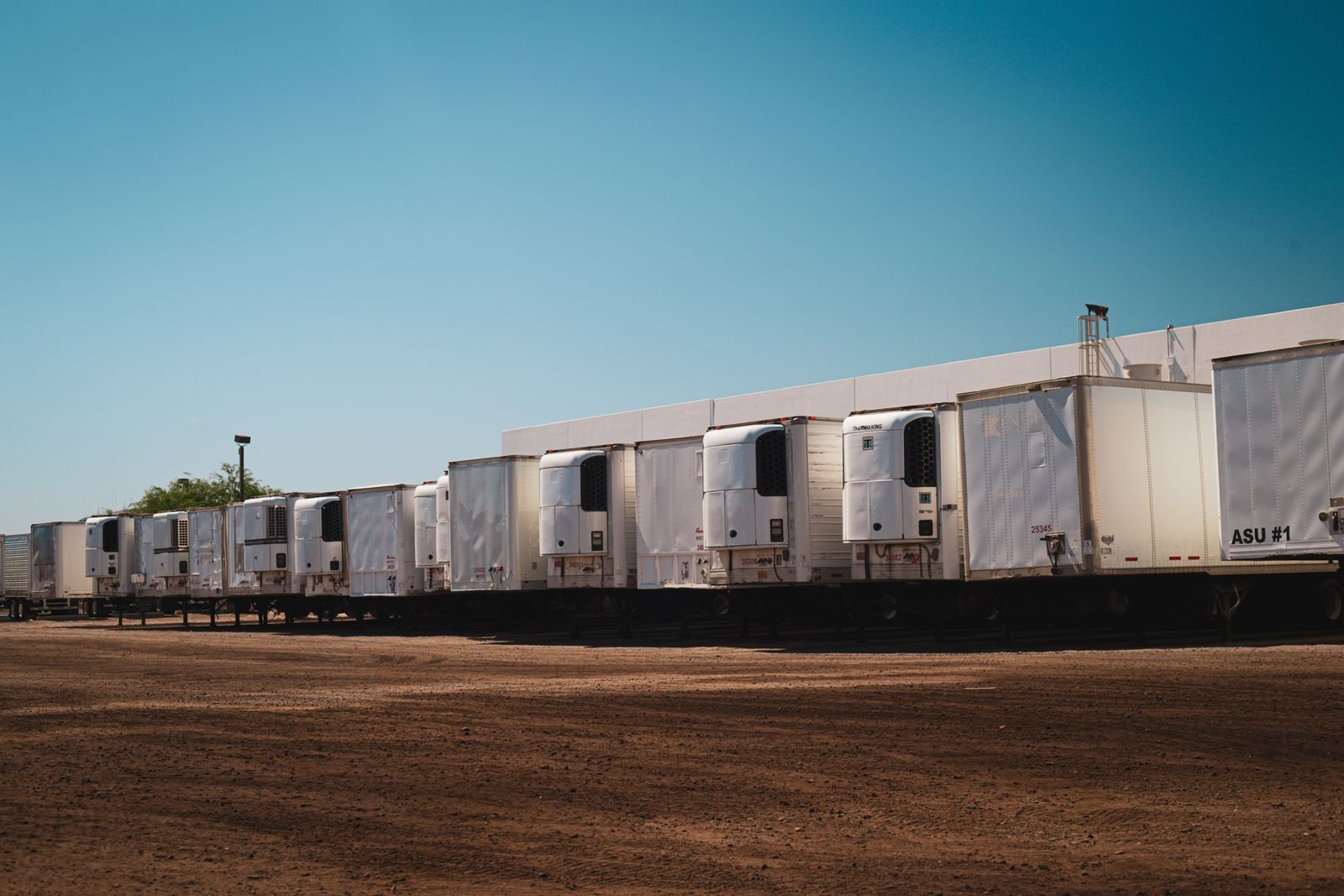
A reefer trailer is an insulated semi-trailer with a refrigeration unit mounted on its front wall that holds a set temperature for perishable goods such as fresh produce, frozen food, meat, dairy, and some pharmaceuticals. Two brands lead the US market. Thermo King and Carrier Transicold build most US reefer units, which draw from a separate diesel tank or, on newer models, electric power.
A reefer holds temperature. It isn’t built to pull warm product down. That’s why the shipper must load product already at the correct temperature, and many shippers also want the driver to pre-cool the trailer before loading starts.
Pulp temperature is the internal temperature of produce, taken with a probe thermometer. Seasoned reefer drivers check it at pickup and write the readings on the BOL. That note matters. If the consignee later rejects the load as out of range, the carrier can point to those written readings as proof of what it picked up.
What Temperatures Can a Reefer Trailer Hold?
Modern reefer units hold set points well below 0°F (-18°C) for frozen loads and above 50°F (10°C) for sensitive produce. Range varies by unit model. Always run the set point written on the BOL, whatever a general guide suggests. This table compares common freight types with the set points shippers often request.
| Freight Type | Common Set Point (°F / °C) | Usual Mode |
|---|---|---|
| Ice cream | -10 or colder / -23 or colder | Cycle |
| Frozen food | 0 or colder / -18 or colder | Cycle |
| Leafy greens | 32 to 34 / 0 to 1 | Continuous |
| Fresh meat and dairy | 33 to 38 / 1 to 3 | Continuous |
| Bananas | 56 to 58 / 13 to 14 | Continuous |
Continuous vs Cycle Mode
Continuous mode runs the reefer unit nonstop for steady airflow. Cycle mode, also called start-stop, shuts the unit off once the trailer reaches its set point, then fires it back up when the temperature drifts. This table compares the two modes.
| Mode | How It Works | Best For | Fuel Use |
|---|---|---|---|
| Continuous | Unit runs nonstop | Fresh produce and live product | Higher |
| Cycle | Unit starts and stops by temperature | Frozen loads | Lower |
Fresh produce keeps respiring after harvest, so it needs constant air movement to hold an even temperature throughout the load. Frozen product is different. It holds temperature well, so cycle mode saves fuel without putting the load at risk. Never switch modes against the shipper’s written instructions.
Dry Van vs Reefer Side-By-Side Comparison
In the dry van vs reefer comparison, temperature control is the core difference: a dry van has no refrigeration and hauls shelf-stable freight, while a reefer uses insulation and a refrigeration unit to hold a set temperature. Everything else follows. Payload, fuel use, pay, and appointment times all shift with temperature control, and so does the compliance paperwork each trailer carries.
This table compares dry vans and reefers across the factors drivers and shippers ask about most.
| Factor | Dry Van | Reefer |
|---|---|---|
| Temperature control | None | Set point held by reefer unit |
| Freight | Non-perishable goods | Perishable, temperature-controlled freight |
| Payload | Higher, no unit or insulation weight | Lower, unit and insulation add weight |
| Fuel | Tractor only | Tractor plus reefer unit fuel |
| Typical rates | Lower | Higher |
| Loading style | Often drop and hook | Often live load and unload |
| Appointment times | Mostly daytime | Frequent night and early morning |
| Washouts | Rarely required | Often required between loads |
| Compliance | Standard FMCSA rules | FMCSA, FSMA records, CARB in California |
| Learning curve | Lower | Higher |
Equipment Specs in Imperial and Metric
On US highways, dry vans and reefers share the same exterior limits, though their interiors differ, and only one of them carries its own power source. This table compares typical 53-foot equipment specs.
| Spec | Dry Van | Reefer |
|---|---|---|
| Exterior length | 53 ft (16.15 m) | 53 ft (16.15 m) |
| Exterior width | 102 in (2.59 m) | 102 in (2.59 m) |
| Common height | 13 ft 6 in (4.11 m) | 13 ft 6 in (4.11 m) |
| Interior width | Wider, thinner walls | Narrower, insulated walls |
| Floor | Wood or composite | Grooved aluminum for airflow |
| Pallets, single-stacked | 26 standard pallets | 26 standard pallets |
| Gross weight limit | 80,000 lb (36,287 kg) | 80,000 lb (36,287 kg) |
| Power source | None | Diesel or electric reefer unit |
The federal 80,000 lb (36,287 kg) gross limit applies on the Interstate System. A reefer unit and its fuel add weight that a dry van never carries, so a reefer hits that cap with less freight on board. Height works differently. Each state sets its own limit, and 13 feet 6 inches (4.11 m) is common across much of the country.
Freight Types Each Trailer Hauls
Each trailer type suits different freight, though some products move in either one depending on the season and how hot or cold the lane runs. This table compares common freight examples.
| Freight Example | Dry Van | Reefer |
|---|---|---|
| Paper and packaging | Yes | Yes, as a backhaul |
| Canned and boxed food | Yes | Yes, as a backhaul |
| Electronics | Yes | Yes, as a backhaul |
| Bottled drinks in winter | Risk of freezing | Yes, protect-from-freeze |
| Chocolate in summer | Risk of melting | Yes |
| Fresh produce | No | Yes |
| Frozen food | No | Yes |
| Temperature-sensitive pharmaceuticals | No | Yes |
Produce season drives reefer demand. When fresh produce ships in volume from California and Florida, or from the Rio Grande Valley, reefer capacity tightens and rates climb on those lanes.
Does Reefer Pay More Than Dry Van?
Yes, reefer loads usually pay more per mile than dry van loads, because shippers pay a premium for temperature control, reefer fuel, and the risk of a rejected load. The premium moves with the lane and the season, so no verified national per-mile figure applies. Market swings matter too. Check current spot and contract rates on DAT or Truckstop.
Company drivers see the gap two ways. Some carriers pay reefer drivers more per mile. Others keep the rate the same but offer more miles, because reefer freight runs year-round and tends to move on longer lanes.
Owner-operators notice the gap in gross revenue per load. That number misleads. Reefer work piles on costs that dry van work never carries, so gross revenue alone says little about what actually reaches the bank.
Does Higher Reefer Pay Offset Longer Waits?
No, higher reefer pay doesn’t always offset longer waits. Reefer freight often heads to grocery warehouses that bring live unloads and detention, plus lumper fees, which are charges from third-party crews that unload trailers. Waiting hours earn little. Detention pay is the exception, when it applies.
Use this formula to compare loads fairly:
Effective hourly pay = (line haul pay + detention pay) ÷ (driving hours + on-duty waiting hours)
Run the formula on one month of real loads from both trailer types. Then compare. The result tells you whether the reefer premium still stands once you account for every hour spent waiting on your own lanes.
Owner-Operator Cost Worksheet
Owner-operators should price reefer-only costs before switching. This worksheet compares each cost item for both trailers and shows how to calculate it, with no assumed dollar figures filled in.
| Cost Item | Dry Van | Reefer | How to Calculate |
|---|---|---|---|
| Tractor fuel | Yes | Yes | Miles ÷ mpg × diesel price |
| Reefer unit fuel | N/A | Yes | Unit hours × gallons per hour × price |
| Trailer payment or lease | Yes | Usually higher | Monthly payment ÷ monthly miles |
| Reefer unit maintenance | N/A | Yes | Service visits × shop rate |
| Trailer washouts | Rare | Frequent | Washouts per month × local price |
| Cargo and spoilage coverage | Standard cargo | Reefer breakdown coverage | Quote from your insurer |
| Lumper fees | Sometimes | Common | Check reimbursement terms per load |
| Deadhead miles | Yes | Yes | Empty miles × cost per mile |
Calculate true profit with these steps:
- Add all revenue for the month, including detention and fuel surcharges.
- Subtract every cost in the worksheet.
- Divide the remainder by total miles, including deadhead miles.
- Compare the result against the same calculation for dry van loads.
Reefer fuel tax rules differ by state. Because fuel burned from a separate reefer tank doesn’t propel the truck, some states allow tax refunds or dyed off-road diesel for reefer units. Confirm each state’s rules with its fuel tax office before you buy reefer fuel.
Is Reefer Harder Than Dry Van?
Yes, reefer work is usually harder than dry van work because reefer drivers monitor temperatures, wait through more live loads, handle night appointments, and carry liability for rejected loads. Dry vans have their own headaches. Their drivers still deal with detention and tight docks, but each dry van load involves fewer checks and fewer ways for freight to spoil.
At every stop, a reefer driver checks the unit’s set point and mode, along with fuel level and alarm codes. Small misses get expensive. If the unit fails or the set point is wrong, the consignee can reject the entire load, and that rejection can trigger a cargo claim worth far more than the freight bill.
Schedules add strain. Reefer freight runs on grocery and food-service clocks, and many distribution centers receive loads overnight, which pushes drivers onto irregular sleep cycles.
How Reefer Work Affects Hours of Service
Reefer work strains HOS clocks because waiting at a dock counts as on-duty time. The math is unforgiving. Under Federal Motor Carrier Safety Administration (FMCSA) rules, a property-carrying driver gets 11 hours of driving within a 14-hour window after 10 consecutive hours off duty.
That 14-hour window keeps running during waits. A driver who sits four hours at a live unload has only 10 hours left in the window, no matter how few miles remain to drive. Drivers also need a 30-minute break after 8 cumulative hours behind the wheel. On top of that, the 60-hour or 70-hour limit over 7 or 8 days still applies.
The sleeper berth provision lets drivers split off-duty time into pairs, such as 8 hours and 2 hours or 7 hours and 3 hours. Reefer drivers often use those splits to rest through long dock waits. ELDs log it all, on either trailer.
Reefer Noise and Rest Breaks
The reefer unit sits on the trailer’s front wall, directly behind the sleeper cab, so its engine noise carries straight into the bunk. Most drivers adapt with a few habits:
- Use earplugs or a white noise machine during rest.
- Choose cycle mode when the BOL allows it, because the unit runs less often.
- Park on level ground to reduce vibration through the cab.
- Top off reefer fuel before sleeping so the unit does not run dry overnight.
Federal and State Compliance for Reefer Haulers
Reefer haulers follow the same FMCSA rules as dry van carriers, plus food-safety duties under the FDA Food Safety Modernization Act (FSMA). Reefers operating in California must also meet emissions rules for transport refrigeration units (TRUs) from the California Air Resources Board (CARB). Expect more records. Equipment checks multiply too, and so does the cost per load.
Dry vans aren’t exempt. Any dry van carrier hauling food also falls under FSMA sanitation rules, even though the temperature control duties land mainly on reefer freight.
FSMA Sanitary Transportation Rule
The FDA’s Sanitary Transportation of Human and Animal Food rule, finalized in 2016 under FSMA, assigns duties to shippers, loaders, carriers, and receivers of food. Carriers under the rule must:
- Keep vehicles and equipment in sanitary condition for the food they haul.
- Pre-cool the trailer when the shipper requires it.
- Show that the required temperature was maintained, and provide records when the shipper or receiver asks for them.
- Follow written procedures for cleaning, prior cargo, and temperature control.
- Train carrier personnel in sanitary practices when the contract requires it, and keep training records.
Trailer washouts tie straight to FSMA sanitation duties. Many food shippers want a washout certificate before loading, and getting one adds both time and cost to reefer work.
CARB TRU Rules in California
CARB regulates diesel-powered TRUs operating in California through its TRU Airborne Toxic Control Measure. Two duties follow. Covered units must meet in-use emission standards, and their owners have to register them in CARB’s Air Resources Board Equipment Registration (ARBER) system.
In 2022, CARB amended the TRU rule with stricter requirements, including a zero-emission phase-in for TRUs mounted on straight trucks. Any reefer carrier running California lanes should check unit compliance on CARB’s TRU program page before dispatching loads into the state. Dry vans without a TRU are exempt.
Which Trailer Should You Choose?
Choose a dry van for simpler loads, more drop-and-hook freight, and steadier sleep. Choose a reefer for higher rates and year-round freight if you can handle night appointments, temperature checks, and extra compliance. Role matters. Company drivers don’t weigh the same factors as owner-operators, and shippers come at the question from a different angle entirely.
This decision matrix compares the better fit for each role and the main risk to watch.
| Role | Better Fit | Main Reason | Watch Out For |
|---|---|---|---|
| New company driver | Dry van | Fewer variables while learning | Detention at busy docks |
| Experienced company driver | Reefer | Higher pay potential, steady freight | Night unloads, rejected loads |
| Team drivers | Reefer | Long perishable runs suit nonstop driving | Unit noise during sleeper time |
| Owner-operator, tight budget | Dry van | Lower equipment and operating costs | Lower rates in soft markets |
| Owner-operator, reefer experience | Reefer | Rate premium and backhaul flexibility | Unit fuel, maintenance, claims |
| Shipper, shelf-stable goods | Dry van | Lower cost per load | Heat or freeze risk on some products |
| Shipper, perishable goods | Reefer | Temperature control required | FSMA records and pre-cooling |
Reefer owner-operators get one extra edge. A reefer can haul dry freight on a backhaul, which cuts the deadhead miles that would otherwise eat into the margin between perishable runs. The reverse doesn’t work: a dry van can’t haul reefer freight.
How Shippers Choose Between Dry Van and Reefer
A shipper should book a reefer whenever a product’s storage range falls outside the temperatures it will face in transit. Follow these steps to choose:
- Check the product label or specification for a required storage temperature.
- Map the lane’s seasonal weather, such as winter freezes in the Upper Midwest or summer heat in Arizona and Texas.
- Request quotes for both trailer types from carriers or brokers.
- Write the set point, mode, and pre-cool requirement on the BOL for reefer loads.
- Request a temperature download from the reefer unit at delivery.
Protect-from-freeze loads are a common gray area. Bottled drinks and paint ride in dry vans most of the year, as do some chemicals, but in winter they need a reefer holding above 32°F (0°C).
Frequently Asked Questions
Yes. A reefer can carry dry freight with its unit off or set to a mild temperature. Carriers often book dry loads into reefers as backhauls, which cuts the empty miles a truck would otherwise run between perishable loads.
A 53-foot dry van holds 26 standard 48 x 40 inch (1,219 x 1,016 mm) pallets single-stacked, loaded in 13 rows of 2 pallets placed side by side. That’s a full floor.
Yes. Double stacking raises capacity to 52 standard pallets, but only when the freight is stackable and the two-high pallets fit under the trailer ceiling. The total still has to stay within the 80,000 lb (36,287 kg) gross limit.
No, not usually. Most dry van freight is no-touch, so dock workers or lumpers handle the unloading. Some loads do call for driver assist, and when they do, the rate confirmation should spell that out before pickup.
Yes. Most reefer drivers sleep with the unit running. Earplugs and white noise take the edge off the engine noise behind the sleeper, and cycle mode helps too when the BOL allows it.
Conclusion
The dry van vs reefer decision will keep shifting as equipment and rules change. Electric and hybrid reefer units from major manufacturers are entering fleets, and CARB’s TRU amendments push California lanes toward zero-emission refrigeration. Telematics now let shippers watch trailer temperatures in real time. The bar keeps rising. Carriers that document every set point will hold the edge in reefer record-keeping.
Dry vans will stay the entry point for new drivers and the default for shelf-stable freight. Reefers will hold their rate premium wherever temperature control matters. Do the math first. Track your effective hourly pay and price the reefer-only costs, then recheck federal and state rules every year before you commit. Then match the trailer to your freight and your lanes, along with the kind of life you want on the road.

Esther Howard leads trucking and commercial driving content at TruckingHow, covering CDL training, trucking regulations, fleet operations, and truck maintenance. With over a decade of experience researching the transportation industry, she brings a practical, research-driven approach to driver education and safety standards. Her guides help drivers, fleet owners, and trucking professionals make informed decisions on and off the road.
Related Posts