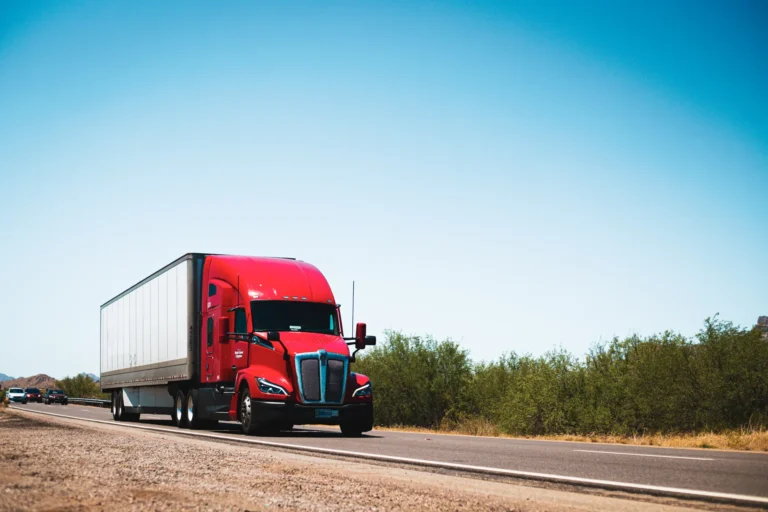
LTL vs FTL: Choosing Between Less-Than-Truckload and Full Truckload
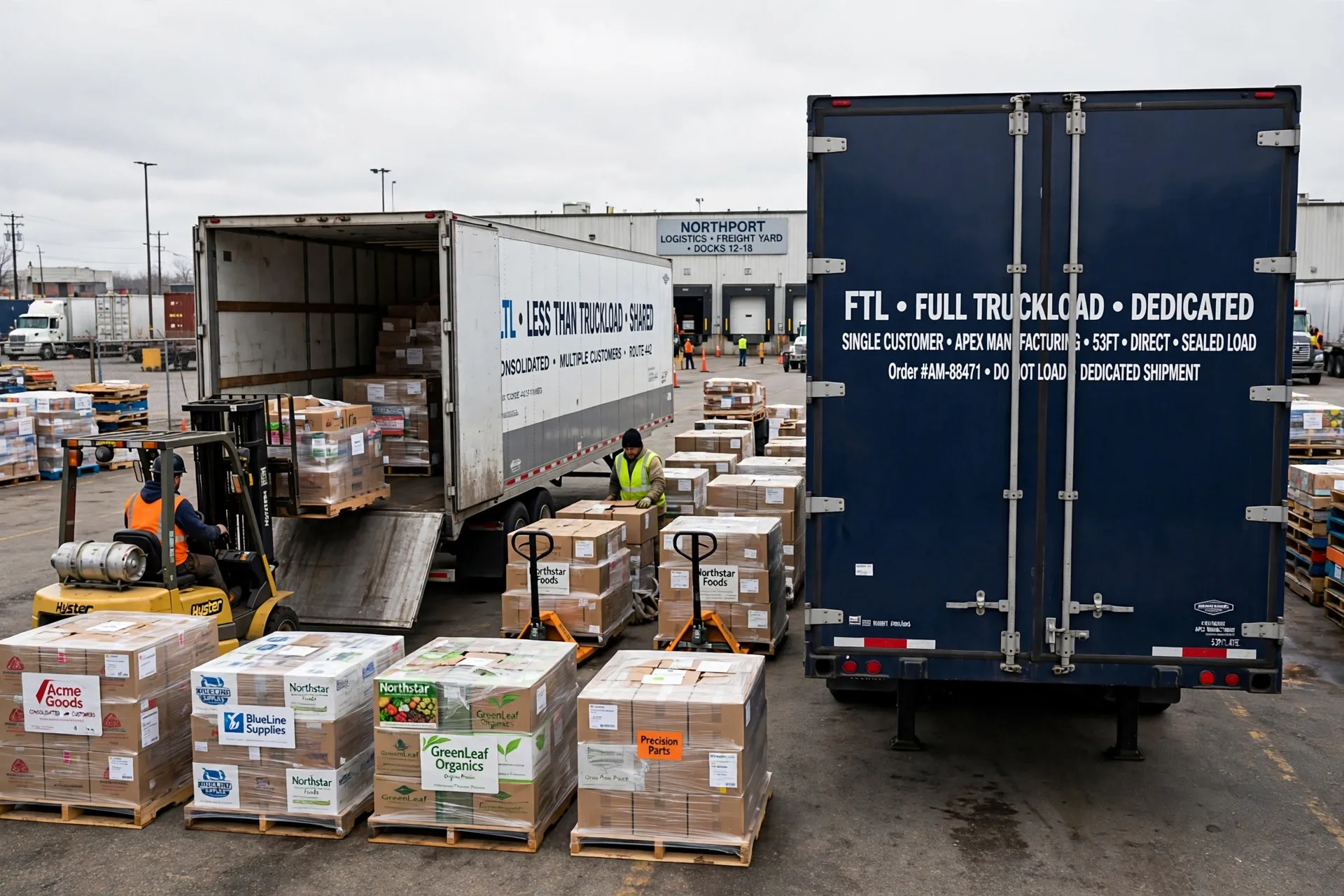
LTL vs FTL is a freight mode choice. It decides whether your shipment shares a trailer with other freight or gets a whole one to itself, and that single question shapes both price and transit time. Less-than-truckload (LTL) suits roughly 1 to 6 pallets that can ride with other freight, while full truckload (FTL) suits large, heavy, fragile or urgent loads that need a dedicated trailer.
Key Takeaways
- Less-than-truckload (LTL) shipping shares trailer space and suits small palletized shipments, commonly in the 150 to 15,000 lb (68 to 6,804 kg) range.
- Full truckload (FTL) shipping reserves a dedicated trailer, usually a 53-foot (16.2 m) dry van, and moves freight direct from pickup to delivery.
- LTL prices depend on freight class, weight, distance and accessorials, while FTL prices depend mainly on the lane, mileage, equipment and market rates.
- The 2025 National Motor Freight Classification (NMFC) update moved many commodities toward density-based freight class, so accurate dimensions now matter more for LTL cost.
- No universal break-even pallet count exists, so mid-size loads deserve side-by-side quotes for volume LTL, partial truckload and FTL.
- Cargo vans and box trucks cover urgent, short-haul or fragile freight that should not pass through LTL terminals.
What Is the Difference Between LTL and FTL?
The difference between LTL and FTL is trailer use: LTL freight shares a trailer with other shippers and moves through terminals, while FTL freight fills or reserves a whole trailer and travels direct from pickup to delivery. That single split drives the price gap. It also explains why LTL takes longer and why its freight gets handled, and sometimes damaged, more often than a load that rides alone.
Everything else follows from shared versus dedicated space. Sharing lowers the bill for small shipments, since several shippers split what one trailer and one linehaul run would cost any of them alone. A dedicated trailer buys speed and control instead.
What LTL Means in Trucking
LTL stands for less-than-truckload. The LTL meaning in trucking is shared capacity: a carrier combines freight from many shippers in one trailer, and each shipper pays only for its share of space and weight.
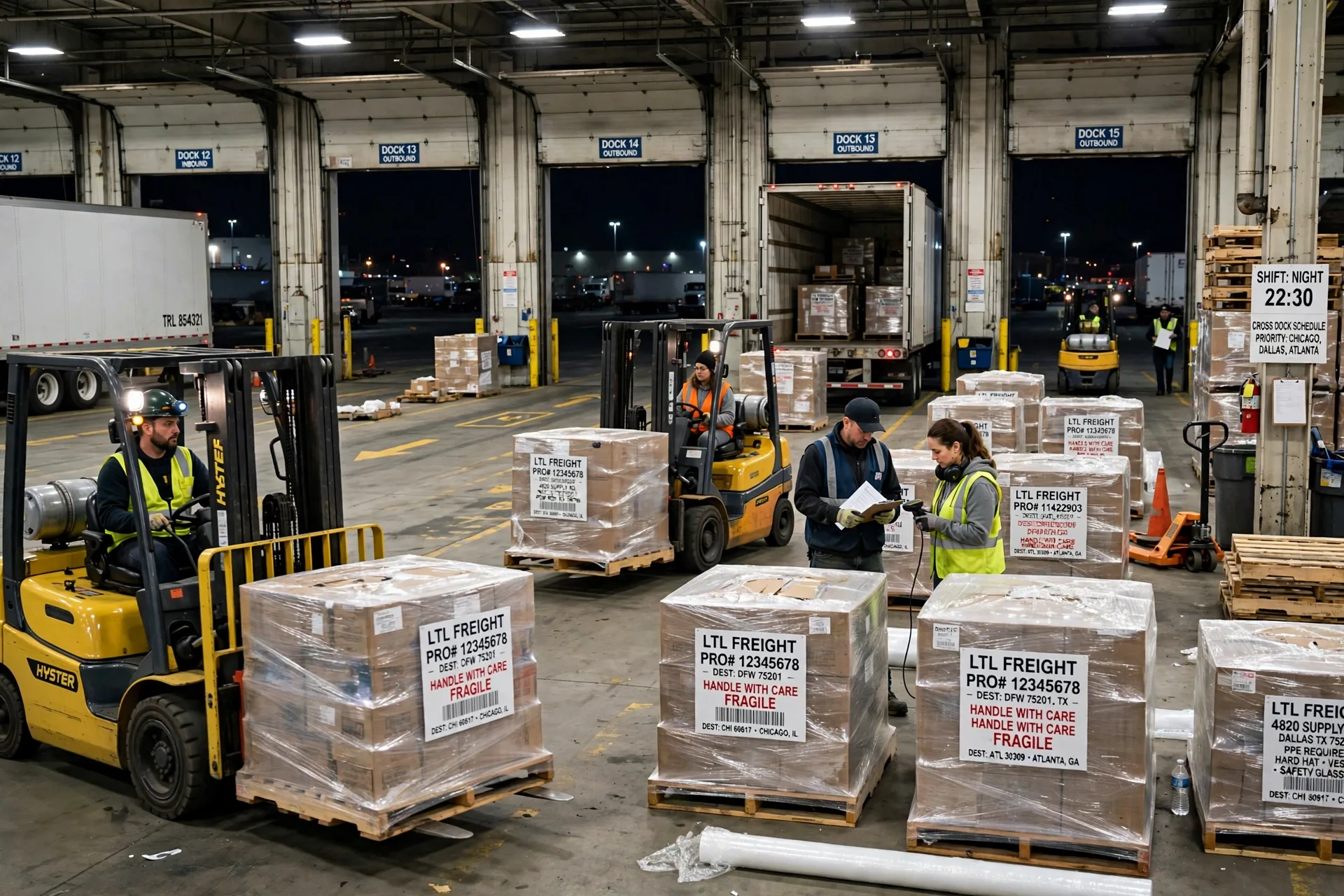
The LTL freight meaning covers movement, too. A local driver picks up your pallets and takes them to an origin terminal. Dock crews then cross-dock the pallets onto a linehaul trailer bound for a destination terminal or a break-bulk hub, and a second local driver makes the final delivery.
That hub-and-spoke network lets carriers pack trailers efficiently, and efficient trailers are what keep LTL prices low for shippers moving only a pallet or two. It’s also why transit runs longer. A direct truck simply skips those stops.
Put simply, the LTL trucking meaning is a pay-for-what-you-use service, where you give up some speed in exchange for a lower price on small shipments. That’s the deal.
Every LTL shipment gets a PRO number, a carrier-assigned tracking ID printed on the bill of lading (BOL) and the freight labels. You’ll use it to track freight and request proof of delivery. Claims reference it, too.
Most LTL freight is palletized and shrink-wrapped. Forklifts move it at every terminal, which is why loose cartons and odd shapes push up both the cost and the damage risk.
What Full Truckload Shipping Means
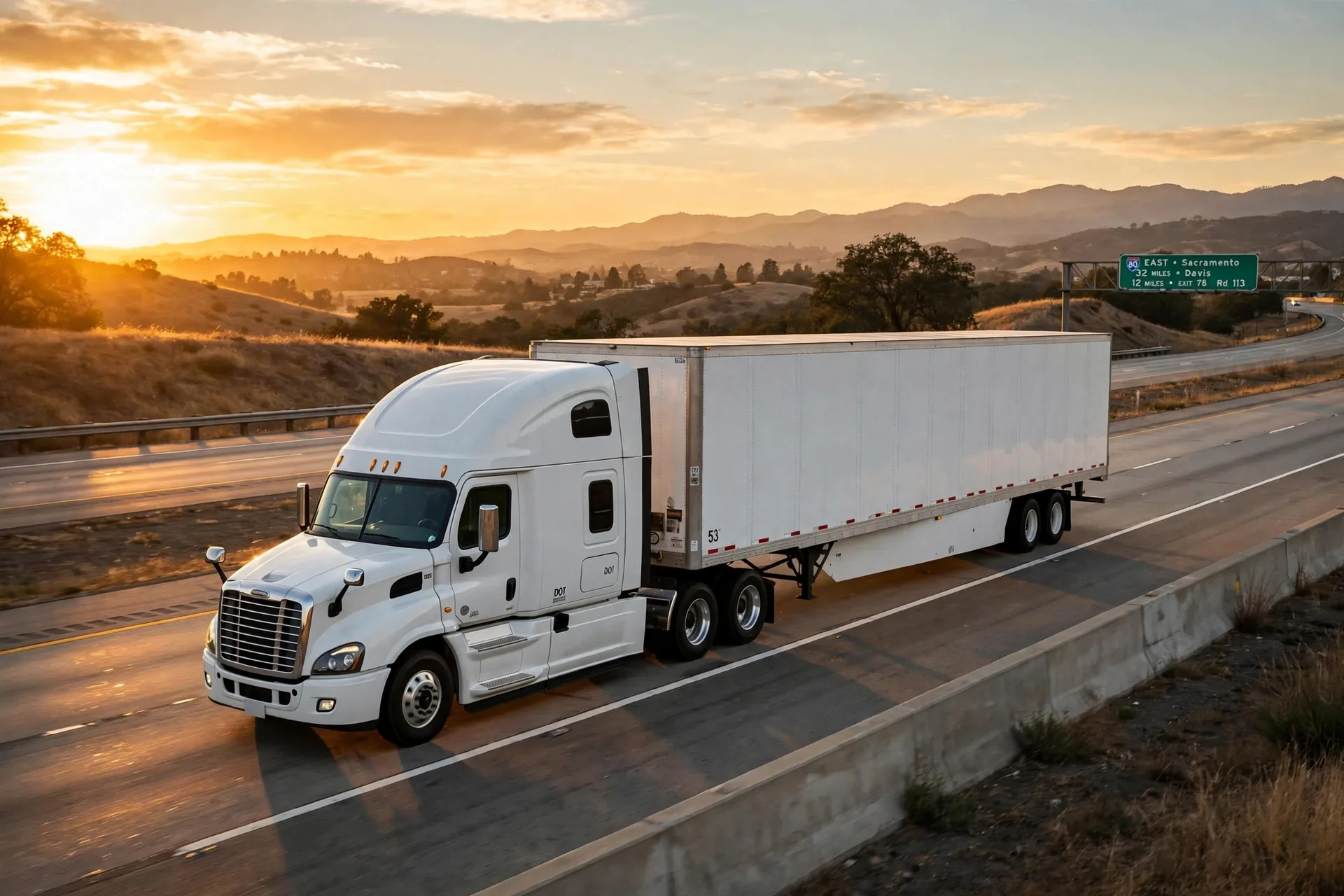
Full truckload shipping (FTL, also called TL) gives one shipper exclusive use of a trailer. No other freight rides along. The carrier sends a tractor and trailer to your dock, and once the freight is loaded, the driver hauls it straight to the receiver with no terminal transfers.
In the USA, the standard FTL trailer is the 53-foot (16.2 m) dry van. It isn’t the only option. Refrigerated (reefer) trailers handle temperature-controlled freight, and flatbeds take the oversized or open-deck loads that won’t fit inside a box.
Weight sets the real ceiling. Under 23 CFR 658.17, federal rules cap gross vehicle weight at 80,000 lb (36,287 kg) on the Interstate System. Once you subtract the weight of the tractor and trailer, a dry van typically carries about 42,000 to 45,000 lb (19,051 to 20,412 kg) of payload, depending on equipment.
Filling the trailer isn’t required. Since the whole truck is yours either way, FTL makes sense whenever speed or security outweighs the cost of empty floor, and the same holds for freight that can’t take repeated handling.
LTL vs FTL Comparison at a Glance
An LTL vs FTL comparison comes down to five factors: shipment size, pricing basis, transit time, handling and damage risk. LTL wins on cost for small, durable shipments, and FTL wins on speed, security and cost per pallet for large or sensitive loads.
This table compares LTL vs FTL shipping across the factors that drive most freight decisions.
| Factor | LTL | FTL |
|---|---|---|
| Typical Shipment Size | 1 to 6 pallets, 150 to 15,000 lb (68 to 6,804 kg) | Large loads up to trailer capacity |
| Trailer Use | Shared with other shippers | Dedicated to one shipper |
| Pricing Basis | Freight class, weight, distance, accessorials | Lane, miles, equipment, market rate |
| Route | Hub-and-spoke through terminals | Direct from pickup to delivery |
| Handling | Several forklift transfers | Loaded once, unloaded once |
| Transit Time | Longer, set by terminal schedules | Shorter, set by miles and driver hours |
| Damage Risk | Higher from extra handling | Lower with single loading |
| Tracking | PRO number | Load or reference number |
| Best For | Small, durable, flexible freight | Large, fragile, urgent or high-value freight |
Is LTL Cheaper Than FTL?
Yes, LTL is cheaper than FTL for small shipments because you pay only for the space and weight your freight uses, but FTL often costs less per pallet once a load fills a large share of the trailer or triggers LTL volume and space rules.
The FTL vs LTL freight cost gap narrows as a shipment grows. Eventually, the LTL charge for a stack of pallets, with accessorials added, approaches or passes what a dedicated truck would cost on the same lane. Then FTL wins.
Where that crossover lands depends on the lane and the season, and it shifts from carrier to carrier as well. No verified figure is available for a universal break-even pallet count. Quote both modes on any mid-size load.
How LTL Freight Rates Are Built
LTL carriers price from a base rate quoted per hundredweight (cwt), which means per 100 lb (45.4 kg). Freight class drives it. Shipment weight matters as well, and so do the origin and destination ZIP codes that define where the freight starts and where it ends up.
Because carriers price in weight breaks, heavier shipments usually earn a lower rate per cwt once they cross into the next bracket. Lower classes earn lower rates, too.
This worked example uses placeholder variables instead of real prices, because LTL rates shift from one carrier and lane to the next and change over time.
- Multiply the shipment weight (W) by the base rate per cwt (R), then divide by 100 to get the gross charge (G = W x R / 100).
- Apply the negotiated discount (D%) to get the net linehaul charge (N = G x (1 – D%)).
- Compare N with the carrier’s minimum charge (M) and keep the higher number.
- Add the fuel surcharge (F%), which carriers usually apply to the net linehaul charge.
- Add each accessorial charge (A1, A2, A3) to reach the total invoice (T).
The finished formula reads: T = the higher of N or M, multiplied by (1 + F%), plus A1 + A2 + A3.
How FTL Rates Are Built
FTL carriers usually price per mile or as a flat rate for a specific lane, such as Chicago, IL, to Atlanta, GA. Weight matters less than in LTL. The load just has to stay under legal limits.
Spot rates come from the open market and rise or fall with truck supply and demand on any given day. Contracts work differently. A shipper negotiates contract rates for recurring lanes, and those rates hold for a set term.
Both rate types add a fuel surcharge. Detention charges apply when a driver waits at the dock beyond the free time set in the rate agreement.
Because you’re paying for the full trailer, FTL cost per pallet drops with every pallet you add, and that math gives mid-size shipments a real shot at pricing lower as FTL. Run the numbers.
How Is LTL Freight Class Determined?
LTL freight class is determined by the National Motor Freight Classification (NMFC), which the National Motor Freight Traffic Association (NMFTA) publishes and which assigns each commodity one of 18 classes from 50 to 500 based on density, handling, stowability and liability. Lower classes cost less to ship.
The 18 classes run 50, 55, 60, 65, 70, 77.5, 85, 92.5, 100, 110, 125, 150, 175, 200, 250, 300, 400 and 500. Dense freight that loads easily sits low. Light or fragile goods climb toward the top of the scale, and bulky items that eat up trailer space land up there with them.
Each NMFC item carries an item number and either a fixed class or a density scale that sets class by pounds per cubic foot (lb/ft³). Put both on your BOL. That means the NMFC item number and the class, written exactly as the current tariff lists them.
Wrong classes don’t stay hidden. Carriers measure freight at terminals, and when the numbers don’t match the paperwork, they reclassify it and bill the correct class plus a fee.
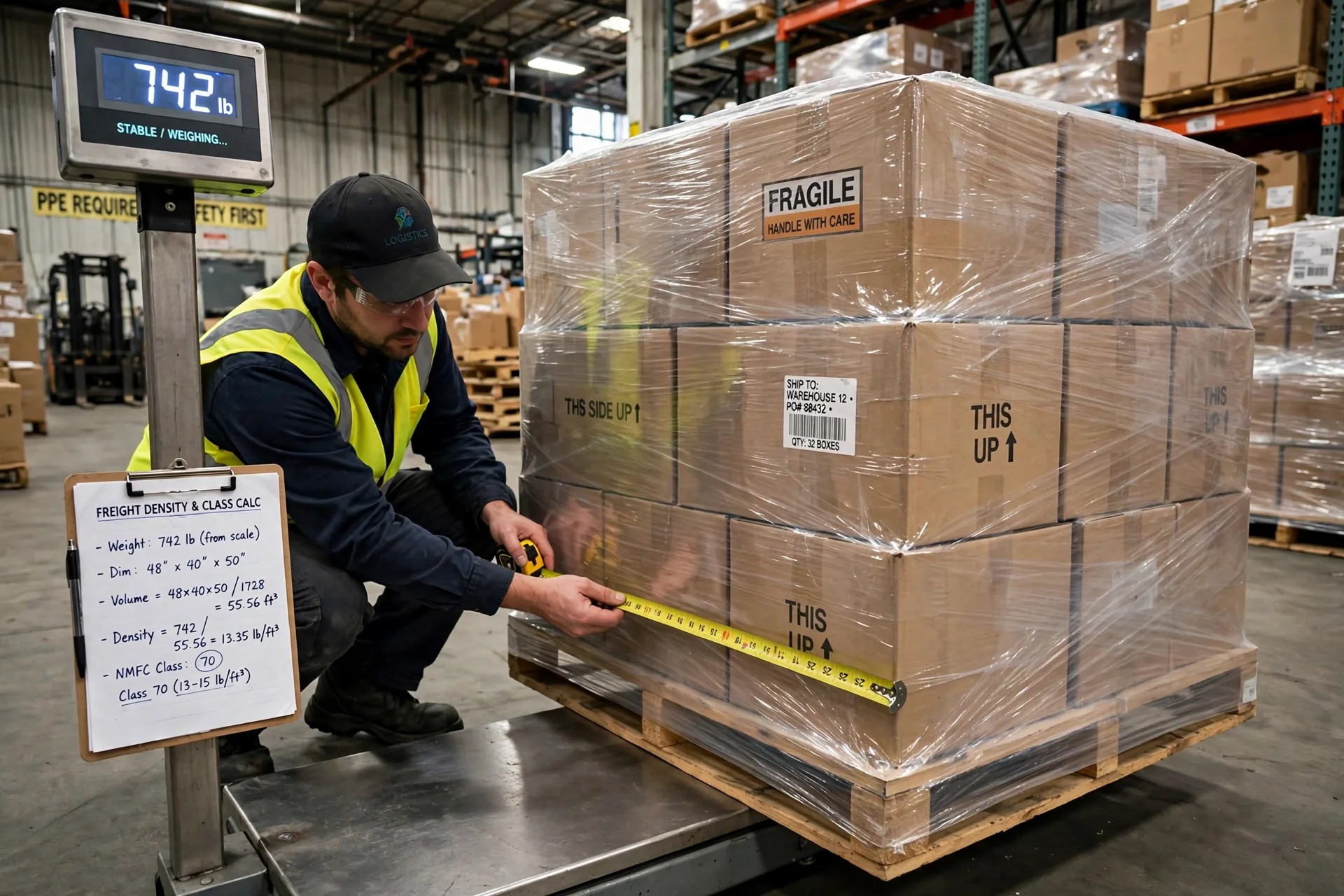
How to Calculate Freight Density
Freight density is the weight of a shipment divided by the space it occupies, and it’s the number that now sets class for a growing share of commodities. Use these steps for each handling unit.
- Measure length, width and height in inches, including the pallet and any overhang.
- Multiply the three dimensions to get cubic inches.
- Divide cubic inches by 1,728 to convert to cubic feet.
- Divide total weight in pounds, including the pallet, by cubic feet to get density in lb/ft³.
- Match that density to the current NMFC item or density scale to find the class.
Example: a 48 x 40 x 48 inch (122 x 102 x 122 cm) pallet weighing 500 lb (227 kg) measures 92,160 cubic inches, or 53.33 cubic feet (1.51 m³). Its density is 9.38 lb/ft³ (150 kg/m³).
What Changed with the 2025 NMFC Update
NMFTA’s Docket 2025-1 took effect on July 19, 2025, and moved a large number of commodities from fixed classes to density-based classification. It revised the density scale itself, too.
No verified figure is available for the average rate impact of the change. Winners and losers exist, though. Accurately measured dense freight tends to benefit, while light, bulky freight can jump to a higher class and cost more to move.
Before you book, check current classes through NMFTA’s ClassIT+ tool or with your carrier. Don’t copy old BOLs. Class assignments carried over from past paperwork are a common source of reclass fees, and a quick lookup avoids them.
When Should I Use FTL Instead of LTL?
Use FTL instead of LTL when freight takes up a large share of a 53-foot trailer, weighs enough to trigger LTL volume pricing, is fragile or high value, or must meet a tight delivery deadline, because a dedicated trailer removes terminal stops and extra handling.
Size is only one trigger. A single pallet of high-value electronics can justify a dedicated truck if keeping it secure matters more to you than the extra cost of an unfilled trailer.
This table matches common shipment profiles to the mode that fits each one best.
| Shipment Profile | Best Mode | Why It Fits |
|---|---|---|
| 1 to 6 durable pallets, flexible date | LTL | Pay only for space used |
| Mid-size load, several pallets | Volume LTL or partial truckload | Shared trailer with fewer transfers |
| Fragile or high-value goods | FTL | Single load, no terminal handling |
| Tight delivery deadline | FTL or expedited van | Direct route, no terminal stops |
| Load fills most of a 53 ft trailer | FTL | Lowest cost per pallet |
| 1 to 3 pallets, same-day local delivery | Cargo van | Direct, fast pickup and delivery |
What Is Partial Truckload?
Partial truckload (PTL), often sold as volume LTL, sits between standard LTL and FTL. It fills a gap. Carriers and brokers quote it for loads too large for standard LTL tariffs but too small to justify a dedicated 53-foot trailer.
PTL pricing usually depends on linear feet and the lane rather than strict freight class. Handling drops, too. Many PTL moves stay on a single trailer with far fewer terminal transfers than standard LTL, so the freight spends less time on a forklift.
Thresholds for volume quotes differ by carrier. Ask each carrier or broker for its volume rule before you request a standard LTL rate on a large shipment.
How Many Pallets Fit in a 53-Foot Trailer?
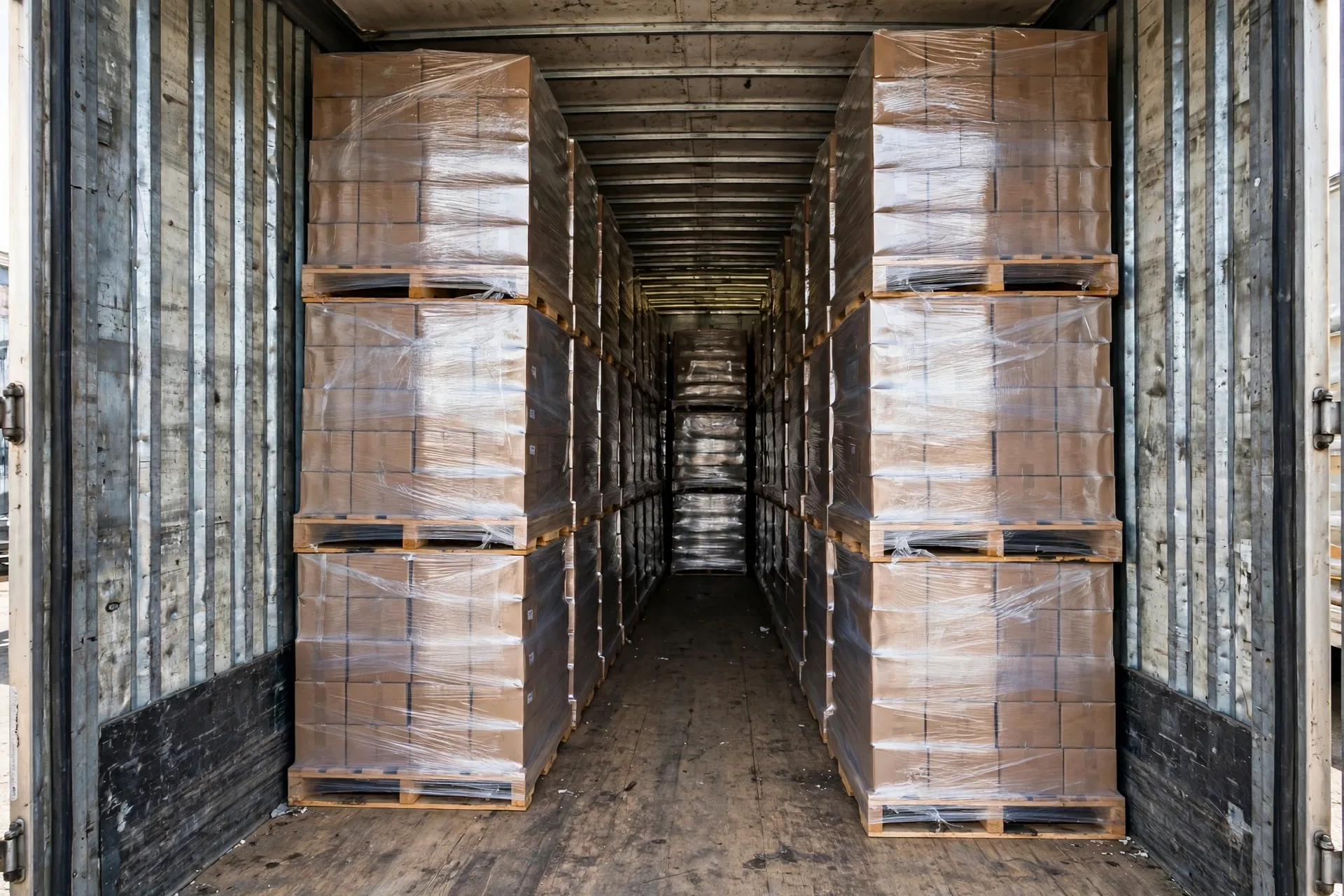
A 53-foot (16.2 m) dry van holds 26 standard 48 x 40 inch (122 x 102 cm) pallets loaded straight and single stacked, about 30 when pallets are turned and pinwheeled, and up to 52 when freight can be double stacked within the trailer’s legal weight limit.
The math is simple. Loaded lengthwise, each row of two pallets uses 4 linear feet (1.2 m) of floor, so 13 rows take up 52 linear feet (15.8 m) and leave a small gap at the doors.
This table compares pallet counts by loading method in a standard 53-foot dry van.
| Loading Method | Standard Pallets | Linear Feet (ft / m) | Limiting Factor |
|---|---|---|---|
| Straight, single stack | 26 | 52 / 15.8 | Floor length |
| Turned and pinwheeled, single stack | About 30 | 52 to 53 / 15.8 to 16.2 | Pallet pattern and trailer width |
| Straight, double stack | 52 | 52 / 15.8 | Payload and freight strength |
Double stacking hits the weight cap fast. At a 45,000 lb (20,412 kg) payload, 52 pallets can average only about 865 lb (392 kg) each, which rules out double stacking for heavy freight.
Should I Use a Cargo Van or Box Truck Instead of LTL?
Yes, a cargo van or box truck is the better choice over LTL when freight is urgent, fragile, moving a short regional distance or needs direct delivery with no terminal stops, because the vehicle carries only one shipper’s freight; LTL usually costs less on long lanes.
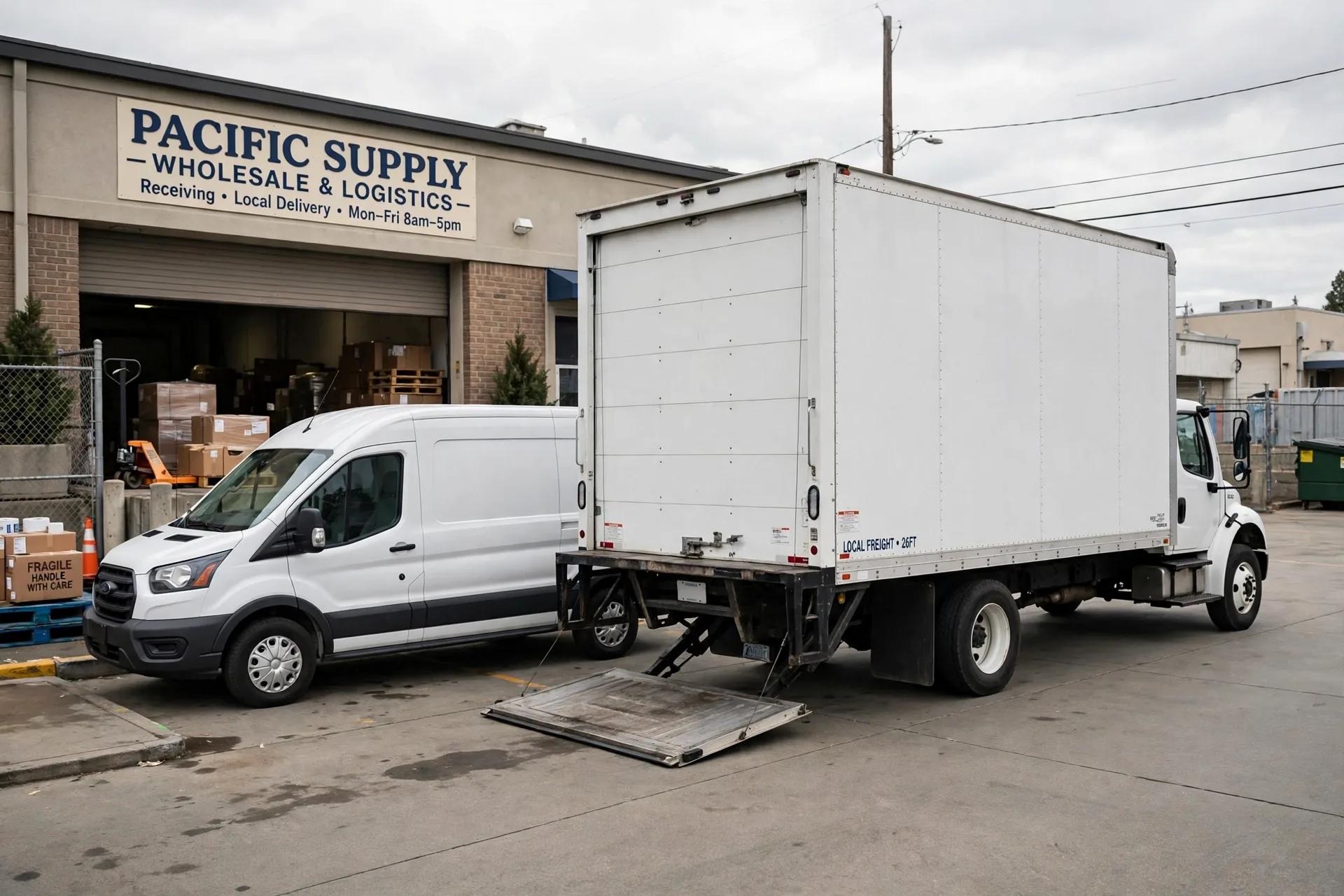
A box truck, also called a straight truck, has its cargo box mounted on the same chassis as the cab. Liftgates are common. Many 26-foot (7.9 m) models carry one, which makes deliveries easier at businesses without a loading dock.
The cargo van is the smallest tier. It handles a few pallets or loose cartons on same-day local moves, and it fits into spots where a large truck can’t park.
The Five-Tier Freight Decision Ladder
A cargo van vs box truck vs LTL vs FTL comparison works best as a ladder. Start at the bottom. Move up a tier only when your freight outgrows the one below it, whether by pallet count or by urgency.
This table compares the five freight tiers by capacity, best use and main trade-off.
| Tier | Typical Capacity | Best Use | Main Trade-Off |
|---|---|---|---|
| Cargo Van | 1 to 3 pallets, model dependent | Same-day local, urgent parts | Low payload; check manufacturer rating |
| 26 ft Box Truck | About 12 standard pallets | Regional direct moves, liftgate deliveries | Payload limited by GVWR |
| LTL | 150 to 15,000 lb (68 to 6,804 kg) | Durable freight on long lanes | Terminal handling, slower transit |
| Volume LTL or PTL | Mid-size loads priced by linear feet | Loads too big for standard LTL | Carrier thresholds vary |
| FTL (53 ft Dry Van) | 26 to 30 pallets single stacked | Large, fragile or urgent freight | You pay for the whole trailer |
The 12-pallet figure for a 26-foot box truck comes from floor math: 312 inches (7.9 m) of length fits six rows of two 48-inch-deep pallets. Bodies vary, though. Measure the interior of the specific truck before you plan the load.
Payload on a box truck depends on the gross vehicle weight rating (GVWR) printed on the door plate, minus what the truck itself weighs. Check that rating before loading heavy freight.
Is FTL Faster Than LTL?
Yes, FTL is faster than LTL on most lanes because a full truckload travels direct from shipper to receiver, while LTL freight stops at an origin terminal, a destination terminal and often a break-bulk hub, where crews sort and cross-dock it onto other trailers.
Each terminal stop adds time. LTL freight also waits for a trailer to fill on its outbound lane, and pickups follow the carrier’s daily route instead of your schedule.
FTL has a speed limit of its own. Federal Motor Carrier Safety Administration (FMCSA) hours-of-service rules let a property-carrying driver drive up to 11 hours within a 14-hour on-duty window after 10 consecutive hours off duty.
Teams solve it. Two drivers alternate shifts, so the truck keeps rolling while one of them sits out the required rest. Ask for team service when a long FTL lane can’t wait on a single driver’s clock.
Is LTL Freight More Likely to Be Damaged?
Yes, LTL freight is more likely to be damaged than FTL freight because LTL pallets are loaded, unloaded and cross-docked several times at terminals and share trailer space with other shippers’ cargo, while FTL freight is usually loaded once at origin and unloaded once at delivery.
In LTL, packaging is your best defense. Build square, stable pallets with no overhang, then lock the cartons down with stretch wrap and corner boards so they hold up through every forklift transfer.
Mark freight that can’t bear weight as non-stackable on the BOL. Expect a surcharge. Some carriers charge more for non-stackable freight, and you’ll want that cost built into the quote rather than discovered on the invoice.
Cargo claims on interstate shipments fall under the Carmack Amendment, codified at 49 U.S.C. 14706. Coverage isn’t unlimited, though. Carriers often cap liability through released rates in their tariffs, so confirm the limit and weigh cargo insurance for high-value freight.
How to File a Carmack Claim
Carrier claim rules sit in 49 CFR Part 370, which governs how carriers investigate and settle loss and damage claims on the freight they haul. Follow these steps to protect yours.
- Inspect the freight before you sign the delivery receipt.
- Write specific exceptions on the delivery receipt, such as “2 cartons crushed,” rather than a vague note.
- Photograph the damage, packaging and labels before moving the freight.
- Report concealed damage to the carrier as soon as you find it.
- File a written claim within 9 months of delivery, with the PRO number, BOL, invoice, photos and a specific dollar amount.
- Track the carrier’s response, which must include acknowledgment within 30 days and payment, declination or a firm offer within 120 days.
Hidden LTL Costs to Check Before You Book
Hidden LTL costs come from accessorial charges, reweigh and reclassification fees, and the linear foot rule, and each one can push the final invoice above the original quote when the bill of lading (BOL) does not match the real freight or delivery conditions. Check each charge against your shipment before you book.
This table lists the most common hidden LTL charges, what triggers each one and how to avoid it.
| Charge | Trigger | How to Avoid It |
|---|---|---|
| Liftgate | No dock or forklift at pickup or delivery | Confirm dock access before booking |
| Residential Delivery | Home or home-based business address | Declare residential delivery on the quote |
| Inside Delivery | Freight moved past the door or dock | Arrange unloading by the receiver |
| Limited Access | Schools, farms, construction sites, military bases | List location type on the quote |
| Delivery Appointment | Receiver requires a scheduled time | Request appointment service in the quote |
| Reweigh | Actual weight differs from BOL weight | Weigh freight on a certified scale |
| Reclassification | Class on BOL is wrong | Verify NMFC item and density |
| Linear Foot Rule | Low-density freight uses excessive trailer length | Request a volume or PTL quote |
Many LTL carriers apply the linear foot rule, also called the cubic capacity rule, when a low-density shipment occupies a large share of trailer length, commonly around 10 to 12 linear feet (3 to 3.7 m). Billing flips at that point. The carrier charges for space instead of class and weight.
Thresholds aren’t uniform. Each carrier sets its exact cutoff in its rules tariff, so read that document, or ask your broker, before booking any long or bulky shipment as standard LTL.
How to Ship LTL or FTL Step by Step
To ship LTL or FTL, measure and weigh the freight, confirm its NMFC class, choose the mode by pallet count and urgency, get competing quotes, prepare an accurate bill of lading, and inspect the freight at delivery. These ten steps apply to both modes, with class and accessorials mattering most for LTL.
- Measure and weigh every handling unit, including pallets.
- Calculate density and confirm the NMFC item number and class.
- Count pallets and linear feet to pick a tier on the decision ladder.
- Request quotes for LTL, volume LTL and FTL from carriers or a freight broker.
- Verify the carrier’s USDOT number and operating authority in FMCSA records.
- List every accessorial that pickup and delivery require.
- Prepare the BOL with accurate weight, class, piece count and contacts.
- Package, wrap and label the freight for the handling it will face.
- Track the shipment with the PRO number or load number.
- Inspect the freight and note any damage on the delivery receipt.
Freight brokers book a large share of small-business shipments. Vet them first. FMCSA requires every broker to hold broker operating authority and a $75,000 surety bond or trust fund, so confirm both before you sign anything.
Frequently Asked Questions
Conclusion
LTL vs FTL shipping decisions will lean more on accurate data each year, because density-based freight class, carrier space rules and digital paperwork all reward shippers who measure and document freight precisely. The shippers who measure every pallet will pay the least and dispute the fewest invoices.
The clearest signal is NMFTA’s move toward density-based classification. Expect carriers to measure more freight automatically at terminals and to bill reclass fees faster whenever the data on a BOL misses the mark. Sloppy paperwork gets expensive.
Watch digital bills of lading next. NMFTA’s Digital LTL Council is developing an electronic BOL (eBOL) standard, and that work points toward faster quotes and fewer data errors for shippers of every size. Claims get simpler as well.
Build your process around the five-tier ladder and accurate density numbers. Add side-by-side quotes for every mid-size load, and you’ll keep each shipment in the cheapest mode that still meets its deadline and protects the freight.

Esther Howard leads trucking and commercial driving content at TruckingHow, covering CDL training, trucking regulations, fleet operations, and truck maintenance. With over a decade of experience researching the transportation industry, she brings a practical, research-driven approach to driver education and safety standards. Her guides help drivers, fleet owners, and trucking professionals make informed decisions on and off the road.
Related Posts