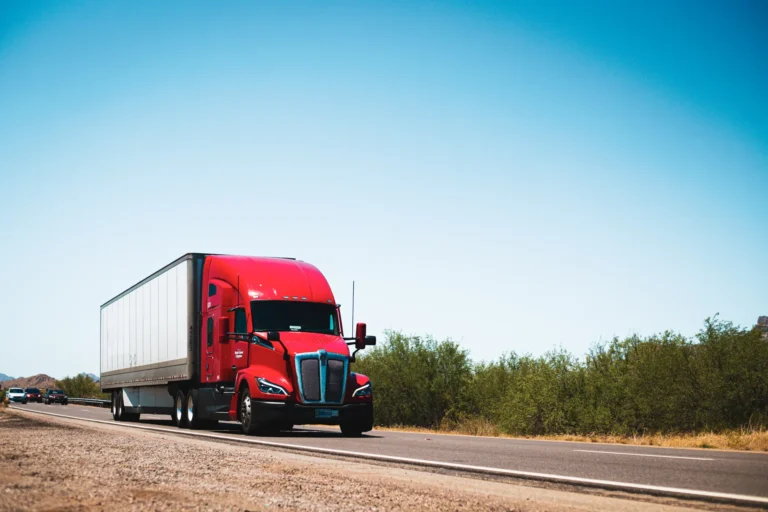
How to Start Driving Trucks: A Step-By-Step Guide to Your CDL

To start driving trucks in the USA, you must meet the age rules, pass a DOT physical, earn a Commercial Learner’s Permit (CLP), finish Entry-Level Driver Training (ELDT) with a registered provider, hold the CLP for 14 days, and pass the Commercial Driver’s License (CDL) skills test. That’s the licensing side. After it, most new drivers join a carrier for their first job and finish company orientation.
Key Takeaways
- A Class A Commercial Driver’s License (CDL) qualifies a driver for tractor-trailers and opens the widest range of trucking jobs.
- Federal rules require drivers to be 21 for interstate trucking, while most states license 18-year-olds for in-state routes.
- Entry-Level Driver Training (ELDT) from a provider on the FMCSA Training Provider Registry (TPR) is mandatory before a first-time Class A or Class B skills test.
- A Commercial Learner’s Permit (CLP) must be held for at least 14 days before the CDL skills test.
- Carriers must query the FMCSA Drug and Alcohol Clearinghouse and receive a negative pre-employment drug test before a new driver hauls freight.
- Company-sponsored CDL training lowers upfront cost but ties the driver to a work contract with repayment terms.
What Is a Commercial Driver’s License (CDL)?
A Commercial Driver’s License (CDL) is a state-issued credential, built on Federal Motor Carrier Safety Administration (FMCSA) standards, that allows a person to drive vehicles rated at 26,001 lbs (11,794 kg) or more, vehicles designed for 16 or more people, or vehicles carrying placarded hazardous materials.
Learning how to start driving trucks is mostly a licensing process, one that walks a regular driver through federal medical standards and training rules before the state issues a CDL. Tests come last.
Your State Driver Licensing Agency (SDLA) issues the license. That’s usually the DMV. Federal rules behind the CDL sit in 49 CFR Part 383, so the core requirements don’t change from one state to the next.
CDL Classes Compared
The table below compares the three CDL classes by the vehicles each one covers and the jobs it supports.
| CDL Class | Vehicles Covered | Common Jobs |
|---|---|---|
| Class A | Combinations 26,001+ lbs (11,794 kg), trailer over 10,000 lbs (4,536 kg) | Tractor-trailer, long-haul, regional freight |
| Class B | Single vehicles 26,001+ lbs (11,794 kg), light towing only | Straight trucks, dump trucks, city buses |
| Class C | 16+ passengers or placarded hazmat, below Class A or B | Passenger vans, small hazmat vehicles |
Choose Class A if you want the widest job choice. A Class A holder can also drive Class B and Class C vehicles, provided the license carries any endorsements those vehicles require. That flexibility pays off early.
CDL Endorsements Explained
Endorsements are add-ons. Each one permits a specific cargo or vehicle type. First-time hazmat (H) applicants must complete ELDT. The same goes for first-time passenger (P) and school bus (S) applicants, who face that training requirement on top of their knowledge and skills tests.
The table below compares common endorsements by code and the extra requirement each one carries.
| Endorsement | Code | Extra Requirement |
|---|---|---|
| Hazardous materials | H | Knowledge test plus TSA security threat assessment |
| Tank vehicles | N | Knowledge test |
| Doubles and triples | T | Knowledge test |
| Tank and hazmat combined | X | Meets both H and N requirements |
| Passenger | P | Knowledge and skills tests |
| School bus | S | Knowledge and skills tests |
Nobody needs every endorsement on day one. Still, adding the tanker or doubles and triples endorsement early widens the pool of carriers that will consider your application.

What Do You Need to Be a Truck Driver?
To become a truck driver, you need a valid regular driver’s license, a minimum age of 18 for in-state driving or 21 for interstate driving, a DOT medical certificate from a registered examiner, enough English to read road signs and speak with officials, and a record free of disqualifying offenses.
Check all five first. Anyone researching how to become a truck driver should confirm each requirement before paying for training, because missing even one stops the process at the permit stage.
Age Requirements
Federal rules in 49 CFR 391.11 set 21 as the minimum age for interstate commercial driving, and that floor applies in every state. Most states issue CDLs at 18. Drivers under 21, though, are limited to intrastate trucking: routes and freight that stay inside one state.
There’s one exception. Created by the Infrastructure Investment and Jobs Act, the FMCSA Safe Driver Apprenticeship Pilot lets drivers aged 18 to 20 run interstate routes with participating carriers.
Apprentices complete two probationary periods with an experienced driver in the cab. Equipment rules apply too. Each apprentice’s truck must carry specific safety technology on board, such as automatic emergency braking and a forward-facing video camera.
Medical Standards
Every interstate CDL driver must pass a Department of Transportation (DOT) physical. Where you get it matters. Only examiners listed on the National Registry of Certified Medical Examiners can issue a valid Medical Examiner’s Certificate, which drivers usually call a medical card.
The table below compares the main DOT physical standards and what each one requires.
| Standard | Requirement |
|---|---|
| Distance vision | 20/40 in each eye, with or without correction |
| Field of vision | At least 70 degrees horizontal in each eye |
| Color vision | Recognize red, green, and amber signals |
| Hearing | Perceive a forced whisper at 5 ft (1.5 m) |
| Certificate length | Up to 24 months |
Not everyone gets 24 months. Examiners issue shorter certificates for conditions that need monitoring, such as high blood pressure. Drivers with insulin-treated diabetes can still qualify, provided their treating clinician completes the FMCSA Insulin-Treated Diabetes Mellitus Assessment Form.
Driving Record and Clearinghouse
The FMCSA Drug and Alcohol Clearinghouse is a federal database of CDL drug and alcohol program violations. It went live on January 6, 2020. Since then, carriers must run a full pre-employment query in the database before hiring any CDL driver, including someone fresh out of school.
You’ll need your own Clearinghouse account. New drivers must register and give electronic consent so a carrier can complete that query, and the carrier must also receive a negative pre-employment drug test before the driver operates a commercial vehicle.
Since November 18, 2024, states must remove commercial driving privileges from any driver listed in prohibited status in the Clearinghouse. The downgrade sticks. Prohibited status lasts until the driver completes the return-to-duty process.
Serious offenses also block a CDL. Under 49 CFR 383.51, a first DUI conviction while holding a CLP or CDL brings at least a one-year disqualification, and a second brings a lifetime disqualification.
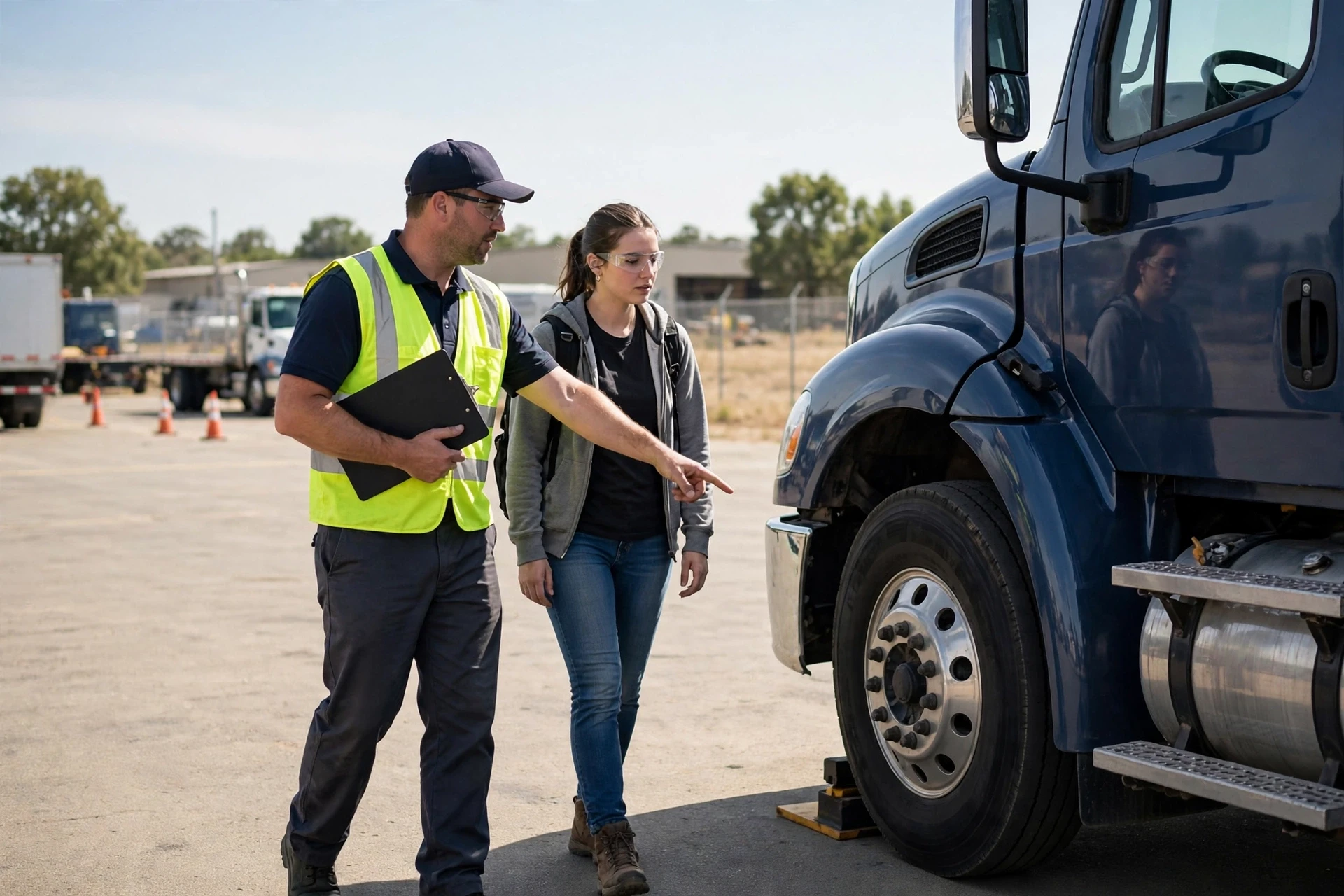
How to Start Driving Trucks in 8 Steps
The path for anyone learning how to start driving trucks follows eight steps in a fixed order: confirm eligibility, pass a DOT physical, finish ELDT theory, earn a Commercial Learner’s Permit (CLP), finish behind-the-wheel training, hold the CLP for 14 days, pass the skills test, and complete carrier hiring.
- Confirm your eligibility. Check that you hold a valid non-commercial license, meet the age rule for the routes you want, and have no disqualifying offenses on your record.
- Pass a DOT physical. Book the exam with an examiner listed on the National Registry of Certified Medical Examiners and keep a copy of your medical card.
- Complete ELDT theory training. Enroll with a provider on the Training Provider Registry and score at least 80% on the theory assessment.
- Earn your Commercial Learner’s Permit. Pass the general knowledge test, plus the combination vehicles and air brakes tests for Class A, at your SDLA.
- Finish behind-the-wheel training. Practice range maneuvers and public-road driving with a qualified CDL holder beside you until the provider certifies proficiency.
- Hold the CLP for 14 days. Use the waiting period to drill the pre-trip inspection and register for a Clearinghouse account.
- Pass the CDL skills test. Complete the vehicle inspection, basic control, and road test in a vehicle of the class you want.
- Get hired and finish orientation. Apply to carriers, consent to the Clearinghouse query, pass the pre-employment drug test, and complete company training.
Whether you phrase the question as how to start truck driving or how to become truck driver, the federal order stays the same. Don’t skip ahead. Each step sets up the next one, so skipping any of them stalls everything after it.
A CLP holder may only drive a commercial vehicle with a CDL holder of the proper class seated in the front passenger seat. Solo driving isn’t allowed.
Is CDL Training Required Before the CDL Test?
Yes. Since February 7, 2022, federal Entry-Level Driver Training (ELDT) rules in 49 CFR Part 380 require first-time Class A and Class B applicants to finish theory and behind-the-wheel training with a provider listed on the FMCSA Training Provider Registry (TPR) before taking the skills test.
The rule reaches past first licenses. ELDT also applies to drivers upgrading from Class B to Class A, and it covers anyone adding the H, P, or S endorsement for the first time.
The table below compares the three parts of ELDT by format and passing standard.
| ELDT Component | Format | Passing Standard |
|---|---|---|
| Theory | Classroom or online | 80% on the written assessment |
| Range training | Off-road practice area | Instructor-certified proficiency |
| Public road training | Live traffic | Instructor-certified proficiency |
Federal ELDT rules set no minimum number of training hours. Proficiency is the bar. The provider decides when a student has reached it, then submits the completion record to the TPR so the state can see that training is done.
Your SDLA checks the TPR record before letting you take the skills test. Check the listing yourself. Training from a school that isn’t on the registry won’t satisfy the rule, no matter how many hours you put in.
Can Trucking Companies Pay for CDL Training?
Yes. Many trucking companies run company-sponsored CDL training programs that cover tuition in exchange for a commitment to drive for that carrier for a set period, and drivers who leave early usually owe back part or all of the training cost under the contract terms.
Carriers aren’t the only payers. Outside their programs, the Workforce Innovation and Opportunity Act (WIOA) funds approved job training, including CDL programs, through local American Job Centers.
Veterans can use GI Bill benefits at approved CDL programs. Some can skip a test. Former military drivers may apply through the FMCSA Military Skills Test Waiver, which lets states waive the skills test for drivers with qualifying military experience.
Training Paths Compared
Expect no price tags here. No verified national tuition figure is available, so the cost column shows who pays upfront rather than an average dollar amount.
The table below compares the four main CDL training paths by cost, commitment, and flexibility.
| Training Path | Upfront Cost | Work Commitment | Flexibility | Best For |
|---|---|---|---|---|
| Company-sponsored | Little or none to student | Yes, set contract period | Low, tied to one carrier | Drivers with no savings |
| Private CDL school | Paid by student | None | High, apply anywhere | Drivers wanting carrier choice |
| Community college | Tuition, often aid-eligible | None | High, slower schedule | Students using financial aid |
| Tuition reimbursement | Paid by student first | Yes, repaid during employment | Medium | Drivers who can front costs |
A private school gives the most freedom, while company-sponsored training gives the lowest cash outlay. Read the fine print. Before you sign any sponsored-training contract, ask the carrier for written answers to these questions and keep a copy with your records:
- What total amount would I owe if I leave before the contract ends?
- How long is the commitment, and when does it start?
- Does the balance shrink for each month I stay?
- Is the school on the Training Provider Registry?
How Long Does It Take to Get a CDL?
Getting a CDL takes at least 14 days after the Commercial Learner’s Permit (CLP) is issued, because 49 CFR 383.25 bars skills testing before then. Total time depends on the training schedule, state testing availability, and endorsements, and no verified national average is available.
The table below compares the factors that change how long the CDL process takes.
| Factor | Effect on Timeline |
|---|---|
| CLP waiting period | Fixed 14-day minimum |
| Training schedule | Full-time programs finish faster than part-time |
| State test slots | Waits vary by testing location |
| Endorsements | Each one adds a knowledge test |
| Medical conditions | Specialist clearance can delay the physical |
A CLP is valid for no more than one year under federal rules. Watch that date. Plan training and testing around it, because an expired permit stops you from taking the CDL skills test at all.
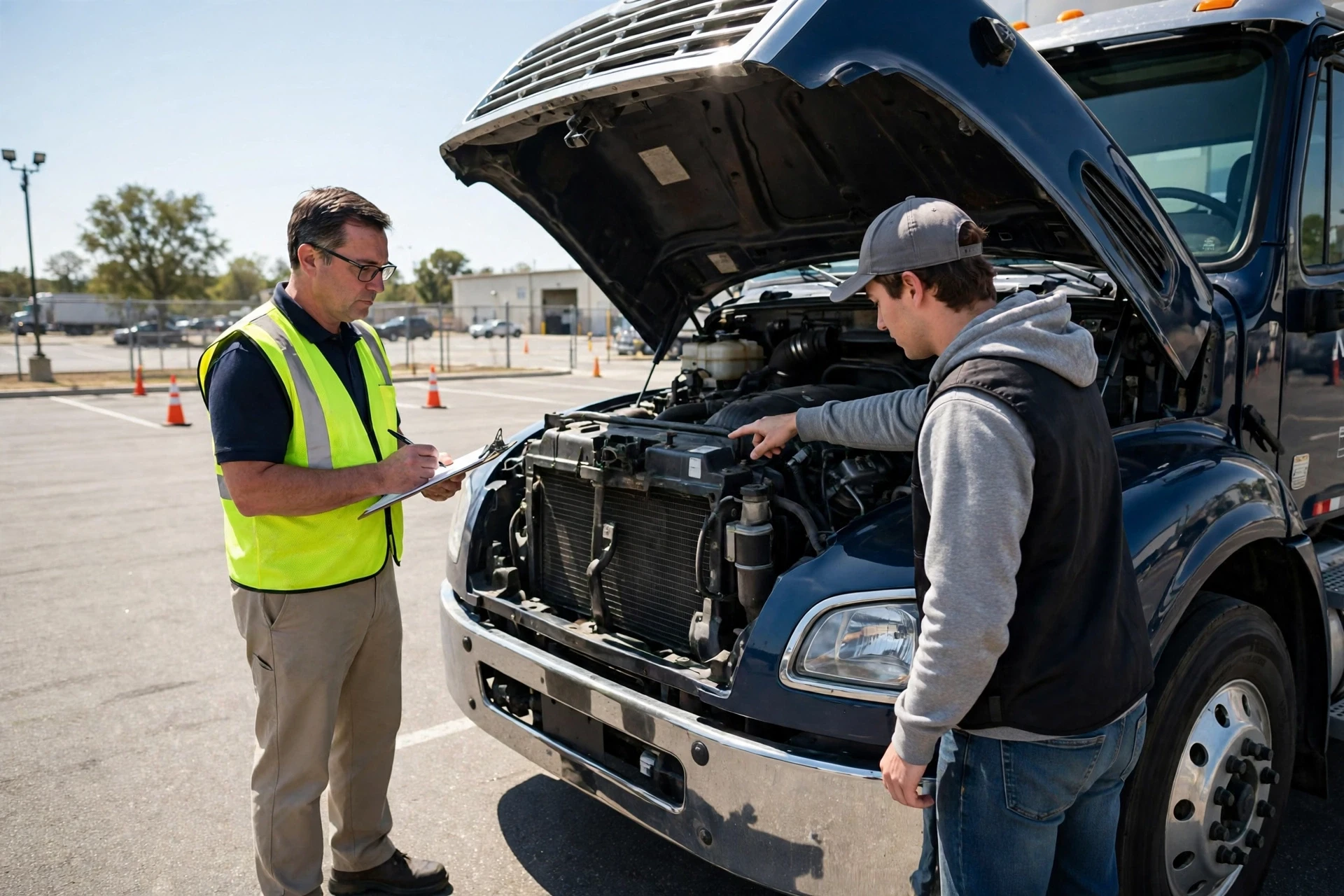
What Is on the CDL Skills Test?
The CDL skills test has three parts, all taken in the vehicle class you want to drive: a vehicle inspection test (pre-trip), a basic vehicle control test of backing and maneuvering, and an on-road driving test in traffic. Applicants must pass every part to earn the license.
The vehicle used on test day matters. Testing in an automatic transmission truck adds an E restriction that bars manual-transmission driving, and testing without full air brakes adds an air brake restriction.
Pre-Trip Inspection
The pre-trip inspection test checks whether you can tell if a vehicle is safe to drive. It’s hands-on. You point to each component and name it, then explain out loud exactly which condition you’re checking on that part.
Class A adds an air brake check. Practice the inspection in the same order every time, starting at the engine compartment and working back through the coupling system to the trailer, and the sequence will hold up under test pressure.
Basic Control and Road Test
The basic control test measures backing and low-speed maneuvering skill. States choose the exercises. Depending on where you test, they can include straight-line backing and offset backing, along with alley dock or parallel parking maneuvers.
The road test happens in live traffic. Examiners score your turns, intersections, lane changes, railroad crossings, curves, and merging along the route. Retest rules and fees vary by state, so check with your SDLA well before test day to avoid surprises on the morning of the exam.

Do Carriers Hire Drivers Straight Out of School?
Yes. Many carriers hire drivers straight out of CDL school, usually for over-the-road (OTR) routes, and place them with a trainer for a period of supervised driving before they run solo. Local jobs that bring drivers home daily more often require prior experience.
The table below compares the three main route types new drivers encounter.
| Route Type | Home Time | Typical Freight | New Driver Access |
|---|---|---|---|
| Over-the-road (OTR) | Away for extended stretches | Long-haul dry van, refrigerated | Most common first job |
| Regional | Often home weekly | Multi-state loads within one region | Some carriers hire new drivers |
| Local | Often home daily | Delivery, pickup, less-than-truckload | Often requires experience |
Expect a detailed application. Under 49 CFR 391.21, carriers ask for 3 years of employment history and up to 10 years of commercial driving history.
Carriers also pull your motor vehicle record from every state where you held a license in the past 3 years. Then comes orientation. Expect company policy sessions and a drug test there, plus a road evaluation by the carrier.
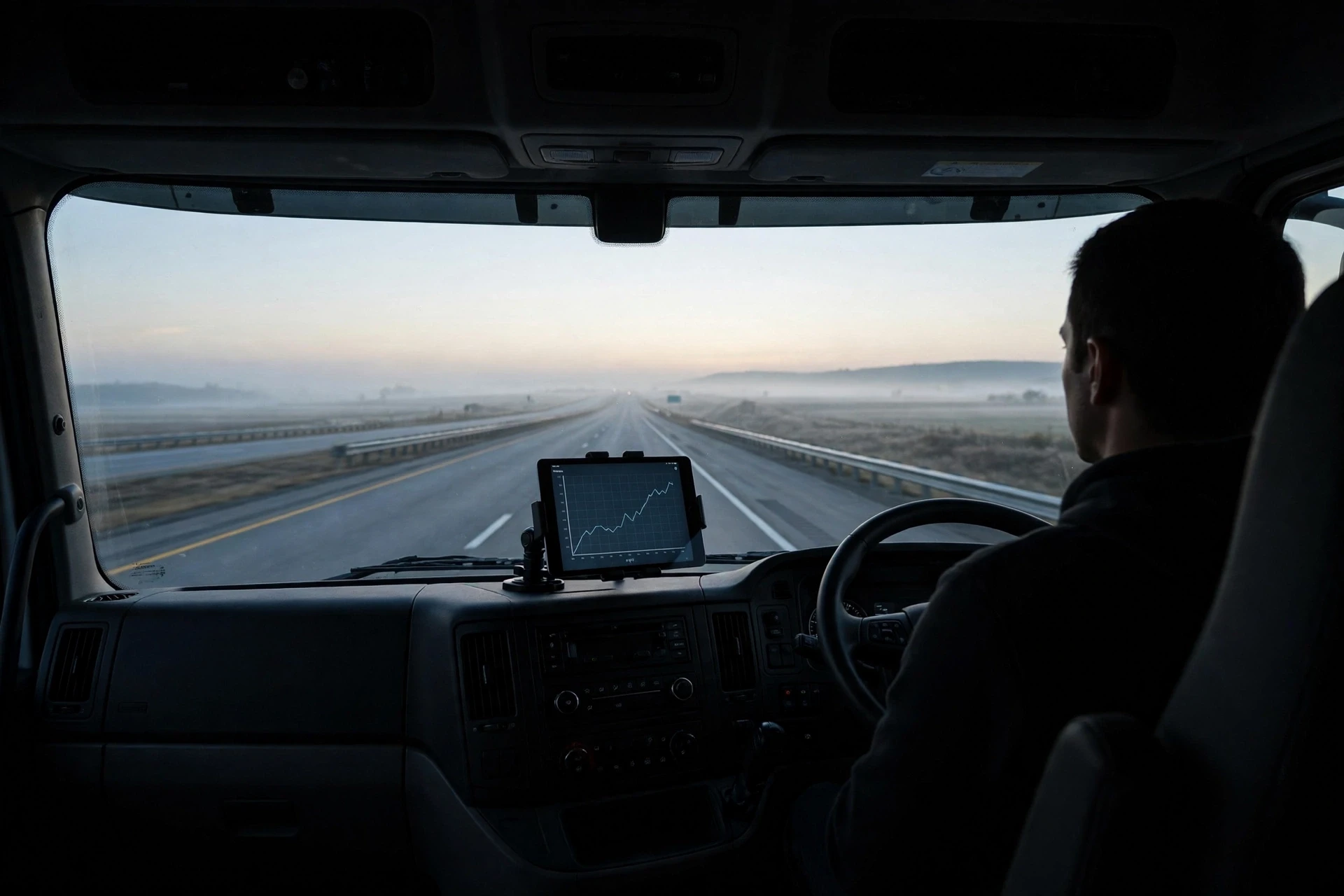
What to Expect in Your First Year
The first year of truck driving centers on mastering Hours of Service (HOS) rules, backing and trip planning under real deadlines, and adjusting to life on the road. New drivers who keep clean inspection and safety records build the history carriers weigh when assigning routes and home time.
Hours of Service Rules
Hours of Service (HOS) rules in 49 CFR Part 395 limit how long property-carrying drivers can work before they must stop and rest. An Electronic Logging Device (ELD) records your driving time automatically. Learn to read it.
The table below compares the core HOS limits for property-carrying drivers.
| HOS Rule | Limit |
|---|---|
| Driving limit | 11 hours after 10 consecutive hours off duty |
| Duty window | No driving after the 14th hour on duty |
| Rest break | 30 minutes after 8 cumulative hours driving |
| Weekly limit | 60 hours in 7 days or 70 in 8 |
| Restart | 34 consecutive hours off resets the weekly clock |
Plan each day around the 14-hour window. That clock doesn’t pause for fueling or loading, and it keeps ticking through every hour you spend waiting at a dock for a door.
Trucker Advice for New Drivers
Good trucker advice for year one comes back to staying safe and planning ahead, plus keeping your dispatcher in the loop:
- Plan parking before you start driving. Truck parking fills early in many areas, so pick a primary and a backup stop before your clock runs low.
- Get out and look before backing. Walk around the truck as many times as needed; no delivery deadline is worth a collision.
- Inspect the truck every day. Daily inspections catch problems such as low tire pressure or air leaks before a roadside officer does.
- Talk to your dispatcher early. Report delays, weather issues, or HOS limits as soon as they appear.
- Protect your sleep. Fatigue is the fastest way to lose a CDL, so use your off-duty hours to rest.
- Keep your record clean. A clean first year of inspections and safety events gives you more job options later.
Other Ways into the Trucking Business
Driving is one entry point, but trucking also supports owners who run carriers without driving and educators who train new drivers. Both paths require federal registration: carriers register through the FMCSA, and schools must be listed on the Training Provider Registry before their students can test.
How to Start a Trucking Company Without Driving
The steps for how to start a trucking company without driving match those for how to start a truck driving business as an owner-operator, minus the CDL. You hire the drivers. Every one of them must be qualified, with files to prove it.
- Form a business entity. Register your company with your state and get an Employer Identification Number from the IRS.
- Register with the FMCSA. Apply for a USDOT number and Motor Carrier (MC) operating authority through the FMCSA registration system.
- File a BOC-3. Designate a process agent in every state where you operate.
- Buy required insurance. Carry at least $750,000 in liability coverage for general non-hazardous freight in vehicles of 10,001 lbs (4,536 kg) or more.
- Complete state and fuel registrations. Register for the Unified Carrier Registration (UCR), International Registration Plan (IRP) plates, and the International Fuel Tax Agreement (IFTA).
- Build a compliance program. Join a drug and alcohol testing program, run Clearinghouse queries, and keep driver qualification files.
Oversight starts right away. New carriers enter the FMCSA New Entrant Safety Assurance Program and receive a safety audit within their first 12 months of operation.
How to Start a Truck Driving School
Knowing how to start a truck driving school begins with the federal ELDT rules. Registration comes first. A school must be listed on the Training Provider Registry and must teach the curriculum set out in the appendices to 49 CFR Part 380.
Behind-the-wheel instructors must hold a CDL of the class and endorsements they teach. Experience counts too. Each instructor needs at least 2 years driving vehicles that require that CDL, or 2 years as a behind-the-wheel instructor. Many states also license private career schools, so check with your state education or licensing agency before you enroll a single student.
Conclusion
Knowing how to start driving trucks comes down to following federal rules in the right order. Sequence beats speed. Confirm your eligibility and pass a DOT physical first, then pick a TPR-listed training path that fits your budget and spend the 14-day permit window drilling for the skills test.
Trucking regulations keep changing, as the 2022 ELDT rule and the 2024 Clearinghouse downgrade rule show. Stay current. Check the FMCSA website and your SDLA before each step, and the CDL you earn will carry you into a first job and added endorsements, then later moves into regional or local driving or even business ownership.
Frequently Asked Questions

Esther Howard leads trucking and commercial driving content at TruckingHow, covering CDL training, trucking regulations, fleet operations, and truck maintenance. With over a decade of experience researching the transportation industry, she brings a practical, research-driven approach to driver education and safety standards. Her guides help drivers, fleet owners, and trucking professionals make informed decisions on and off the road.
Related Posts