Best States for Truck Drivers in 2026: Pay, Freight & Cost of Living Ranked
Texas, Ohio, Florida, Tennessee, and Indiana rank among the best states for truck drivers in 2026, based on freight corridor density, carrier volume, tax burden, and cost of living (COL). Freight moves through a network of shippers, carriers, and freight brokers, and it’s the states where that network runs thickest, with dense port access, manufacturing shippers, and interstate freight corridors, that consistently produce the strongest driving opportunities. Pay follows freight density closely. The Bureau of Labor Statistics (BLS) puts the national median truck driver salary at $57,440 a year, but a driver in North Dakota’s tanker-heavy freight market can clear close to $78,000 annually, while thinner freight lanes in Hawaii average under $45,000.
This guide ranks the best states for truck drivers using five weighted factors: freight demand, average pay, tax exposure, living costs, and road infrastructure. Each state profile below covers the dominant freight lanes, equipment types, and carrier networks driving that state’s opportunities, alongside real salary figures pulled from BLS and current job market reports. A driver shortage of roughly 80,000 positions is still pushing carriers to compete for capacity, which makes 2026 a strong year to match a driver’s equipment endorsement to the right state’s freight market.
What Makes a State Good for Truck Drivers?
The best states for truck drivers combine five factors: freight volume, driver pay, state income tax, cost of living, and highway infrastructure. Skip any one of these and you get a skewed picture. A state with high salaries but a brutal cost of living, for example, can leave a driver with less take-home value than a state paying $10,000 less per year.
- Freight volume: ports, warehouses, and manufacturing plants that keep a truck loaded instead of running empty (deadhead miles)
- Driver pay: average annual salary and cents-per-mile (CPM) rates for over-the-road (OTR) and regional routes
- State income tax: nine states, including Texas, Florida, and Tennessee, charge zero personal income tax
- Cost of living: housing, fuel, and insurance costs measured against take-home pay
- Highway infrastructure: interstate density, weigh station frequency, and road maintenance quality
Ohio shows why all five factors matter together. Its Bureau of Labor Statistics location quotient (LQ), a measure of how concentrated trucking jobs are compared to the national average, sits at 1.72, well above the 1.0 baseline. Pair that concentration with a cost of living 8.1% below the national average, and Ohio drivers keep more of every paycheck than the raw salary figure suggests.
How the Freight Industry Shapes These Rankings
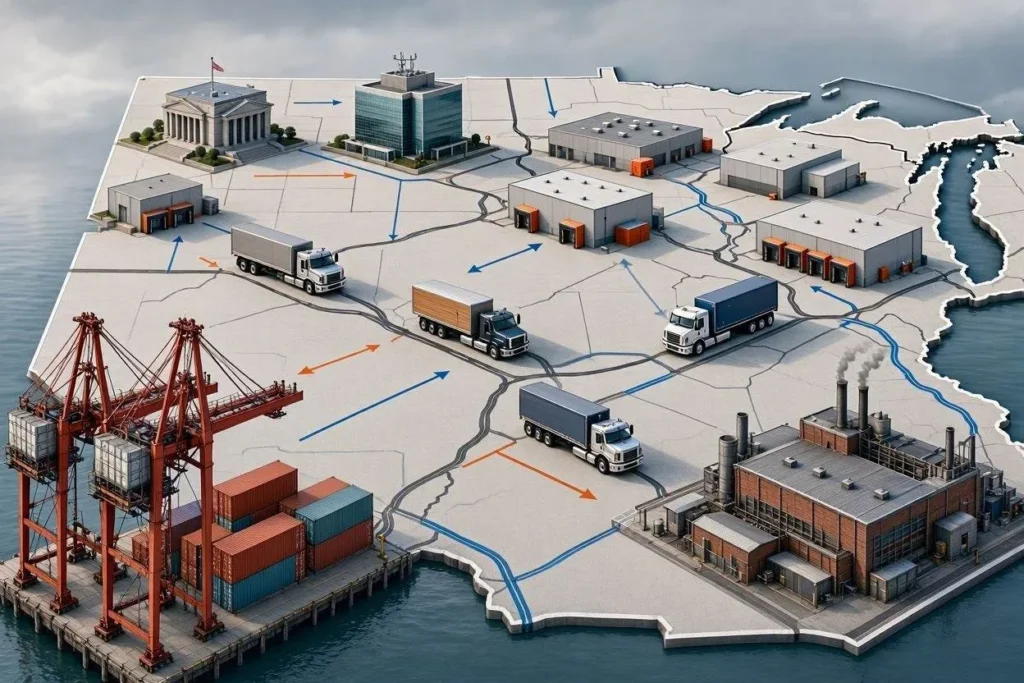
State rankings track the freight transport system underneath them: carriers, brokers, shippers, and the regulatory bodies that govern all three. A state doesn’t generate trucking jobs on its own. Manufacturing plants, ports, and distribution centers act as shippers, freight brokers match that cargo with available capacity, and carriers (from single-truck owner-operators to national fleets) move it across the highway network.
Three regulatory layers shape where that freight moves and who can legally haul it:
- Federal Motor Carrier Safety Administration (FMCSA): issues the DOT number every commercial carrier must display, and sets safety, inspection, and hours-of-service (HOS) standards nationwide
- Electronic Logging Device (ELD) mandate: requires most carriers to log driving hours electronically, which standardizes HOS compliance across every state a truck crosses
- State departments of transportation: manage weigh stations, permit systems, and weight limits that vary by state, even though federal rules set the floor
Freight itself moves through two core models. Full-truckload (FTL) freight fills an entire trailer for a single shipper, common on high-volume corridors like the Texas Triangle or the I-65 corridor through Indiana and Kentucky. Less-than-truckload (LTL) freight combines multiple shippers’ cargo into one trailer, which explains why states with dense distribution networks, Ohio, Pennsylvania, and Indiana among them, post consistently strong freight and job numbers. A trucking company’s access to reliable freight brokers and a stable shipper base matters as much to a driver’s income as the state’s tax code, since thin freight lanes mean more unpaid deadhead miles between loads.
Equipment type also determines which states offer the strongest freight lanes for a given driver. Dry van trailers haul general cargo and dominate freight volume nationwide. Refrigerated (reefer) trailers move perishable goods out of agricultural states like Iowa and Florida. Flatbed equipment carries steel, lumber, and machinery, which keeps flatbed carriers busy in industrial states like Indiana and Pennsylvania. Tanker trailers haul fuel and chemicals, and demand for tanker drivers runs highest in energy-producing states such as North Dakota and Texas. Matching a driver’s equipment endorsement to a state’s dominant freight lane, rather than chasing salary figures alone, tends to produce steadier work and fewer empty return hauls.
The 10 Best States for Truck Drivers in 2026
Texas, Ohio, Florida, Tennessee, Indiana, North Dakota, Delaware, Pennsylvania, Iowa, and Kentucky rank as the ten best states for truck drivers in 2026. The rankings below combine freight density, tax burden, and cost-adjusted pay rather than salary figures alone.
| Rank | State | Avg. Annual Salary | State Income Tax | Standout Factor |
| 1 | Texas | $60,000–$70,000 | None | Highest freight volume in the U.S. |
| 2 | Ohio | $65,665 | 0%–3.5% | Highest labor demand (LQ 1.72) |
| 3 | Florida | $60,000–$70,000 | None | Port access, no winter weather |
| 4 | Tennessee | $58,000–$68,000 | None | Reaches 75% of U.S. population in a day’s drive |
| 5 | Indiana | $55,000–$65,000 | 3.05% flat | Second-largest FedEx hub worldwide |
| 6 | North Dakota | $78,797 | 1.1%–2.5% | Highest average pay nationally |
| 7 | Delaware | $70,901 | 0%–6.6% | Small state, short average hauls |
| 8 | Pennsylvania | $68,200 | 3.07% flat | Tax-friendly, dense freight lanes |
| 9 | Iowa | $67,723 | 4.4%–5.7% | Low crime rate, strong safety record |
| 10 | Kentucky | $68,500 | 4% flat | Home to UPS Worldport, the world’s largest package hub |
1. Texas
Texas leads this list because of its freight corridor density and carrier volume. The state sits at the crossroads of the Texas Triangle (Houston, Dallas-Fort Worth, San Antonio, and Austin), where interstates connect every cardinal direction and more than 66,000 carriers operate dry van, flatbed, and tanker fleets. Manufacturing plants, oil terminals, and the Port of Houston act as steady shippers, keeping freight brokers supplied with full-truckload (FTL) and drayage loads that reduce empty-mile stretches between hauls. Local pay across the Texas Triangle runs $55,000–$70,000 annually, and the state’s zero income tax stretches that further.
2. Ohio
Ohio ranks second for its dense less-than-truckload (LTL) network and Great Lakes port access. Columbus, Cleveland, Cincinnati, and Toledo sit within a one-day drive of 60% of the U.S. population, which lets regional carriers run consolidated freight lanes instead of long empty backhauls. Toledo’s Great Lakes terminal adds intermodal cargo to the mix, feeding local dry van and flatbed carriers year-round. The state’s location quotient (LQ) of 1.72 confirms unusually high carrier demand, and average pay near $65,665 goes further against a cost of living 8.1% below the national average.
3. Florida
Florida earns a top-five spot through its seaport drayage volume and import/export freight demand. PortMiami and Port Everglades serve as the country’s primary gateway to Latin America and the Caribbean, generating steady containerized cargo for drayage carriers moving loads off the docks and into regional distribution centers. Refrigerated (reefer) carriers stay busy year-round hauling produce out of the state’s agricultural belt, and the lack of snow or ice keeps routes running without winter weather delays. No state income tax adds to take-home pay on top of an average salary in the $60,000–$70,000 range.
4. Tennessee
Tennessee stands out for corridor connectivity, not just pay. Interstate 40 runs east-west across the entire state, while Interstate 75 links Michigan to Florida through Tennessee’s eastern corridor, giving carriers based here direct freight lanes to roughly 75% of the U.S. population within a single day’s drive. FedEx’s global air-cargo hub in Memphis feeds a constant stream of full-truckload and LTL freight to regional carriers, and Nashville’s distribution centers keep dry van trailers loaded on the return leg. Zero state income tax adds to a driver’s take-home pay on top of average salaries between $58,000 and $68,000.
5. Indiana
Indiana’s manufacturing supply chains and central corridor position make it one of the most stable freight markets for carriers. The state ranks among the top ten busiest states for commercial freight, driven by automotive, steel, and pharmaceutical shippers that depend on tight delivery windows and flatbed or dry van capacity. Indianapolis hosts the second-largest FedEx Express hub in the world, and six interstates intersect within state lines, giving both LTL and FTL carriers direct freight lanes in every direction. A flat 3.05% income tax and median home prices near $185,000 keep operating costs low for owner-operators based here.
6. North Dakota
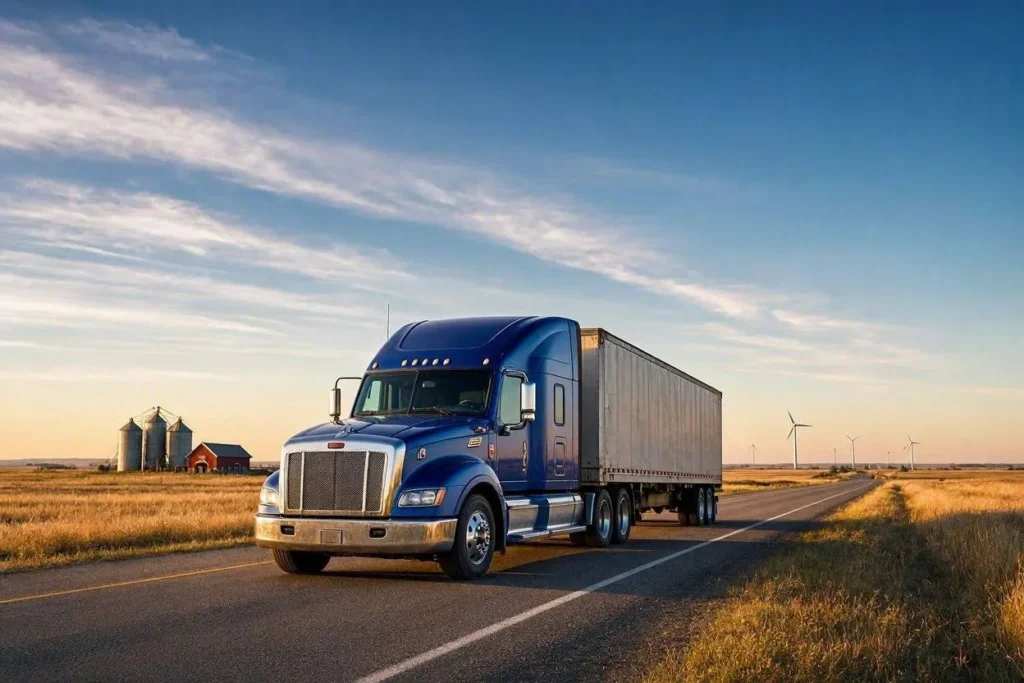
North Dakota’s tanker and flatbed freight lanes pay more than any other state’s freight market. Oil and gas extraction in the Bakken region drives sustained demand for tanker carriers hauling crude and water, plus flatbed capacity for drilling equipment: specialized freight that commands higher rates than general dry van hauling. Low carrier competition on rural routes pushes cents-per-mile (CPM) rates higher still, lifting average pay to $78,797 annually. Harsh winters bring real trade-offs, though, if a driver isn’t equipped for extended cold-weather routes and reduced visibility on rural highways.
7. Delaware
Delaware’s freight lanes favor short-haul and LTL carriers over long-distance OTR operations. Its position among major East Coast population centers creates constant demand for regional dry van capacity moving consumer goods between distribution centers in Wilmington, Dover, and nearby Philadelphia-area hubs. A location quotient of 1.37 confirms above-average carrier concentration for the state’s small footprint, and more than 1,400 active driving positions keep the freight market competitive. Average salaries reach $70,901 a year, the highest among small-footprint states.
8. Pennsylvania
Pennsylvania combines dense freight lanes with a genuinely carrier-friendly regulatory climate. Philadelphia, Pittsburgh, Harrisburg, and Scranton anchor a distribution network that keeps dry van and flatbed carriers loaded on both legs of a regional route, and the state’s location quotient of 1.43 reflects that steady freight demand. Streamlined permitting and registration make it easier to launch a small carrier operation here than in several neighboring Northeastern states. Average driver pay reaches $68,200 annually under a flat 3.07% income tax.
9. Iowa
Iowa’s agricultural shippers keep reefer and dry van carriers running steady freight lanes year-round. Grain elevators, meatpacking plants, and feed processors act as consistent shippers, which cuts down on the deadhead miles that hit carriers in thinner freight markets. The state also ranks among the safest for drivers raising families, with a violent crime rate of 3.85 per 1,000 people against a national rate of 4.49. Average annual pay reaches $67,723, with entry-level positions starting near $50,000.
10. Kentucky
Kentucky posts the highest carrier demand of any state on this list, with a location quotient of 2.03. Louisville is home to UPS Worldport, the largest fully automated package-handling hub on Earth, which alone generates thousands of local, regional, and linehaul driving positions feeding its overnight sort network. The I-65 corridor running through the state connects Kentucky’s distribution centers directly to Indiana and Tennessee freight lanes. Average annual pay reaches $68,500, and a flat 4% income tax pairs with state tax incentives for carriers expanding operations.
Best States for Truck Drivers by Category
No single state wins across every category, so the right choice depends on what a driver values most. A driver chasing the highest paycheck should look at different states than a driver prioritizing family safety or tax savings.
| Category | Top State | Why |
| Highest pay | North Dakota | $78,797 average annual salary |
| Lowest taxes | Texas, Florida, Tennessee | Zero personal state income tax |
| Best for owner-operators | Indiana | Low registration fees, flat 3.05% tax |
| Best for families/safety | Iowa | Crime rate below national average |
| Best freight volume | Texas | 66,000+ trucking companies statewide |
| Best for short regional hauls | Delaware | Small footprint, dense population centers |
States to Approach With Caution
California, New York, and Hawaii carry freight-market and regulatory trade-offs that outweigh their headline salary figures for most carriers. California’s CARB emissions rules and high fuel taxes raise operating costs for owner-operators by thousands of dollars a year, even on strong-paying port drayage routes out of Los Angeles and Long Beach. New York and New Jersey combine heavy tolls with dense traffic, which cuts into both take-home pay and daily hours of service (HOS) availability for carriers running LTL freight through the region. Hawaii’s isolated highway network and limited freight volume produce the lowest average truck driver salary in the country, at roughly $44,475 annually.
How to Choose the Right State for Your Trucking Career
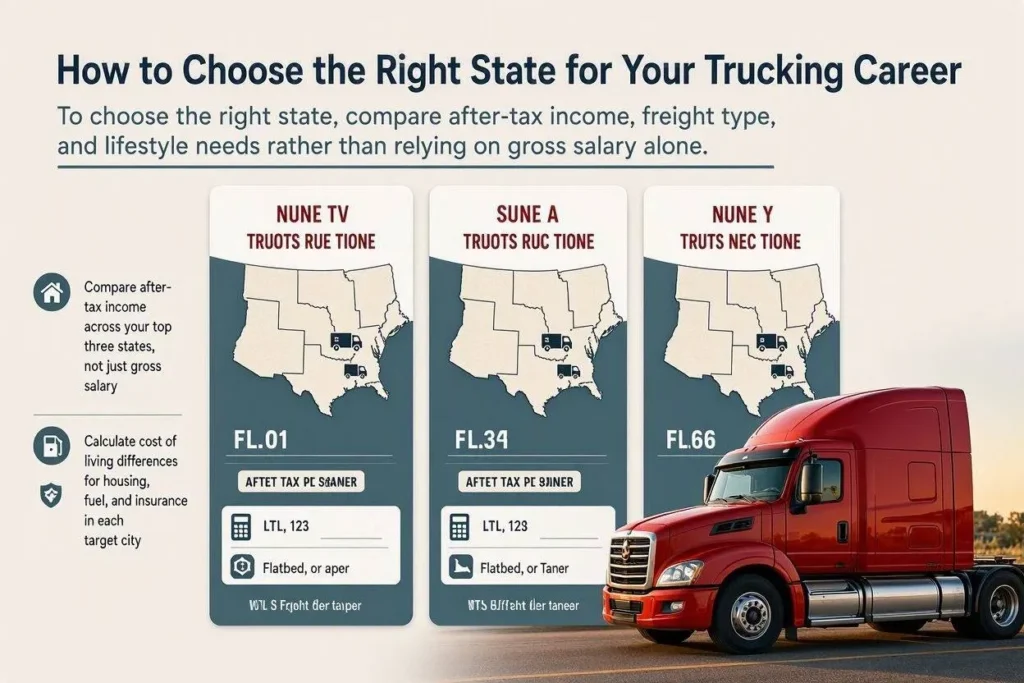
To choose the right state, compare after-tax income, freight type, and lifestyle needs rather than relying on gross salary alone. A methodical approach avoids the common mistake of chasing a high number that doesn’t survive contact with cost of living.
- Compare after-tax income across your top three states, not just gross salary
- Calculate cost of living differences for housing, fuel, and insurance in each target city
- Check CDL reciprocity rules, if you’re transferring a license from another state
- Research diesel fuel tax rates, since they vary by more than 40 cents per gallon (10.6 cents per liter) between the highest and lowest states
- Test truck parking availability along your typical routes before committing to a home base
Owner-operators face an extra layer of complexity here. International Fuel Tax Agreement (IFTA) compliance, weigh station frequency, and state-level registration fees for trucks over 66,000 pounds (29,937 kg) all shift the real cost of doing business from state to state. The American Trucking Associations (ATA) publishes updated freight and workforce data every year, and checking that data before relocating beats relying on outdated blog rankings.
Conclusion
Texas, Ohio, and Florida lead this list in 2026 because they combine freight volume, low tax burden, and manageable living costs better than any other states in the country. North Dakota pays more per year, Iowa offers safer streets, and Kentucky delivers the tightest labor market, but no single state wins on every metric. The right state depends on whether a driver values maximum gross pay, lower taxes, family safety, or freight consistency most. A driver who runs the after-tax numbers on two or three states before signing a lease or relocating a household will end up ahead of one who chases a single headline salary figure.
FAQs

Esther Howard
Esther Howard leads TruckingHow’s trucking, commercial driving, and transportation content division. She specializes in CDL training, trucking regulations, fleet operations, truck maintenance, and logistics best practices. With over a decade of experience researching the commercial transportation industry, Esther brings a practical, research-driven approach to driver education, safety standards, and industry regulations. She is the primary author of TruckingHow’s CDL guides, trucking career resources, maintenance tips, and transportation content, helping drivers, fleet owners, and trucking professionals make informed decisions on and off the road
Related Posts